
Android & Multi-Device Charging
Every Android brand fast-charges on its own protocol. Plain PD covers less of it than the spec sheet implies.
This is the starting point for charging anything that is not an iPhone. Work down through the brand protocols, the wattage each one actually needs, and the multi-port setups that cover a mixed desk.
- Three routes below cover every Android and multi-device decision
- 32 guides organised by the question they answer
- Every route ends at a wattage tier, a protocol and a cable
Three routes, and you only need one of them
The brand question, the fast-charge ladder and everything else are three different problems. Start with the one you actually have.
Match the brand protocol
Samsung leans on PPS, Xiaomi and OPPO on private protocols. A charger that ignores that distinction will charge the phone, just not fast.
Climb the fast-charge ladder
Xiaomi and OPPO push 65W to 120W through proprietary paths. Knowing where PD stops helping tells you which SKUs are worth carrying.
Cover everything else
Pixel, Huawei, OnePlus and Android tablets each sit somewhere between full PD compliance and a private path. This is the part a multi-port brick can genuinely cover.
Consoles, handhelds and the gaming desk
Handhelds and controllers are the newest device class to need a proper charger, and they have their own power expectations.
Handhelds and controllers
A Steam Deck or a Switch draws far more than a phone on the same port, and controller docks add a second charging target with its own connector. Both want a charger that holds its rating under a sustained load rather than one that touches it briefly.
The gaming desk
Console, controller, phone and headset on one desk is the case that finally justifies a multi-port brick — provided the split behaviour is documented. Without a split map, the fourth device gets whatever is left, which is usually not enough.
Wireless, finally, on Android
Qi2 standardised the magnet, and Android is catching up. The practical question is which phones actually benefit and which still fall back to a slow pad.
Qi2 and the Android roadmap
Qi2 brought magnetic alignment to the ecosystem that MagSafe defined, but the rollout is per-model rather than per-brand. Brands planning a pad or a stand should check the timeline against their own device list instead of assuming the standard arrives everywhere at once.
Which phones actually charge wirelessly
Mid-range models are where the answer varies most, and the Reno 14 family is the clearest example: the support exists on some variants and not others. Publishing the per-model answer is what stops a returned pad.
When the phone stops at 80%
Most 80% ceiling reports are a battery-protection setting or an adaptive charging routine rather than a fault. Knowing which one saves a support ticket and a warranty claim.
The Xiaomi 120W case, and what it proves
Xiaomi pushed a phone charger past 100W first. Whether it is worth a SKU depends on how much of that speed a third-party charger can reproduce.
Inside the 120W claim
The headline number belongs to the brand own charger and cable pair. A generic 120W brick will charge the phone, but only at the rate the private protocol allows over PD — which is why the honest question is not whether 120W exists but whether it is reachable outside the original bundle.
What actually decides how fast an Android phone charges
Four things, in this order. The wattage printed on the phone box is the least useful of them.
The brand private protocol
SuperVOOC, SCP, HyperCharge and the rest are proprietary paths. A charger that does not speak them still charges the phone, but at the PD rate rather than the advertised one.
What PD and PPS can substitute
PPS covers Samsung and Pixel well and Xiaomi partially. Knowing the coverage per brand is what stops a buyer returning a charger that was never going to hit the headline number.
The cable in the loop
Proprietary charging usually needs the matching cable as well as the matching brick. A 5A generic cable can carry the current but cannot negotiate the brand profile.
Port allocation under load
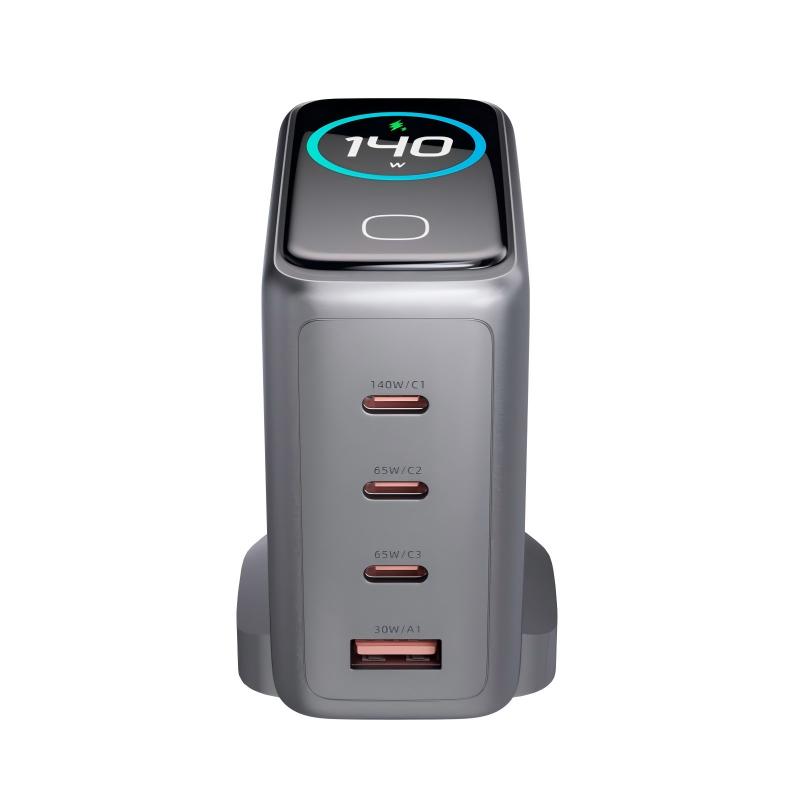
On a multi-port brick the total is shared. The split map, not the total wattage, decides whether the phone gets its fast-charge window when three other devices are plugged in.
Where to go from here
The Android cluster connects to four neighbours. Pick the one that matches your next question.
Android charging questions
The short answers. Each one links into the guide that covers it properly.
Will a generic 120W charger fast-charge a Xiaomi phone?
It will charge it, but usually at the PD rate rather than the full 120W. The top speed runs over Xiaomi own private protocol and normally requires the matching brick and cable. A generic unit is still a good travel charger; it is just not a substitute for the original bundle.
Does PPS matter for Samsung phones?
Yes. Samsung uses PPS for its higher-wattage fast charging, so a charger without PPS support falls back to a slower fixed profile. PPS is also the reason a 25W and a 45W Samsung charger can behave differently on the same phone.
Is Qi2 coming to Android?
It is arriving per model rather than per brand. Qi2 standardises the magnetic alignment, so once a phone supports it a magnetic pad becomes as repeatable as MagSafe. Check the timeline against your specific device list rather than the brand.
Why does my phone stop charging at 80%?
In most cases it is a battery-protection setting, an adaptive charging schedule or a charge limit in the phone firmware rather than a fault. Check the battery settings first, then the charger and cable, before treating it as a hardware problem.
Can one charger cover a phone, a tablet and a handheld console?
Yes, if it has enough ports and a documented split map. The total wattage matters less than how the allocation behaves when everything is plugged in, because a shared total is what throttles the phone during its fast-charge window.
Request a charging review
Send us the device list and the markets you sell into. We will come back with the protocol each brand actually needs, the wattage tier that covers the range, and the SKUs that avoid carrying three chargers that do the same job.