Xiaomi phones sit on both sides of the fast-charging divide: their proprietary Turbo Charging reaches high wattage with the matching brick, while USB PD provides the universal fallback that works with any certified charger. For buyers, the compatibility matrix is simple once you know which side your phone is on — and which speeds each side delivers.
How Xiaomi fast charging is split between proprietary and PD
Xiaomi's proprietary system delivers the headline wattage — often 33W to 120W depending on the model — but only with a Xiaomi-certified charger and cable. USB PD is the universal standard that works with any PD-compliant charger, and Xiaomi phones support it as the fallback layer. The result is two distinct speeds on the same phone: the proprietary peak with the matching brick, and a lower universal speed with everything else.
This split is not a Xiaomi quirk; it is the industry pattern for Chinese-brand phones, and it shapes every compatibility question. The matrix column that matters is "with a universal charger," because that is what most users will actually plug in.
Wattage and protocol support by model line
The model lines divide roughly into three groups:
- Redmi entry models: often 18–33W proprietary, with basic PD fallback around 18W.
- Mainstream Xiaomi/Redmi mid-range: 33–67W proprietary, with PD/PPS fallback typically 18–27W.
- Flagship and gaming lines: 67–120W proprietary, with PD/PPS fallback that can reach 27W or higher on recent models.
The exact numbers change by generation, so verify against the model's official spec before promising a speed. The pattern — proprietary peak, PD fallback — is consistent even when the watts move.
The model-line split is worth checking per device because Xiaomi changes charging hardware generations quickly: a phone from two years ago may accept 33W proprietary while its successor negotiates 67W, and the PD fallback moves with it. The USB PD specification defines the universal layer, while the proprietary peak follows Xiaomi's own certification. For compatibility tables, list both numbers per model and date the table — a stale wattage claim is worse than no claim, because buyers test it against their actual phone.
What a generic PD charger delivers on Xiaomi
A generic PD + PPS charger fast-charges most Xiaomi phones at the universal speed, typically 18–27W. That is a perfectly usable daily charging rate — a phone-sized battery reaches about 50% in 30–40 minutes — but it is far from the proprietary peak. Buyers who expect 67W from a universal charger are the source of most "charger is slow" complaints, so set the expectation in listings and reviews.
The good news is that the universal speed is still genuinely fast. The proprietary system exists to win spec-sheet wars; the PD layer exists to make the phone work everywhere, and it works well.
Charging Xiaomi phones with multi-port GaN
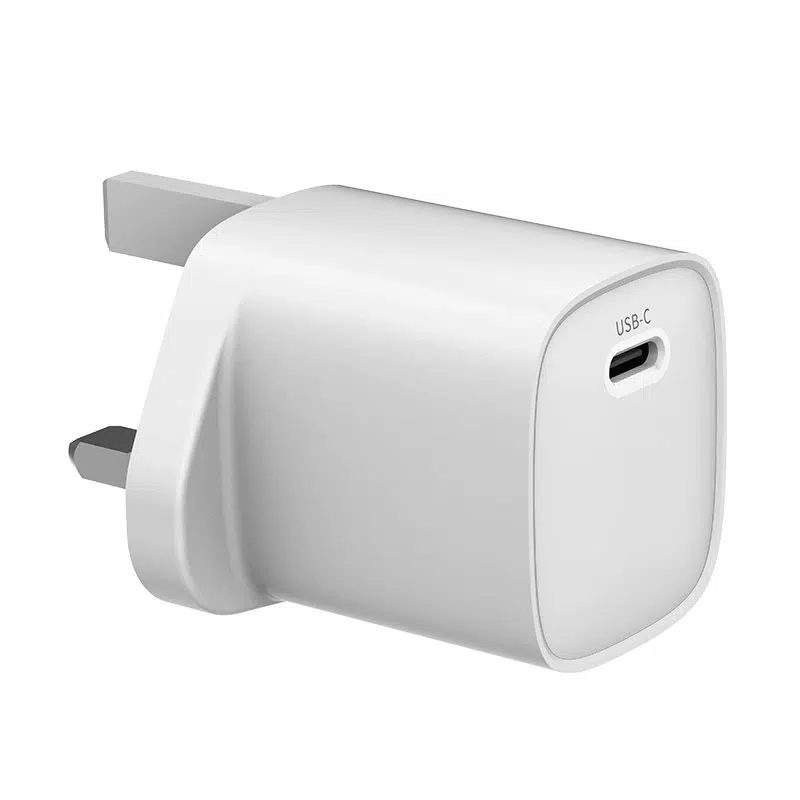
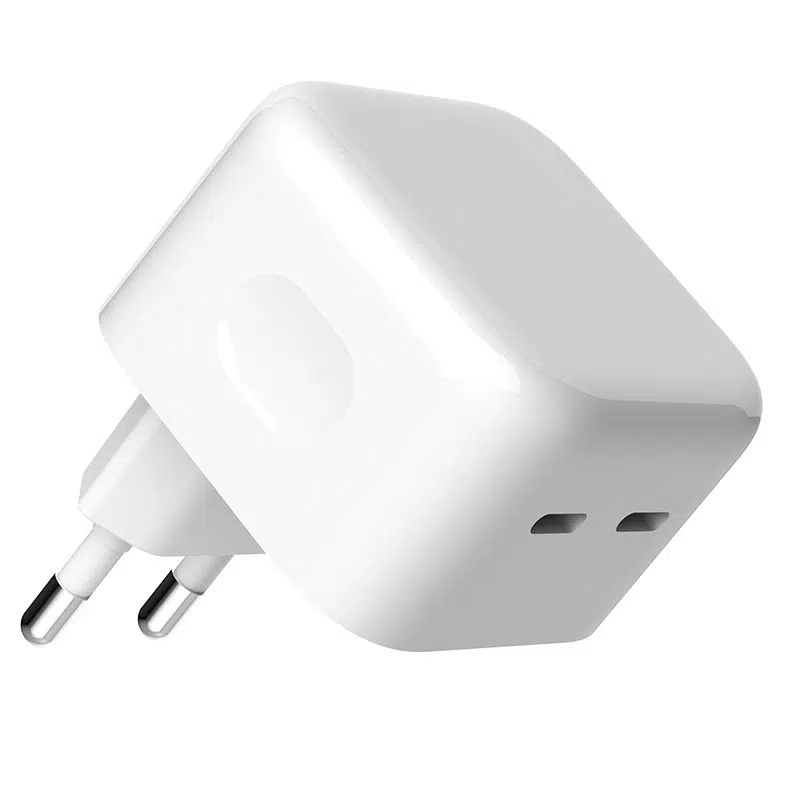
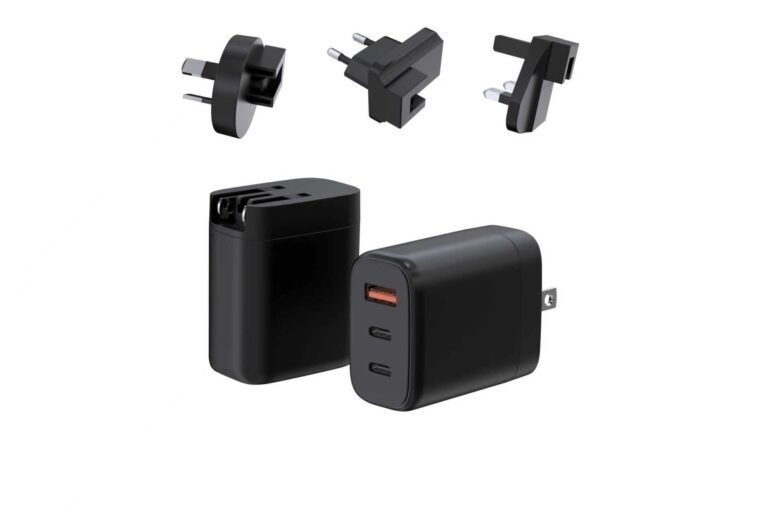
A multi-port GaN charger with PD + PPS covers a Xiaomi phone plus everything else in the household: one port at 30W for the phone's universal speed, another at 20W for an iPhone, and a third for earbuds. The WEG-33W-1A and 35W GaN/PD charger sit exactly in the tier Xiaomi users need, with foldable plugs and the protocol support that makes the fallback work at its best.
Keep the original Xiaomi brick only if the proprietary peak matters daily. For most users, one certified multi-port charger replaces it for everything except the fastest top-up.
Practical charger picks for Xiaomi users
| User type | Recommended charger |
|---|---|
| Phone-only, budget | 30W PD + PPS single-port |
| Phone + earbuds | 33–35W dual-port PD + PPS |
| Phone + tablet | 45–65W multi-port |
| Phone + laptop | 65–100W multi-port |
The tier is chosen by the simultaneous load, and the protocol requirement is always the same: PD with PPS for the best universal speed on Xiaomi and other Android brands.
Sourcing guidance for Xiaomi-compatible lines
For OEM and private-label teams, the sourcing rule is to verify protocol behavior on real Xiaomi models rather than trusting a spec sheet. A charger that prints PD + PPS may negotiate differently on different Xiaomi generations, so build a small device test matrix before committing volume. Certification for the target markets (CE, FCC, RoHS and model-dependent marks) is the baseline; compatibility is the differentiator.
How to test charging speed on a Xiaomi phone
The test is the same as for any brand: use a USB-C power meter, a consistent battery level below 50%, the same cable, and a fixed ambient. Record the negotiated wattage and the first-30-minute charge gain. Compare universal chargers against each other with the proprietary brick as the reference ceiling — the gap between the two numbers is the honest compatibility story.
Cable requirements for Xiaomi fast charging
Proprietary speeds require the Xiaomi-rated cable; a standard USB-C cable drops the session to PD speeds even with the original brick. For universal charging, any quality USB-C-to-C cable rated for 60W+ works. This is the least understood part of the compatibility matrix, and it belongs in every listing that mentions Xiaomi fast charging.
Charging Xiaomi devices beyond phones
Xiaomi's ecosystem — power banks, earbuds, watches, tablets and even scooters — mostly charges over USB-C, so the universal matrix extends beyond phones. Tablets and power banks accept PD at their rated speeds, earbuds trickle-charge on any port, and the proprietary peak applies mainly to phones. One certified multi-port charger therefore covers a Xiaomi household with the same PD + PPS story.
Beyond phones, Xiaomi's ecosystem reveals the value of the universal layer: power banks, earbuds cases and tablets accept USB-C PD at their rated speeds, so one certified multi-port charger serves the whole household. The proprietary peak matters mainly for the phone itself. This split is exactly why USB-C standardization keeps winning: the connector and negotiation language are shared, and only the speed story differs per brand. Sellers who explain the split position their chargers as the universal base layer every Xiaomi household still needs.
Common compatibility problems and fixes
- "Fast charging" missing on a universal charger: the phone is negotiating PD fallback — check the meter, not the lock-screen indicator.
- Slow charging with the original brick: the cable is usually the culprit — use the Xiaomi-rated cable.
- No charging at all: the cable is damaged or the charger is uncertified — replace both.
- Two brands, one charger: PD + PPS covers the widest set; proprietary peaks require each brand's own brick.
Two compatibility details deserve extra attention in listings. First, the lock-screen indicator is not evidence: a Xiaomi phone may show "fast charging" at 10W or at 27W depending on the profile, so content that quotes the indicator without a meter number is guesswork. Second, UFCS support is arriving on newer Xiaomi devices, which means a UFCS-capable charger can negotiate better than plain PD on those models. For sellers, the honest listing includes the tested wattage per model and the date of the test — buyers in this category compare meters, not slogans.
Building a Xiaomi-friendly charger lineup
For sellers, a Xiaomi-friendly lineup needs one clear message: "charges Xiaomi phones at PD fast-charge speeds; proprietary Turbo Charging requires the Xiaomi brick." Publish the tested device list and update it per generation, because Xiaomi models change frequently. The brand that documents compatibility honestly earns the repeat buyer in a market full of vague claims.
FAQ
Does a Xiaomi phone support PD charging?
Yes — Xiaomi phones include USB PD as the universal fallback, typically delivering 18–27W depending on the model. Proprietary Turbo Charging speeds require the Xiaomi-certified brick and cable.
Can I use a GaN charger with a Xiaomi phone?
Yes, any certified USB-C PD charger works, and a PD + PPS GaN charger delivers the best universal speed. The proprietary peak is only available with the matching Xiaomi charger.
Why is my Xiaomi phone charging slowly with a universal charger?
Because the universal fallback is slower than the proprietary peak by design. Check the actual wattage with a meter; if it matches the phone's PD profile, the charger is working correctly.
Do I need a special cable for Xiaomi fast charging?
For proprietary Turbo Charging speeds, yes — use the Xiaomi-rated cable. For universal PD speeds, any quality USB-C-to-C cable rated for 60W+ works.
Building a Xiaomi-compatible charger line? Send your target models and volume to our team through the contact page — we can verify PD/PPS behavior on real devices and match chargers to your markets.
This article is part of Android & Multi-Device Charging, the guide that covers this topic in decision order.