OnePlus and realme charge fastest with their own SuperVOOC/VOOC systems, while Nothing phones use standard USB PD. For mixed-brand households, the practical question is simple: what does a universal charger deliver on each, and when is the proprietary brick worth keeping?
How SuperVOOC fast charging works
SuperVOOC is OPPO's proprietary charging system — high current, low voltage, with adapter and phone communicating in real time. OPPO's SuperVOOC technology powers OnePlus and realme devices at their advertised speeds; the system only works with SuperVOOC-compatible chargers and cables.
SuperVOOC is a closed handshake between a compatible charger, cable and phone: the phone and charger exchange encrypted identifiers and negotiate a high-current, low-voltage profile that universal PD cannot replicate. That is why a OnePlus flagship can show 100W with its OEM brick and 20W with a PD charger — both are real, but only the proprietary pairing reaches the headline number.
Which OnePlus and realme models support PD
Most recent OnePlus and realme phones support standard USB PD as a fallback, and many also support PPS. That means a universal PD charger works — but at lower speeds than the proprietary brick, typically 18–27W instead of 65–100W+.
PD support varies by market and generation: some models negotiate full PD fast charging, others cap at basic profiles, and firmware updates occasionally change behavior. The reliable approach is a per-model compatibility test with a power meter rather than a blanket claim. For listings, phrase it as "PD compatible (speeds vary by model)" and link a maintained table.
Charging speeds with universal PD chargers
With a PD + PPS charger, a OnePlus or realme phone fast-charges at universal speeds, which is fine for daily use but noticeably slower than SuperVOOC's headline numbers. Nothing phones charge at their rated PD speeds, so a universal charger is their correct full-speed option.
The universal fallback is better than most buyers expect: recent OnePlus and realme phones typically fast charge at 18–27W over PD/PPS, which is a reasonable daily speed even if it is far from the proprietary peak. Nothing phones, by contrast, use PD as their primary standard, so a universal charger is their full-speed option. The honest label for a universal brick is "charges OnePlus/realme at PD speeds" — not "fast charging" without qualification.
Choosing a charger for mixed-brand households
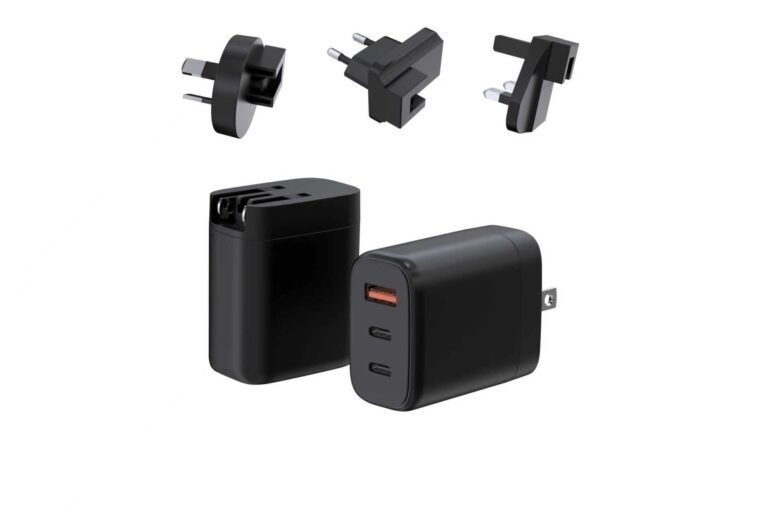
For a household with OnePlus, iPhone and Nothing devices, a 65W PD + PPS multi-port charger covers everyone: iPhone and Nothing at full speed, OnePlus/realme at universal fast speeds. Keep the original SuperVOOC brick only if the fastest OnePlus charging matters daily.
Wattage tiers that make sense for these users
| Device mix | Recommended charger |
|---|---|
| Nothing phone only | 30W PD + PPS |
| OnePlus/realme phone only | Original SuperVOOC, or 30W PD |
| OnePlus + iPhone | 65W multi-port PD + PPS |
| Everything + laptop | 100W multi-port |
Wattage tiers for these users follow the protocol, not the brand: Nothing owners buy 30W PD, OnePlus and realme owners buy either the OEM SuperVOOC brick (for peak speed) or a 30–65W PD/PPS universal brick (for daily use), and mixed households buy 65–100W multi-port units. The 65W tier is the sweet spot because it covers two phones plus accessories with headroom, and it future-proofs against a laptop joining the setup. Sellers should label tiers by what they charge at full speed versus fallback speed, because the OnePlus buyer's disappointment is almost always an expectation mismatch, not a technical failure. A simple line — "SuperVOOC speeds require the original cable and charger" — prevents most of it.
What to verify before sourcing compatible SKUs
Verify PD and PPS support against the specific phone models you target, and test real charging speeds with a power meter. A charger that lists "SuperVOOC compatible" without certification is a red flag; universal PD/PPS support is the honest, verifiable claim.
Before sourcing a universal charger for these brands, verify three things: the PD/PPS profile behavior on the actual models, the cable's contribution to speed, and the certification evidence for your markets. A compatibility matrix built from tests is the deliverable that separates serious SKUs from speculative ones. Ship the matrix with the product documentation; it pre-empts the most common support questions.
SuperVOOC explained in plain terms
SuperVOOC is a proprietary handshake: the charger and phone agree on a high-current profile that no universal charger replicates. That is why the 100W+ numbers only appear with the brand's own brick — the protocol is closed, unlike USB PD, which is why multi-port universal chargers are the practical household answer.
PD fallback speeds on these brands
As a guide, universal PD charging on OnePlus and realme typically lands in the 18–27W range depending on model and PPS support — enough to fast charge, not enough to match the proprietary brick's peak.
The fallback speeds feel slow only in comparison with the proprietary peak: 18–27W still fast-charges a modern phone in practical terms. The disappointment comes from unmet expectations, so the labeling job is expectation-setting. A listing that says "PD fast charging up to 27W; SuperVOOC speeds require the original charger" converts honestly and reduces returns.
Cable requirements for VOOC
SuperVOOC speeds require SuperVOOC-rated cables with the right current capability; using a regular USB-C cable drops the session to PD speeds. For universal charging, a quality USB-C-to-C cable rated for 60W+ is sufficient.
VOOC cables carry higher current and include identification circuitry, so substituting a standard USB-C cable drops the session to PD speeds even with the OEM brick. This is the least understood part of VOOC: users replace a lost cable and wonder why 100W became 20W. Bundles and listings should state that SuperVOOC speeds require the matching cable.
Charging multiple brands from one brick
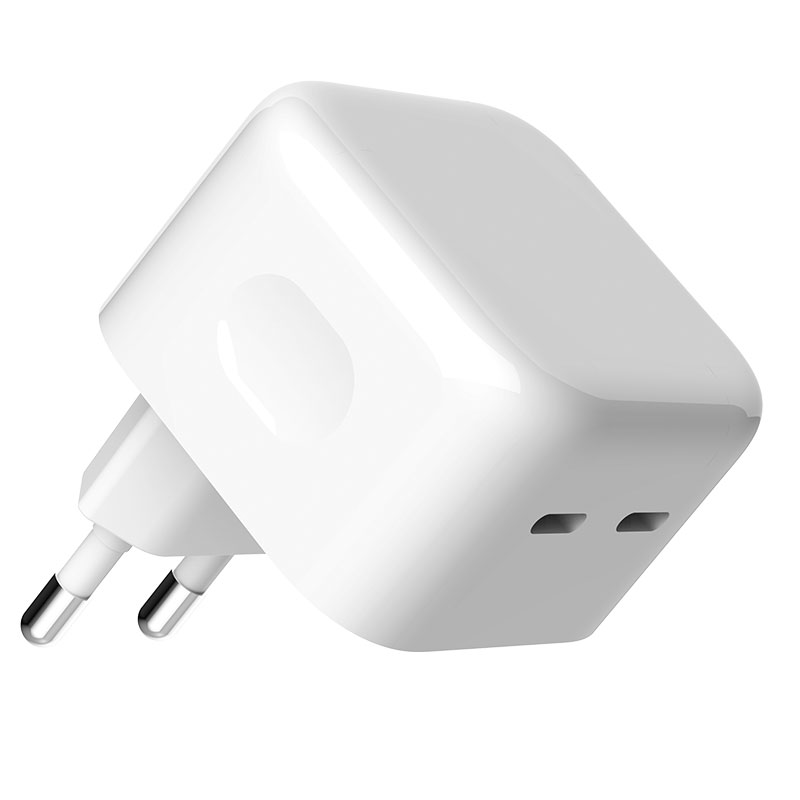
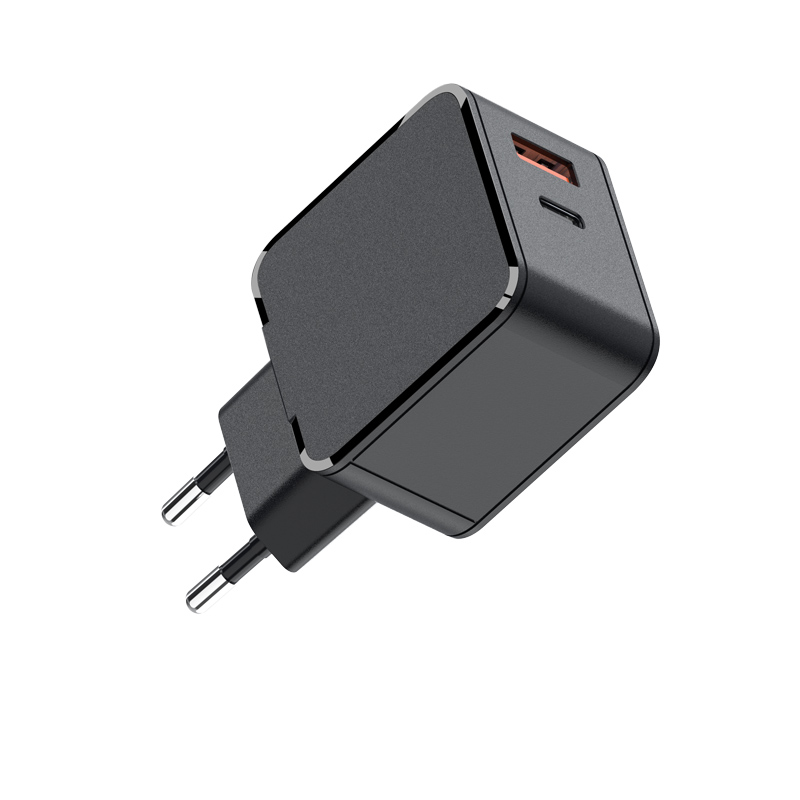
One brick can serve the whole household if it supports PD + PPS across ports: iPhone, Pixel, Nothing and Samsung at fast speeds, OnePlus/realme at universal speeds. The WET-65-CA 65W adapter is the practical family choice.
For mixed households, one PD + PPS multi-port brick is the practical answer: it fast-charges iPhone, Pixel, Samsung and Nothing, and charges OnePlus/realme at universal PD speeds. Keep the OEM SuperVOOC brick for the one user who needs the fastest OnePlus top-ups. This two-brick strategy covers every brand in the house without a drawer of chargers.
The multi-brand brick's value is the protocol set, not the wattage: PD 3.0 + PPS covers the widest ecosystem, and adding UFCS extends it to Chinese-brand devices. For a mixed household, that one brick plus the OEM SuperVOOC brick covers every phone in the house. Publish the protocol table and the tested device list; buyers in mixed households are specifically searching for it.
Product guidance for mixed users
For content and listings, be precise: "charges OnePlus and realme at universal PD speeds; SuperVOOC speeds require the original charger." That honest phrasing prevents the biggest source of returns — buyers expecting proprietary speeds from a universal charger. Our multi-port GaN charger lineup is built around this kind of wide compatibility.
FAQ
Can a OnePlus phone charge with a PD charger?
Yes — recent OnePlus and realme models support USB PD as a fallback, usually at 18–27W instead of SuperVOOC's peak.
Is SuperVOOC the same as USB PD?
No. SuperVOOC is OPPO's proprietary high-current system; USB PD is the universal standard. They coexist in the same charger only when the charger is dual-protocol.
What is the best charger for a mixed-brand household?
A 65W PD + PPS multi-port charger covers iPhone, Pixel, Nothing and Samsung at full speed and OnePlus/realme at universal fast speeds.
Do I need a special cable for SuperVOOC?
For SuperVOOC speeds, yes — a SuperVOOC-rated cable. For universal PD charging, a quality USB-C-to-C cable rated for 60W+ works.
Building chargers for mixed-brand users? Send your target device list to our team through the contact page — we can spec PD + PPS multi-port chargers that cover the widest compatibility.
This article is part of Android & Multi-Device Charging, the guide that covers this topic in decision order.