Samsung's fast charging looks simple on paper but varies by series: flagships negotiate 25W or 45W over PPS, while mid-range A-series models cap lower. This reference maps wattage needs across the Galaxy S, Z and A lines so buyers and sellers stop guessing.
How Samsung fast charging works today
Modern Galaxy phones use USB PD with PPS — the Programmable Power Supply extension that lets the charger adjust voltage in fine steps, explained in PD vs PPS comparisons. Samsung's "Super Fast Charging" requires PPS support; without it, a charger falls back to slower standard PD speeds.
Samsung's battery management picks the charging profile dynamically: it starts near the phone's supported maximum, tapers as the battery fills, and adjusts for temperature. The charger's job is to offer the right PPS profile and let the phone drive. This is why two chargers with the same wattage can behave differently on the same Galaxy — the PPS voltage range and current capability decide what the phone can request.
Wattage needs across Galaxy S, Z and A series
| Galaxy series | Typical fast-charge ceiling | Practical charger |
|---|---|---|
| S series flagships | 25W–45W | 25W or 45W PPS |
| Z Fold / Flip | 25W | 25W PPS |
| A series (mid-range) | 15W–25W | 18–25W |
Newer S flagships support 45W on some models, while most Z and A models peak at 25W. The charger tier should match the model line you serve.
The series split is a useful shorthand, but check the model generation: an older S flagship may cap at 25W while a newer mid-range A model supports 45W. The wattage table in your content should be built from current model specs and dated, because Samsung adjusts charging profiles across generations. Buyers searching for their exact model will trust a table that matches their phone over a generic series claim.
PD and PPS requirements for peak speed
Peak Galaxy speed requires PD + PPS. A PPS-compatible charger negotiates the voltage steps Samsung's battery management requests; a PD-only charger delivers basic fast charging but not Samsung's advertised maximum.
The PPS requirement is simple to verify: the charger's spec must state a PPS profile whose voltage range and current cover the phone's fast-charge window, commonly around 3.3–11V. Without that profile, the phone falls back to fixed-voltage PD, typically capping around 15–18W. Brands selling to Samsung users should print the PPS profile on the box, not just "PPS support," because the range is what determines real compatibility.
Charging Galaxy phones on generic chargers
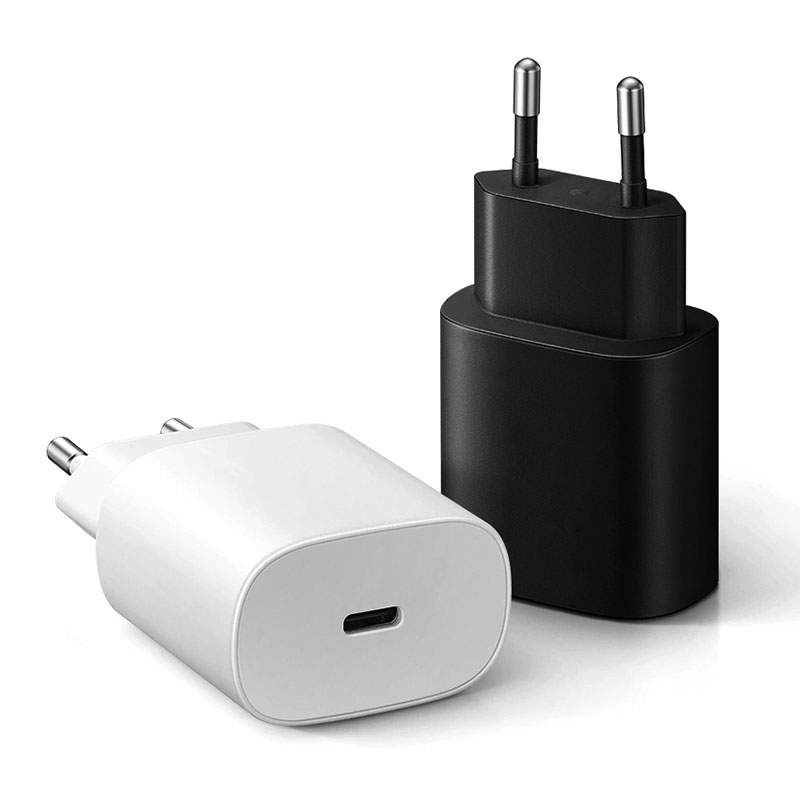
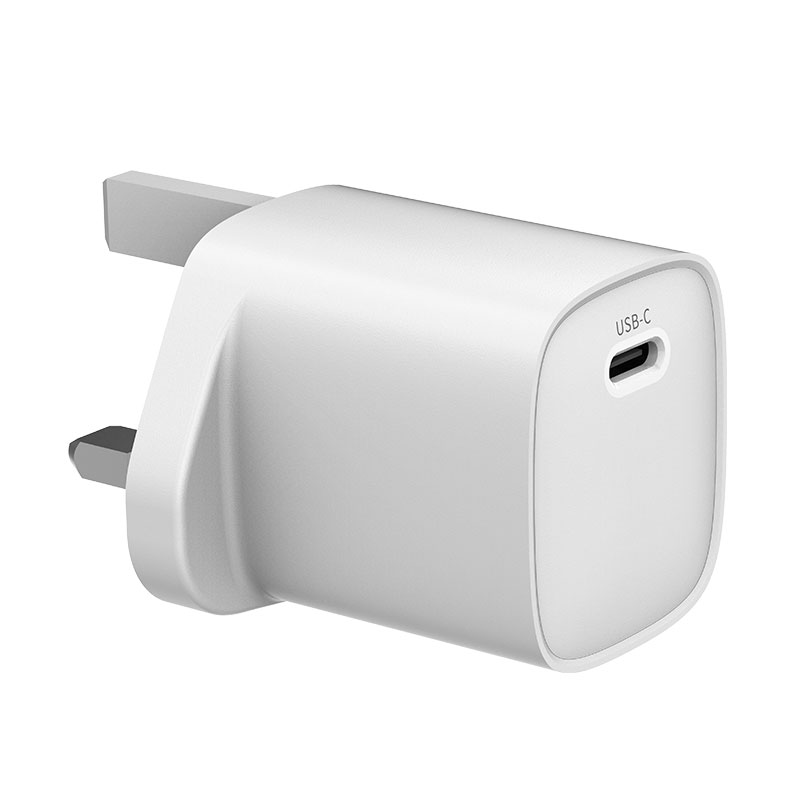
Generic PD chargers work with Galaxy phones but may charge slower than Samsung's rated speed if they lack PPS. For full speed, check the charger spec for "PPS" or "Programmable Power Supply" — a 25W GaN charger for Samsung covers the majority of the lineup.
Generic chargers also differ in PPS quality: two chargers with the same 25W rating can negotiate differently because of their PPS voltage/current windows and firmware. Testing the actual negotiation with a Galaxy and a power meter is the only reliable comparison. This is why compatibility lists based on testing outperform spec-sheet claims in retail listings.
Using one charger for Samsung plus other devices
A 45W PPS charger covers a Galaxy flagship plus an iPhone at fast speeds, and 65W multi-port models add a tablet or laptop. PPS is the key: it keeps the Samsung side fast while PD handles everything else.
A reference table for listings and guides
Use the table above in listings and guides, and add the honest note that exact speed depends on model, cable and battery temperature. Samsung's own specs are the ceiling; third-party chargers reach it only with the right protocol and cable.
A reference table earns its place only if it is structured for scanning: group by series, list the supported wattage and protocol per model, and add a column for cable requirements. Add a last-updated date and link the manufacturer's spec page, because Samsung updates charging behavior across generations and regional variants. When the table appears in a listing, pair it with a buying rule ("match the charger tier to the phone's supported wattage; PPS required for Super Fast Charging") so the buyer leaves with a decision, not just data. A maintained table is a trust asset that reduces returns and support questions, while a stale one quietly converts into negative reviews.
Galaxy fast charging models table
As a practical guide: Galaxy S24/S25-series flagships support 25W and some 45W; Z Fold and Flip peak at 25W; A-series models range from 15W to 25W depending on the generation. Verify each model against current specs before publishing.
Keep the model table in a format buyers can scan: model name, connector, supported wattage, and whether PPS is required. Add the caveat that regional variants can differ, and link the manufacturer's spec page for verification. A maintained table is a trust asset; an outdated one is a return generator.
Charging speeds with 25W vs 45W
On models that accept 45W, the 0–50% window is measurably shorter than with 25W; on models capped at 25W, a 45W charger delivers the same 25W. Sizing one tier above the model's ceiling adds headroom without changing its speed.
Using third-party chargers with Galaxy
Third-party chargers are safe with Galaxy phones as long as they negotiate correctly over USB PD/PPS. Avoid uncertified "fast charge" bricks — genuine USB-C PD certification and safety marks are the baseline.
Third-party chargers are safe and increasingly capable, but the compatibility result depends on the PPS profile and the cable. A certified PD + PPS charger from a reputable brand fast-charges a Galaxy exactly like the OEM brick; an uncertified "fast charge" charger may negotiate poorly or not at all. When testing, use the phone's charging indicator and a power meter — the indicator alone can overstate what the meter shows.
Galaxy wireless charging options
Galaxy phones also support Qi and newer Qi2 wireless charging, with magnetic cases enabling MagSafe-style alignment. Wireless is slower than wired PPS but convenient for desks and nightstands.
Galaxy wireless charging adds a wrinkle: Samsung's fast wireless charging historically used a proprietary protocol that third-party pads may not fully support, and Qi2-era pads change the picture again. If a listing claims Galaxy fast wireless charging, verify it against the actual model and pad. Wired PPS remains the predictable speed story; wireless is convenience with more variables.
Choosing chargers for a Galaxy lineup
For a Galaxy-focused lineup, stock 25W PPS as the volume SKU, 45W PPS for flagship users, and a 65W multi-port for households. The WEG-33W-1A and 25W Samsung-specific model cover the core tiers.
A Galaxy-focused lineup has a clear structure: 25W PPS as the volume SKU, 45W PPS as the flagship tier, and a 65W multi-port for households. Because Samsung dominates many export markets, PPS support across the lineup is a compatibility floor, not a differentiator — the differentiators are port layout, size and price. Verify each SKU's PPS range in testing and publish it.
FAQ
What wattage does a Samsung Galaxy S25 need?
Flagship S models fast charge at 25W, with some supporting 45W. A 25W PPS charger covers most; 45W adds headroom for compatible models.
Does Samsung require PPS for fast charging?
Yes — Samsung's "Super Fast Charging" needs a PPS-capable charger. Without PPS, the phone falls back to slower standard PD speeds.
Can I use an iPhone charger with a Galaxy phone?
Yes, at basic USB PD speeds. For Samsung's advertised maximum, you need a PD + PPS charger.
What is the best charger for a Galaxy Z Fold?
A 25W PPS charger matches the Z Fold's fast-charge ceiling; a 45W PPS charger adds headroom for other devices.
Building a Galaxy-compatible charger lineup? Send your target models and volume to our team through the contact page — we can spec PPS support across your SKUs and verify compatibility.
This article is part of Android & Multi-Device Charging, the guide that covers this topic in decision order.