Huawei phones support a family of protocols — SCP for modern SuperCharge, FCP for older models, and USB PD for universal compatibility. Understanding which one applies to your phone is the key to choosing a charger that actually fast-charges instead of quietly trickling.
Huawei's charging protocol family: SCP and FCP
SCP (SuperCharge Protocol) is Huawei's modern low-voltage, high-current system; FCP is the older high-voltage standard that preceded it. Huawei's certification ecosystem treats SCP as the main line, with FCP support carried for older devices. Fast charging on a Huawei phone usually means SCP.
SCP is the modern system that Huawei's SuperCharge branding uses, delivering higher current at lower voltage for cooler, faster charging; FCP is the older high-voltage standard that topped out around 18W. Huawei chargers and certified third-party products support both, falling back gracefully for older devices. Understanding the family matters because "SuperCharge" on a listing is a trademark claim — the protocol behind it is SCP.
What Huawei devices accept from PD chargers
Many Huawei phones support USB PD as a universal fallback, which means a standard PD charger works — usually at 18W-class speeds rather than SCP's higher rates. The USB PD specification governs this fallback; the exact speed depends on the model.
Huawei's PD fallback is model-dependent: some phones negotiate full PD fast charging, others accept only basic 5V/3A or 9V/2A profiles, and the result varies by generation and region. The practical takeaway is to test the specific model before promising PD speeds. A universal PD charger is safe and usually fast enough for daily use, but it should be sold as "compatible" rather than "SuperCharge."
PD fallback behavior has regional variance too: devices sold in different markets can ship with different charging firmware, so a PD charger that fast-charges a Huawei in one region may not in another. Test the actual SKUs you intend to serve. This regional variance is exactly why certification labs and compatibility matrices exist — and why blanket compatibility claims are risky.
Charging speeds with universal adapters
With a universal PD charger, a Huawei phone fast-charges at the negotiated PD rate, which is fine for daily use but below the SCP brick's peak. If the phone supports PPS, a PD + PPS charger can sometimes negotiate better than plain PD.
Universal adapters deliver a predictable but unexciting result on Huawei phones: safe, moderate-speed charging that fits daily routines but not the brand's headline numbers. For most users this is fine, because Huawei's proprietary peak is rarely needed at night. The honest product story is "compatible and safe at PD speeds," not "fast charging" without qualification.
Cable requirements for SuperCharge
SCP fast charging requires a cable that carries the high current SCP uses; Huawei's own SuperCharge cables are rated for it. A standard USB-C cable may work at PD speeds but cap SCP, so verify the cable rating for the speed you expect.
SuperCharge speed requires the high-current cable that ships with Huawei devices; a standard USB-C cable may cap the session at PD levels even with a certified SCP charger. For third-party products, the cable must be rated and tested for the SCP current. This is the most common reason a "SuperCharge" charger disappoints — the charger is fine, the cable is not.
Building chargers for Huawei users
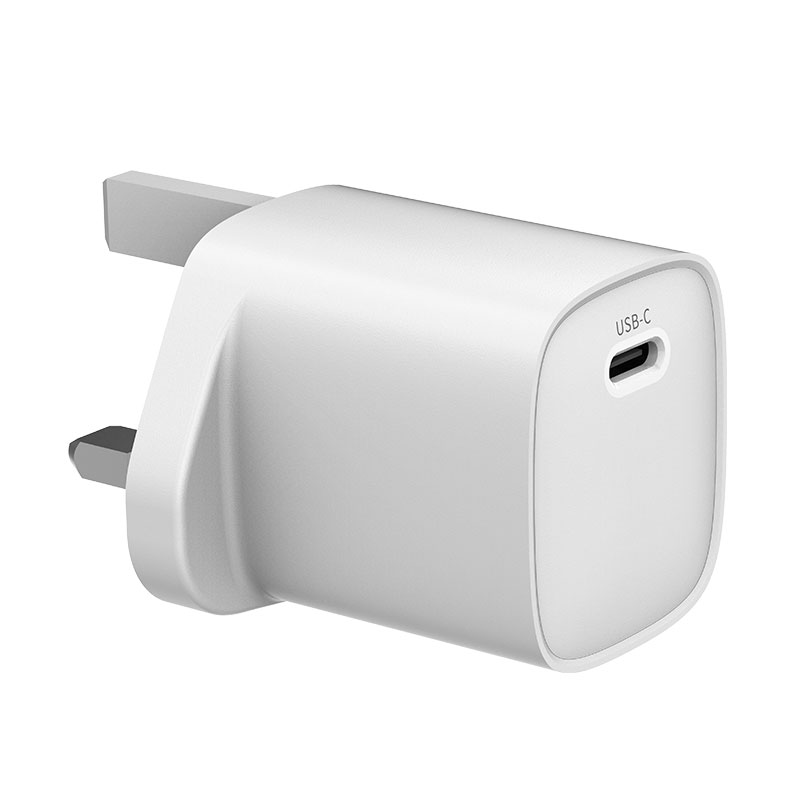
For Huawei-focused products, spec PD + PPS for universal coverage and, where feasible, SCP support for the full SuperCharge experience. Certification matters: claiming SCP support without SuperCharge certification risks compatibility and compliance issues.
A Huawei-focused charger program should decide its position clearly: universal PD/PPS coverage as the broad-market play, or SCP certification as the brand-specific play. The two have different cost, certification and testing burdens. Most third-party brands choose universal coverage plus a clearly stated compatibility matrix, leaving the certified SCP segment to Huawei's own ecosystem.
Regional market considerations
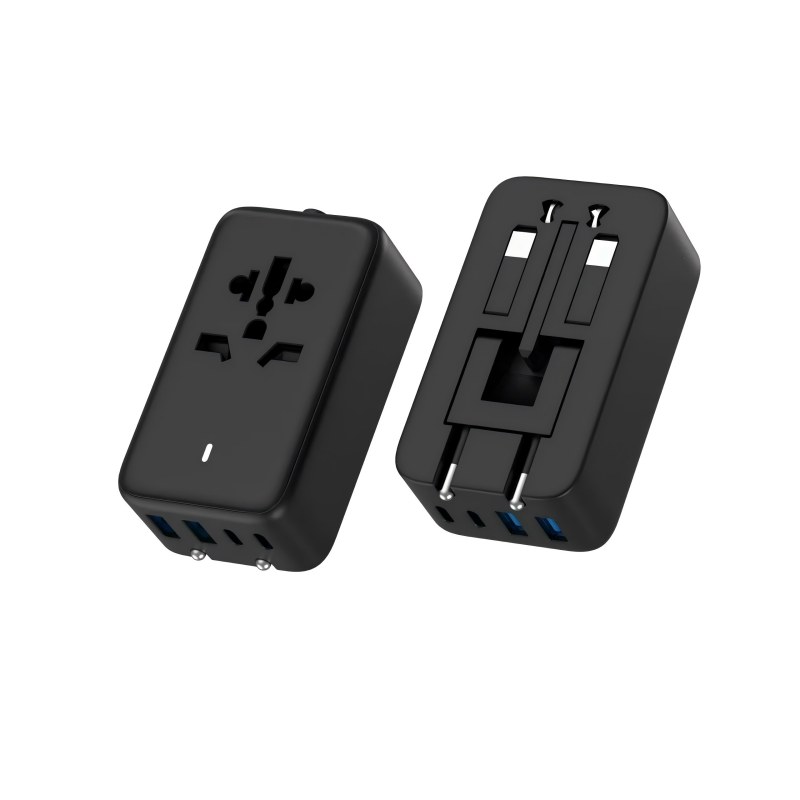
Huawei's market mix skews toward Asia and Europe, so plug variants and regional certifications (CE for Europe, CCC for China, etc.) should drive SKU planning. Multi-region travel chargers with EU/UK/US/AUS plugs cover the broadest base.
Huawei's market mix shapes SKU planning: Europe and Asia dominate, so CE and regional certifications matter more than US-specific programs in some cases. Multi-region plug kits serve the traveler segment, while single-plug SKUs serve each domestic market. Align the certification plan with the actual markets before tooling, because retrofitting certification later is expensive.
How to verify a charger's SCP support
Ask for the SCP test report or certification evidence, and test with a real Huawei phone and a power meter. A charger that lists SCP in the specs should show the higher negotiated current in testing; vague claims without data are not support.
Verification is straightforward: ask for the SCP certification or test report, then test with a real Huawei phone and a power meter. A certified charger shows the SCP-negotiated current in testing; a charger that merely prints SCP on the box often falls back to PD. For resellers, keeping the certificate on file is also the compliance evidence marketplace audits request.
Charging Huawei tablets and laptops
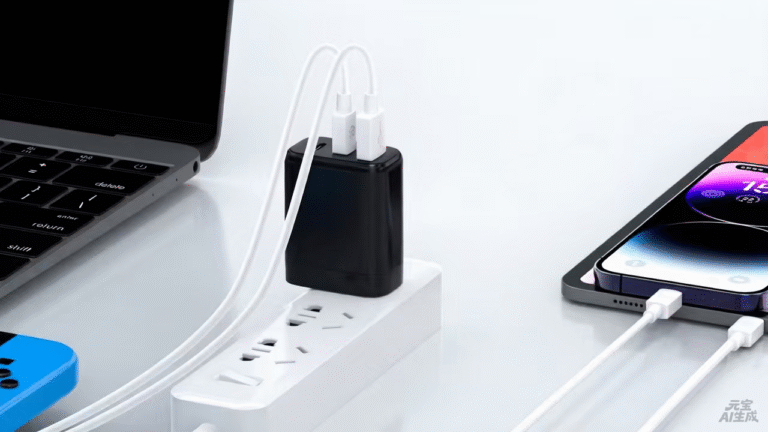
Huawei tablets and laptops accept USB PD, so a 45–65W PD charger covers them at their rated speeds. The GaN 40W travel charger and 65W-class adapters cover the tablet and phone combo.
For Huawei laptops specifically, check the negotiated profile rather than assuming the charger's full wattage is used: many Huawei notebooks negotiate 45–65W, and a multi-port charger that delivers that on one port covers the laptop plus a phone on another. The practical travel setup is a 65W multi-port brick, one 100W-rated USB-C cable for the laptop, and a short cable for the phone — the same system that serves most USB-C devices regardless of brand.
Battery health and charging habits for Huawei
Like all modern phones, Huawei devices manage their own charging curve and temperature. Use a certified charger, keep the phone out of extreme heat, and avoid charging through thick cases during heavy sessions — the habits that protect any battery.
Choosing cables for Huawei fast charging
For SCP speeds, use a SuperCharge-rated cable; for universal PD, any quality USB-C-to-C cable rated for 60W+ works. USB-C cable ratings are the same across ecosystems — the cable must carry the current the session negotiates.
Cable selection for Huawei fast charging follows a two-tier rule: for SCP speeds, use the SuperCharge-rated cable that ships with the device or a certified equivalent, and for PD speeds, any quality USB-C-to-C cable rated for 60W+ works. The two-tier rule matters because users often keep one cable for everything and then wonder why SCP speeds vanished. Retail listings should state the cable requirement next to the charging claim, and bundles should ship the right cable with the charger. When sourcing bulk cables, request the current-carrying test report and verify the connector quality, because the cable is the cheapest component in the chain and the most common point of failure in fast charging.
Huawei compatibility in multi-brand households
In a mixed household, a 65W PD + PPS multi-port charger covers Huawei at universal fast speeds plus iPhone, Pixel and Samsung at full speed. Keep the original Huawei SuperCharge brick if the fastest Huawei charging matters daily; otherwise one multi-port GaN charger replaces several bricks.
FAQ
Can a Huawei phone use a PD charger?
Yes — most Huawei phones accept USB PD as a universal fallback, usually at 18W-class speeds rather than the SCP brick's peak.
What is the difference between SCP and FCP?
SCP is Huawei's modern low-voltage, high-current SuperCharge protocol; FCP is the older high-voltage standard for earlier models. Modern fast charging means SCP.
What is the best charger for a Huawei phone?
The original SuperCharge brick for full speed, or a PD + PPS charger for universal coverage. Verify SCP support claims before relying on third-party "SuperCharge" chargers.
Do I need a special cable for Huawei fast charging?
For SCP speeds, use a SuperCharge-rated cable; for PD speeds, any quality USB-C cable rated for 60W+ works.
Building chargers for Huawei users or mixed households? Send your target markets to our team through the contact page — we can spec PD + PPS multi-port chargers and advise on SCP certification.
This article is part of Android & Multi-Device Charging, the guide that covers this topic in decision order.