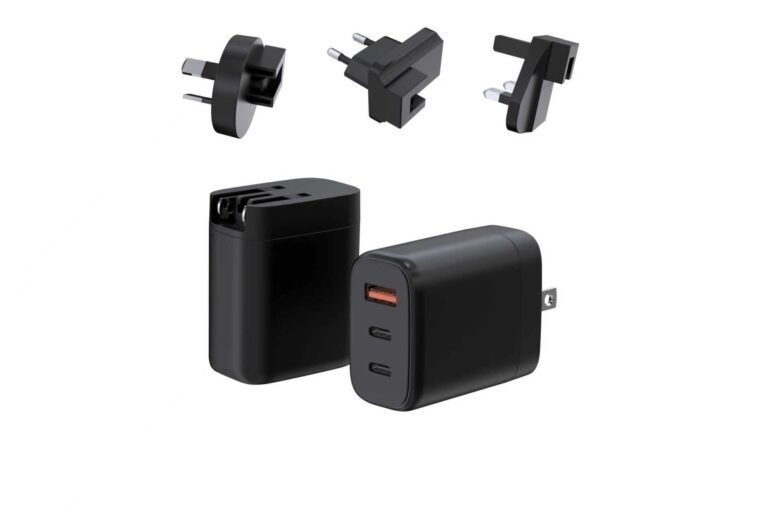
The fastest charger for a Samsung phone is not necessarily the highest-wattage one — it is the one whose PPS range covers the phone’s window. Samsung’s fast charging relies on PPS, the programmable part of USB PD that lets the charger adjust voltage continuously, and a charger that only advertises fixed PD steps charges a Samsung phone at standard speed no matter how many watts it prints. This guide explains why Samsung phones ask for PPS, what 25W versus 45W changes in practice, how to choose a compatible third-party charger, and what to check before stocking a Samsung charger line.
Why Samsung Phones Ask for PPS
Modern Samsung phones support fast charging through PPS — Programmable Power Supply — a feature of USB PD that allows the charger to adjust the voltage continuously within a range. Instead of negotiating a fixed step like 9V or 12V, the phone and charger agree on a window, and the charger then tunes the voltage to match the battery’s need during the charge.
The consequence for buyers is specific: a charger must advertise a PPS range that includes the phone’s window to deliver Samsung’s fast charging. A charger that lists PD but no PPS range, or a PPS range that does not cover the phone, charges the phone at standard PD speed. The PPS range on the specification is the compatibility field that matters for Samsung — more than the headline wattage.
The same logic applies across the brand: some models fast-charge over PPS, others use standard PD, and the exact behavior is confirmed against the official specification for the model. The honest claim is “PPS supported within this range,” not “compatible with all Samsung phones.”
The Samsung ecosystem extends beyond the phone. The same charger often serves a Galaxy Watch and Galaxy Buds, which charge at their own rates and share the brick without drama — but the PPS story belongs to the phone, and the watch and buds do not need it. A buyer planning a Samsung-compatible line should treat the phone as the specification driver and the wearables as the easy part of the equation.
25W vs 45W: What Changes in Practice
The practical difference between a 25W and a 45W charger depends on the phone’s own ceiling:
| Charger tier | What it delivers | When it matters |
|---|---|---|
| 25W | The fast-charging rate many Samsung models support | Daily charging for most phones |
| 45W | A faster rate for models that support it | Supported flagships with the right PPS window |
The pattern is the same as every fast-charging question: the phone’s ceiling decides the speed. A model that supports 25W fast charging does not charge faster from a 45W charger. A model that supports 45W needs a charger whose PPS window covers its request, and often a cable rated for the higher current. The 45W tier is worth the upgrade only for the phones that can use it.
Expert view — WECENT project engineering team: The Samsung compatibility question we answer most is “does this charger fast-charge my phone,” and the answer is always in the PPS window. Two chargers with the same wattage can differ completely for Samsung because one covers the window and the other does not. Check the PPS range against the phone’s official spec before ordering — it is a ten-second check that prevents a long support ticket.
Choosing a Compatible Third-Party Charger
For a Samsung phone, the selection steps are:
- Confirm the phone’s spec. Find the official fast-charging rate and the PPS window from the model’s documentation.
- Check the charger’s PPS range. The advertised PPS window must include the phone’s request.
- Match the cable. Higher-current charging needs a cable rated for the current.
- Verify with the real phone. Charge from a defined battery level and measure the result.
The verification step matters because the PPS window is a specification and the negotiation is the behavior. A charger that lists a PPS range but negotiates incorrectly shows the problem only in the measured result — which is why the real-device test belongs in the buying process.
The fallback behavior is also part of the compatibility picture. A charger that does not cover the phone’s PPS window should still charge the phone at standard PD speed — safely and predictably — rather than refusing to charge. The distinction between “fast” and “works” matters for the listing and the return rate: a charger that fast-charges the target phones and safely serves the rest of the shelf is a better SKU than one that only works at full speed on a narrow list.
A USB-C power meter makes the verification concrete. Connect the meter between the charger and the phone, and it shows the negotiated voltage and current in real time; the phone fast-charging over PPS shows a dynamically adjusting voltage, while a fallback to standard PD shows a fixed step. The meter turns the compatibility question from a claim into a reading, and it is the tool a buyer should own before stocking a Samsung line.
The Wholesale Opportunity in Samsung Lines
For a channel or brand, the Samsung-compatible line is a volume opportunity with a clear differentiation point:
- The compatibility story sells. A charger that explicitly covers Samsung’s PPS windows serves a large installed base.
- The tier ladder is simple. A 25W tier for the mainstream and a 45W tier for the supported flagships covers most buyers.
- The listing matters. The PPS range and the tested device list belong on the listing; they are the fields that reduce “doesn’t fast-charge” returns.
The differentiation is documentation-backed: publish the PPS ranges, name the tested models and verify per batch. A line that states its compatibility honestly earns the repeat purchase that a vague “supports fast charging” line loses.
The stock plan follows the tier ladder. The 25W tier carries the volume and turns quickly; the 45W tier serves the supported flagships and moves slower, so its reorder trigger should follow sell-through rather than a calendar. Keeping the two tiers in the plan with different stock profiles prevents both the empty shelf on the volume tier and the dead stock on the premium tier.
Specs to Check Before You Stock
- The PPS range advertised by the charger, against the phones in your target market.
- The wattage tier and whether the models you stock support it.
- The cable rating included with the charger, if a cable ships in the box.
- The certificate naming the exact model and plug configuration for each market.
- The tested device list published with the listing.
- The MOQ, sample terms and lead time for the configurations.
For a Samsung-focused line, the GaN Charger Category lists models with their protocol support, and the WECENT account team can confirm the PPS ranges and compatibility for your target phones. The WECENT FAQ hub covers the PD vs PPS question buyers raise during selection.
The checklist closes where it started: the phone’s official spec defines the ceiling, the charger’s PPS window defines the compatibility, and the measured result defines the truth. Buyers who keep those three aligned stock a Samsung line that works the first time.
The final check is the certificate and the plug set for each market, because a Samsung-compatible line still ships region by region. The PPS story sells the compatibility; the certificate and the plug configuration clear the market — and both belong in the same specification, not in separate conversations.
The same discipline applies to the listing: publish the PPS ranges, the tested models and the certificate information together, so the buyer’s compatibility question is answered before the return question can be asked.
Frequently Asked Questions
Why doesn’t my Samsung phone fast-charge with a PD charger?
Many Samsung phones fast-charge through PPS, the programmable part of USB PD. If the charger’s PPS range does not cover the phone’s window, the phone falls back to standard PD speed.
Is a 45W charger better than 25W for Samsung?
Only for phones that support 45W charging. A model that supports 25W does not charge faster from a 45W charger; the phone’s ceiling decides the speed.
What is PPS?
Programmable Power Supply is a PD feature that lets the charger adjust voltage continuously within a range. Many Samsung and Google phones use PPS for their fastest charging.
Do I need a special cable for 45W Samsung charging?
Use a cable rated for the higher current. An under-rated cable caps the delivered power and prevents the phone from reaching its fast-charging rate.
Can WECENT supply chargers that fast-charge Samsung phones?
WECENT’s GaN platforms support PD and PPS per model. Share your target phone list with the project team to confirm the PPS ranges and compatibility for your line.
How do I reduce Samsung charger returns?
Publish the PPS range and the tested device list on the listing, state the wattage honestly, and verify compatibility per batch. The documentation is the return-prevention.
Sources
- WECENT – GaN Charger Category
- WECENT – FAQ
- WECENT – Quality Control
- WECENT – Contact Us
- USB Implementers Forum – Official Website
- Wireless Power Consortium – Official Website
This article is part of Android & Multi-Device Charging, the guide that covers this topic in decision order.