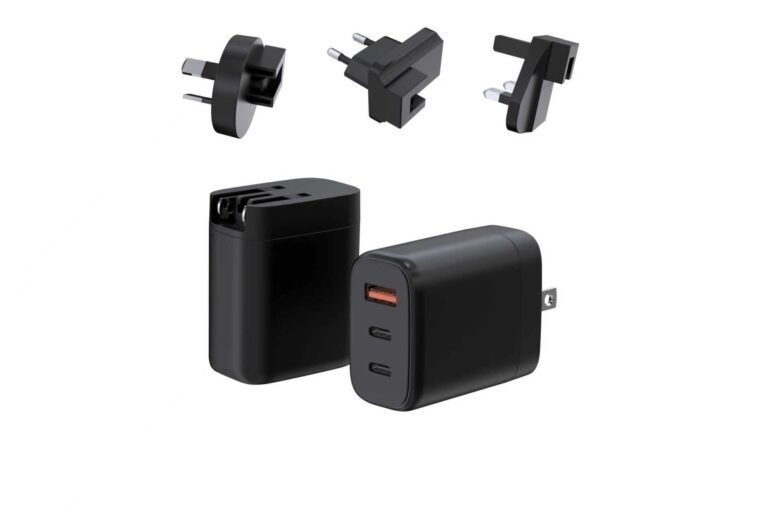
A PPS (Programmable Power Supply) charger intelligently adjusts voltage and current in real time to match a device’s exact power requirements. Instead of switching between fixed voltage steps like standard USB Power Delivery (PD), a PPS charger fine-tunes voltage in 20mV increments and current in 50mA steps through two-way communication with the device—improving efficiency, reducing heat, and extending battery lifespan.
Last updated:
How does a PPS charger work? A PPS charger communicates with the device and adjusts voltage in 20mV increments and current in 50mA steps in real time, instead of switching between fixed 5V/9V/15V/20V levels. This precision reduces waste heat and improves efficiency (up to ~93%) while protecting the battery.
Key Takeaways
- PPS enables real-time voltage/current adjustment (20mV / 50mA steps) instead of fixed 5V/9V/15V/20V levels.
- By providing the exact voltage the battery needs, PPS eliminates internal DC-to-DC conversion, reducing waste heat.
- PPS chargers reach up to ~93% efficiency versus roughly 85–88% for standard PD.
- Both charger and device must support PPS; otherwise the charger falls back to standard PD profiles.
- Wecent integrates PPS into GaN chargers from 20W to 240W for OEM and retail programs.
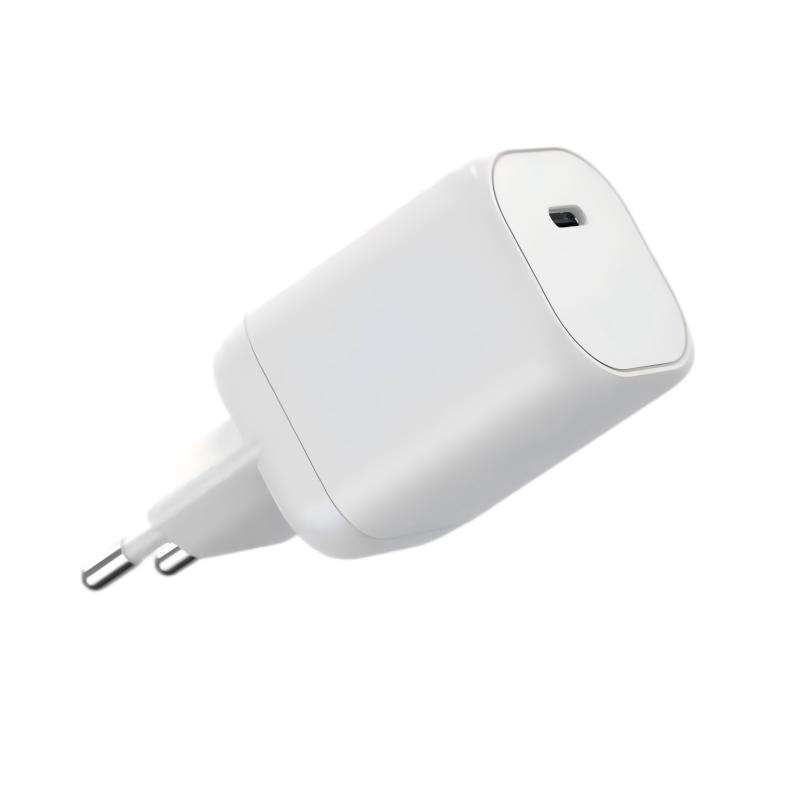
What Is PPS Charging Technology and How Does It Function?
PPS technology enables two-way communication between the charger and the connected device. Unlike standard PD chargers that deliver power in fixed voltage steps (5V, 9V, 15V, 20V), PPS fine-tunes voltage in 20mV increments and current in 50mA steps, providing precise real-time control based on the device’s charging state and temperature.
| Function | PPS Charger | Standard USB PD |
|---|---|---|
| Voltage adjustment | Dynamic, 20mV steps | Fixed (5V/9V/15V/20V) |
| Current control | Dynamic, 50mA increments | Fixed per profile |
| Heat management | Lower, optimized | Higher, less efficient |
| Efficiency | Up to 93% | Around 85–88% |
Why Is PPS More Efficient Than Standard USB PD?
Efficiency comes from precision. Standard PD chargers operate on predefined voltage levels, forcing the device to convert power internally. PPS chargers dynamically adjust voltage and current, significantly lowering power loss and internal heat. With efficiency up to 93%, PPS reduces electrical resistance and heat generation, resulting in cooler charging sessions and longer battery life—particularly for high-capacity lithium batteries in smartphones, tablets, and laptops.
How Does PPS Improve Battery Health and Device Safety?
By maintaining real-time communication with the device, a PPS charger optimizes each charging phase. During the initial high-speed phase, voltage and current are raised safely to maximize speed; as the battery approaches full capacity, the charger automatically tapers power to prevent overcharging or overheating. This smart control protects battery chemistry and supports long-term reliability.
Which Devices Support PPS Charging?
PPS is supported by modern USB PD 3.0 devices, including flagship Android smartphones (Samsung Galaxy, Google Pixel series), tablets, and laptops. Both charger and device must support PPS for full compatibility; non-PPS devices still charge at standard PD speeds. Wecent offers PPS-compatible GaN chargers from 20W to 240W.
How Does Wecent Integrate PPS Into GaN Chargers?
Wecent combines PPS dynamic power control with GaN thermal efficiency to achieve higher power density in smaller, lighter designs. Its 100W, 140W, and 240W GaN chargers use intelligent power distribution across multiple USB-C and USB-A ports.
| Port Combination (Wecent GaN Pro 140W) | Power Output | PPS Support |
|---|---|---|
| USB-C1 only | Up to 100W | Yes |
| USB-C1 + USB-C2 | 65W + 45W | Yes |
| USB-C + USB-A | 100W + 18W | Yes |
Who Can Benefit Most from PPS Chargers?
PPS chargers are ideal for manufacturers, wholesalers, and brands delivering advanced fast-charging solutions that meet international safety standards. Wecent provides full OEM/ODM customization—logo printing, packaging, and circuit optimization—from low MOQs, backed by a 2-year warranty and rapid delivery.
Wecent Expert Views
“PPS represents the future of intelligent charging. By combining programmable voltage control with GaN efficiency, we can achieve a new balance between speed, safety, and device longevity. At Wecent, our engineering team focuses on optimizing PPS algorithms to adapt power delivery in milliseconds, ensuring every device receives exactly what it needs—no more, no less.” — Wecent Engineering Division, Shenzhen Headquarters
Conclusion
PPS charging is transforming how power is delivered to modern electronics. Its real-time voltage and current management reduces heat, enhances safety, and extends battery life. Integrated into GaN technology—as in Wecent’s chargers—the result is compact, efficient, future-ready power solutions for OEMs, wholesalers, and brand developers.
What must match for PPS charging to work?
PPS is an optional capability associated with USB Power Delivery. A successful session depends on support in the source, device and cable, plus a compatible power range. The authoritative starting point is the USB-IF USB Power Delivery information.
| Component | Evidence to check | Failure pattern |
|---|---|---|
| Charger | PPS is explicitly listed with an applicable voltage/current range | Only fixed PD profiles are shown |
| Device | The manufacturer states PPS support for the exact model | The device charges, but never enters its expected fast-charge mode |
| Cable | Current and power capability match the negotiated level | Power is capped or the connection becomes unstable |
| Thermal conditions | Test at a repeatable temperature and battery state | Power falls as the phone becomes warm, even though compatibility is correct |
PPS verification procedure
- Record the charger’s PPS range rather than only its total wattage.
- Confirm PPS support in the device manufacturer’s specification.
- Use a known-good cable suitable for the required current.
- Test from a comparable battery level with the device near room temperature.
- Distinguish a normal thermal reduction from a protocol-compatibility failure.
FAQs
Can I use a PPS charger with a non-PPS device?
Yes. The charger reverts to standard USB PD mode and safely delivers compatible power output.
Are all GaN chargers PPS-compatible?
Not necessarily. Only chargers designed with USB PD 3.0 and PPS protocols support programmable power delivery. Wecent’s GaN chargers are fully PPS-enabled.
Does PPS charging require special cables?
Use certified USB-C to USB-C cables rated for PD 3.0 or higher to ensure full PPS functionality and safety.
Why is PPS better for phone batteries?
Because it adjusts voltage dynamically, PPS reduces heat and internal stress, extending the overall battery lifespan.
Can Wecent customize PPS chargers for OEM brands?
Yes. Wecent provides complete OEM/ODM customization, including power profiles, housing design, and packaging.
This article is part of USB-C PD and PPS, the guide that covers this topic in decision order.
Related Articles
- USB PD vs PPS: Which One Charges Faster?
- A Brief Guide To PD Fast Charging Protocol
- In-Depth Analysis of Mobile Phone Charging Transmission Protocols
Official Resources
References
- Texas Instruments – “Achieving the Programmable Power Supply Function in USB PD Applications” – ti.com