
A power bank recharges in roughly 3–6 hours, and the exact time is decided by its capacity and the input wattage it accepts. This guide explains the calculation, why input wattage matters more than capacity, and how to pick a power bank that recharges fast.
How Long Does a Portable Charger Take to Charge?
Divide the battery capacity by the input wattage for a rough answer: a 10,000mAh (~37Wh) bank on a 20W input takes about 2–3 hours; the same bank on a 10W input takes 4–5 hours. Larger 20,000mAh banks on fast inputs take 4–6 hours. Real time is a bit longer because charging slows near 100%.
Charging Speed Depends on Input Wattage (and the Cable)
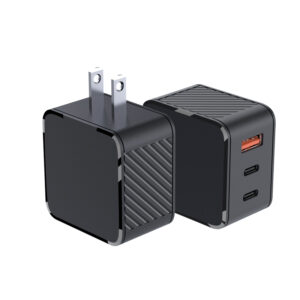
The input wattage is the spec that decides recharge time — not the output wattage. A bank that outputs 22.5W but only accepts 10W input will recharge slowly. The cable also matters: a 5A-capable USB-C cable is required to reach 45W+ input on modern banks. Check both numbers on the spec sheet.
Fast-Input Power Banks: 18W, 45W, 65W+
Fast-input banks accept 18W, 45W or even 65W+ through USB-C PD, cutting recharge time dramatically. A 65W-input 20,000mAh bank can recharge in about 1.5–2 hours with a suitable charger — useful when you are travelling and need the bank back in service quickly. The wireless charger collection includes hybrid banks with USB-C fast input.
How Long Does It Take to Charge Your Phone From the Bank?
For the other direction: a 10,000mAh bank delivers roughly 1–2 full phone charges, and each charge takes about an hour at typical speeds. If the bank supports 15W+ output, phone charging is similar to a wall charger; if it only outputs 10W, expect slower top-ups. Wireless output on hybrid banks is usually the slowest option.
How Long Does a Power Bank Last? (Charge Cycles)
A power bank’s lifetime is measured in charge cycles, and the number is more forgiving than most people think.
Lithium cells are typically rated for 300–500 full charge cycles before capacity drops noticeably — that is hundreds of top-ups for a phone. Heat and deep discharges shorten life; keeping the bank cool and topping it up before empty extends it. After a few years, capacity slowly fades and the bank becomes a smaller backup rather than a full-day solution.
Power Bank Input vs Output: Which Speed Matters
Power banks quote two speeds — how fast they charge the phone (output) and how fast they recharge themselves (input). They matter in different situations.
- Output — decides how fast your phone tops up; 15W+ is the modern baseline.
- Input — decides how long the bank is out of service; 45W+ input recharges a 20,000mAh bank in about two hours.
For daily use, output matters more; for travel, a fast-input bank is the difference between a night of charging and a quick top-up.
How to Charge a Power Bank Faster
If your bank recharges slowly, the fix is usually the charger or cable, not the bank.
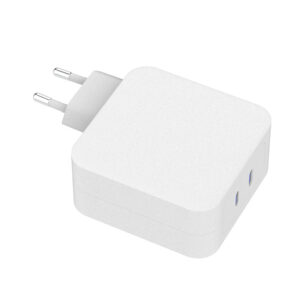
- Use the rated input — check the bank’s max input wattage and match it with a USB-C PD charger.
- Use a 5A-capable cable — a 3A cable caps the speed regardless of the charger.
- Charge when cool — high temperature slows charging and ages the cells.
- Avoid pass-through — charging the bank while it charges a phone divides the power.
FAQ
Why does my power bank take all night to charge? It probably has a slow input (5–10W) — check the input wattage and use a fast charger and 5A cable.
Can I charge a power bank and a phone at the same time? Only if it supports pass-through; otherwise the bank prioritises one or the other.
Does a bigger power bank take longer to charge? Yes — capacity and input wattage together decide the time; bigger capacity with the same input takes longer.
Is wireless charging a power bank slower? For the phone, usually yes; for recharging the bank itself, USB-C input is the fast path.
Can I OEM a power bank with fast input? Yes — specify the input wattage in your spec. See the OEM/ODM page or contact us.
References: Battery University for charging fundamentals, USB-IF for PD input specs, and Tom’s Hardware for power bank tests.
Further reading: ChargerLAB, How-To Geek, AnandTech.
This article is part of Power Banks & Power Stations, the guide that covers this topic in decision order.