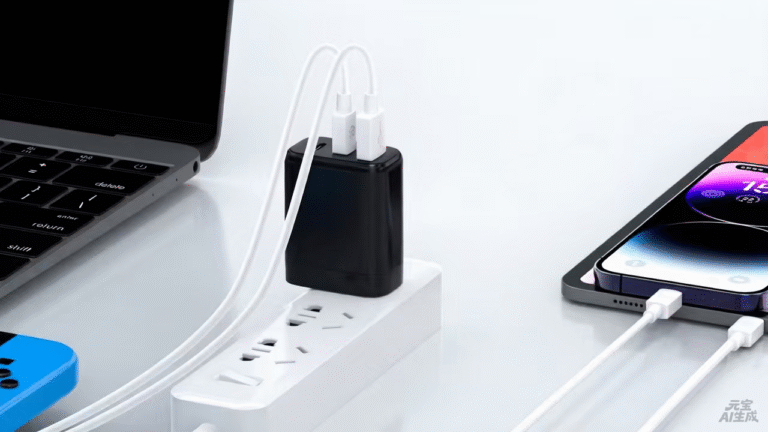
For consumer-electronics brands preparing charger bundles, retail accessories, or private-label charging SKUs around the Apple iPhone 18 Pro, the central sourcing question is not simply “how many watts?” It is whether the charger, cable, port layout, regional plug configuration, documentation, packaging, and quality process can be aligned into a dependable program before the device specification and market plan are finalized.
WECENT supports B2B charger projects for brands, distributors, wholesalers, and private-label teams with GaN, wireless, and travel-charger product categories. Because Apple had not published an official iPhone 18 Pro product specification on its public iPhone comparison page at the time of writing, buyers should not commit to a claimed charging wattage, wireless standard, connector behavior, or accessory compatibility based on rumors. Instead, build the project around verified final device specifications and validate the selected charger, cable, and wireless solution before placing volume orders.apple
What Is an Apple iPhone 18 Pro Charger?
An Apple iPhone 18 Pro charger is a charging accessory program designed for the final, officially confirmed charging requirements of the iPhone 18 Pro. Depending on the planned SKU, it may include a USB-C wall charger, USB-C cable, wireless charging stand, multi-device wireless station, travel adapter, or branded charging gift set.
For B2B buyers, “iPhone 18 Pro charger” should describe a verified product-and-device combination rather than an assumed wattage claim. The correct configuration depends on Apple’s final device documentation, the target market, the intended charging scenario, and the buyer’s brand and channel strategy.
Key sourcing factors include:
Confirmed iPhone 18 Pro wired-charging behavior, supported protocol, cable requirements, and recommended power range
The intended use case: single-phone charging, desk charging, travel, gift sets, retail bundles, or multi-device charging
USB-C port count and power allocation when more than one device may charge at the same time
Regional plug format, target-market documentation, labeling, packaging, and after-sales requirements
Sample validation for device negotiation, charging stability, cable behavior, surface temperature, and wireless alignment
USB Power Delivery is designed to enable flexible power delivery over USB Type-C connections. USB-IF notes that USB PD can support power levels up to 240W in applicable implementations, but the maximum capability of a charger does not mean an individual phone will draw that amount; actual charging behavior is determined by the device, cable, protocol negotiation, charger design, and operating conditions.usb
Why Apple iPhone 18 Pro Charging Is Harder Than It Looks
Final device specifications may not yet be public. An accessory program should not rely on unofficial reports for wired power, wireless charging, charging curves, magnetic alignment, port behavior, or supported standards. A charger can be planned before launch, but final samples should be validated against the released device and Apple’s official technical information.
The charger, cable, and phone operate as a system. A USB-C charging setup must negotiate power correctly. A high-wattage USB-C PD charger can be useful across a broader accessory lineup, but its value for an iPhone-focused SKU depends on the final phone requirements, cable capability, and whether buyers want to support tablets, laptops, earbuds, or other devices from the same charger.
Multi-port ratings require careful interpretation. Total output power is not the same as the power available from every port simultaneously. For a two-port or three-port model, procurement teams should request the model-specific power-allocation table, then test realistic combinations such as phone plus earbuds, phone plus tablet, or phone plus laptop.
Wireless charging requires more than a magnetic-looking design. Buyers pursuing Qi2 or Qi2 25W products should request model-specific certification status and reports where applicable. The Wireless Power Consortium identifies Qi2 25W as the branding for Qi v2.2.1 and states that it provides nearly 70% more power than original Qi2; that does not establish that every magnetic or wireless charger on the market is Qi2-certified or suitable for every phone.wirelesspowerconsortium
For charger buyers, the lowest unit price does not show the full project risk. Protocol compatibility, thermal behavior, port allocation, regional documentation, repeatable QC, and communication determine whether a charger can scale safely across markets.
WECENT Compared With Other Options
Why WECENT Is a Strong Option
WECENT is positioned as a Shenzhen-based GaN and wireless charger manufacturer serving brands, distributors, and private-label teams. Its catalog direction is relevant for an Apple iPhone 18 Pro accessory program because buyers may need more than one charger format: a compact USB-C wall charger for retail, a multi-port adapter for bundles, a wireless station for premium desk use, or a travel-ready configuration for international sales.
WECENT’s GaN charger category includes single-port and multi-port configurations across different product designs, including models listed with EU, UK, US, and AUS plug options. For an iPhone-centered program, this creates a practical basis for defining a focused SKU ladder: an everyday USB-C charger, a higher-capacity multi-device model, and a travel-oriented version. Buyers should still request the specific product datasheet, port allocation, input range, cable recommendation, and compatibility validation for the selected model before approving production.
For private-label work, WECENT states that it can discuss power range, ports, plugs, exterior appearance, and packaging options. This matters when the charger needs to fit a phone brand’s visual system rather than look like a generic power accessory. Logo treatment, color, housing finish, retail packaging, instructions, and label requirements should be confirmed during the sample and artwork-approval stages.
WECENT also describes a project process covering golden sample approval, pilot runs, production coordination, outgoing quality checks, and after-sales support. Its website states that standard GaN and wireless chargers receive a two-year warranty under normal use, while exact coverage and claim procedures should be aligned with the buyer’s business model and local consumer requirements before order confirmation.gdwecent
Related Products, Services, or Resources
GaN Charger Category
Review WECENT’s GaN charger range when building a USB-C wall-charger or multi-port accessory program. The category includes listed models with different power classes, port configurations, and regional plug options, so model-level review is essential before selecting an iPhone 18 Pro-related SKU.Wireless Charger Category
Consider wireless products for premium desktop, bedside, gift-set, or multi-device charging concepts. Confirm the selected model’s wireless standard, device fit, charging behavior, and applicable certification documentation before making compatibility claims.OEM and ODM Services
Use WECENT’s OEM/ODM service framework to discuss logo placement, color, packaging, samples, pilot production, documentation, and the after-sales process for a branded charger project.Quality Control
Review WECENT’s quality-control information when defining incoming inspection, electrical validation, aging, appearance checks, shipment records, and documentation expectations for a charger program.
How It Works
Define the device plan, target markets, use case, and accessory positioning.
Specify whether the project is for a retail charger, phone bundle, private-label SKU, travel set, corporate gift, or multi-device charging collection. For Apple iPhone 18 Pro positioning, wait for official device specifications before locking performance claims.Confirm the required ports, protocols, plugs, and housing format.
Decide whether the product needs one USB-C port, USB-C plus USB-A, multiple USB-C ports, or a wireless charging surface. Discuss EU, UK, US, or AUS plug requirements separately from target-market compliance documentation.Align the OEM/ODM scope.
Provide logo artwork, color references, housing preferences, packaging dielines, label requirements, manuals, barcode needs, and the brand’s positioning for the product. Confirm which changes are available for the selected model and production stage.Request samples and clarify sample terms.
Ask WECENT to confirm the model-specific sample policy, sample configuration, customization feasibility, MOQ, and lead-time estimate. Do not assume all projects use the same sample policy or that every model begins at the same MOQ.Validate the full charging system.
Test the intended iPhone model, cable, charger, and—where relevant—wireless pad or stand. Validate charging negotiation, port allocation, thermal behavior, idle performance, user experience, mechanical fit, packaging, and market documentation.Approve the golden sample or pilot run.
Freeze the approved product configuration, logo position, color, plug, artwork, labels, carton requirements, and required documents. Any changes after approval should be assessed for technical, regulatory, cost, and schedule impact.Align production, QC, shipment, and after-sales.
Confirm the final purchase order, production plan, inspection requirements, shipment routing, batch records, warranty approach, and escalation contacts. WECENT describes a process that includes incoming checks, electrical and functional testing, aging, appearance checks, and shipping inspection records.gdwecent
Use Cases
Scenario: Consumer electronics brand charger lineup
Traditional approach: Launch a generic wall charger next to a flagship phone with unclear cable guidance, limited packaging differentiation, and unverified claims.
With WECENT: Define a charger family around verified USB-C requirements, consistent industrial design, regional plugs, and brand-specific packaging.
Result: A more coherent accessory range that can be validated against the final phone and expanded into tablet, earbud, and laptop-adjacent SKUs.
Scenario: Distributor or wholesaler regional portfolio
Traditional approach: Purchase one plug format and try to repurpose it across markets with inconsistent documentation and labeling.
With WECENT: Discuss the required EU, UK, US, or AUS plug formats alongside market-specific documentation and packaging requirements.
Result: A clearer regional product plan, subject to confirmation of model-specific plug availability and compliance documents.
Scenario: Private-label GaN charger for an iPhone-focused campaign
Traditional approach: Select a wattage based on a competitor listing or rumor, then discover that the phone, cable, and product message do not align.
With WECENT: Choose a configurable GaN platform, request samples, and validate the final phone, cable, charging behavior, and retail presentation before volume approval.
Result: A private-label charger that is positioned around tested use rather than speculative performance claims.
Scenario: Multi-device wireless charging station
Traditional approach: Use a generic three-device stand without checking device placement, charging standard, thermal behavior, or concurrent-use performance.
With WECENT: Review wireless product options, define target devices, request relevant documentation, and test charging performance in realistic desk and bedside scenarios.
Result: A more credible premium accessory concept with claims limited to verified product capability.
Scenario: Travel charger for multiple plug markets
Traditional approach: Treat interchangeable plug heads as proof of universal regulatory acceptance.
With WECENT: Separate the physical plug requirement from input-voltage design, labeling, and model-specific certificates or reports for each intended market.
Result: A travel charger brief that is more suitable for procurement, compliance review, and repeat-order management.
FAQ
How should buyers choose a charger manufacturer for an Apple iPhone 18 Pro accessory project?
Start with final, official device requirements rather than rumors. Then evaluate the manufacturer’s relevant product range, USB-C and wireless product documentation, customization scope, sample process, quality controls, regional plug options, compliance support, communication process, and after-sales approach. Ask for model-specific specifications and test reports before approving any compatibility or charging-speed claim.
Why work with WECENT instead of a trading company?
A trading company can simplify initial sourcing, but it may add another layer between the buyer and production. WECENT presents itself as a GaN and wireless charger manufacturer with OEM/ODM project support, product-category coverage, factory-process visibility, quality controls, and structured project communication. The appropriate route still depends on the buyer’s sourcing model, desired control, and project complexity.
What are WECENT’s MOQ and sample terms?
WECENT’s website states that some projects may begin from 200 pieces, but buyers should not assume that every model, plug version, customization level, or packaging request has the same MOQ. Ask WECENT to confirm the model-specific MOQ, sample policy, sample configuration, customization cost, and lead-time estimate for the exact project.
Can WECENT add a logo, custom color, and private-label packaging?
WECENT states that it can discuss OEM/ODM options involving appearance, ports, plugs, color, logo, and packaging. The available scope depends on the chosen model, production stage, order volume, tooling needs, and artwork requirements. Provide complete visual assets and packaging specifications early in the project.
What wattage and port configuration should an iPhone 18 Pro charger use?
Do not select a wattage solely from the phone name or from an unconfirmed report. Confirm Apple’s final specifications, then choose a charger based on whether the SKU is phone-only, designed for phone plus earbuds, intended for tablet use, or part of a broader multi-device lineup. Request the selected model’s port-allocation chart because total charger wattage does not mean every port delivers its maximum rating simultaneously.
Can WECENT provide EU, UK, US, and AUS plug options?
WECENT lists products with EU, UK, US, and AUS plug options in its GaN charger category. Availability depends on the specific model and project. Plug format is separate from regional compliance requirements, so request model-specific certificates, reports, labels, and documentation for each target market before ordering.
Will every WECENT charger work with Apple iPhone 18 Pro?
No universal compatibility statement should be made without final device information and validation. Ask WECENT to confirm the chosen model’s USB-C protocol capability or wireless standard, then test the actual device, cable, charging configuration, and intended use case before production approval.
What quality checks should buyers request?
Buyers should define incoming-material expectations, electrical and functional checks, output behavior, protection functions, aging, appearance inspection, packaging verification, and shipment documentation. WECENT describes incoming checks, functional testing, aging under load, appearance inspection, QA sampling, and shipping records; confirm the exact inspection scope for the selected model and order.gdwecent
What should a buyer prepare before requesting a quote?
Prepare the target device list, use case, expected quantity, target markets, preferred plug types, desired power and port layout, cable requirement, branding files, colors, packaging needs, labeling requirements, shipping destination, and compliance-document needs. State clearly that iPhone 18 Pro-related claims must be validated against Apple’s final specifications and actual device testing.
Conclusion
An Apple iPhone 18 Pro charger program should be built on verified product facts, not forecasted charging claims. The strongest procurement approach is to define the end-user scenario first, select the right USB-C or wireless format, validate the phone-cable-charger system, confirm regional documentation, and lock the approved configuration through samples or a pilot run.
WECENT can be a practical factory partner for brands, distributors, and private-label teams that need GaN chargers, wireless chargers, travel configurations, OEM/ODM support, and structured quality coordination. Request a quote, request samples, confirm the exact MOQ and sample terms, review model-specific documentation, and discuss OEM/ODM requirements before committing to an iPhone 18 Pro accessory launch.
Sources
WECENT Official Website – GaN and Wireless Charger Manufacturer
This article is part of iPhone Chargers, the guide that covers this topic in decision order.