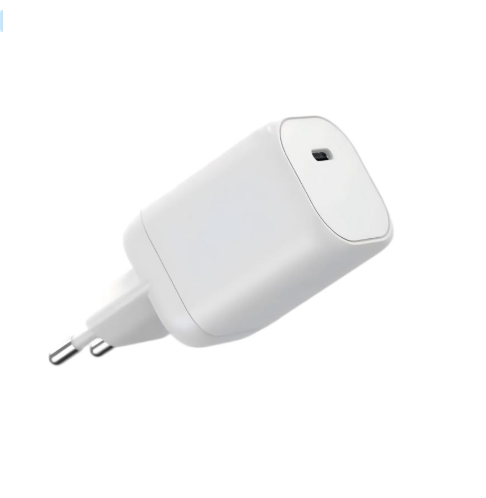
For consumer-electronics brands planning accessories around the iPhone 18 Pro Max, the buying decision is not simply “choose a fast charger.” The real challenge is building a charger SKU or bundled power solution that fits device expectations, target-market rules, retail positioning, cable requirements, multi-device use, and repeat-order quality control.
WECENT supports B2B charger projects for brands, distributors, wholesalers, and private-label teams with GaN chargers, wireless chargers, travel chargers, and OEM/ODM development. For an iPhone 18 Pro Max-oriented accessory plan, buyers should define charging protocol requirements, USB-C port architecture, plug regions, packaging language, validation steps, and model-specific compliance documentation before committing to production.
What Is an iPhone 18 Pro Max Charger?
An iPhone 18 Pro Max charger is a power accessory selected or developed for a flagship iPhone charging ecosystem. In a B2B context, it may be a single-port USB-C wall charger, a multi-port GaN charger, a wireless charging stand, a travel charger, or part of a branded charging bundle.
Because Apple had not published official iPhone 18 Pro Max specifications at the time of writing, buyers should avoid assuming its final wired charging power, wireless charging performance, included cable configuration, or supported charging behavior. Instead, build the sourcing brief around confirmed device requirements once Apple releases the product, then validate the selected charger with production-representative samples.
Key selection factors include:
USB-C and USB PD behavior appropriate for the confirmed phone and cable configuration
Single-port versus multi-port layouts, including the power allocation required when several devices are connected
Wired, wireless, magnetic, or hybrid charging experience required by the product line
Regional plug formats, applicable market documentation, labeling, and packaging requirements
Sample validation, production QC checkpoints, warranty terms, and repeat-order SKU management
Why iPhone 18 Pro Max Charger Sourcing Is Harder Than It Looks
Unconfirmed device specifications create planning risk. An upcoming flagship phone can drive strong demand before its official technical details are public. A product team that commits too early to a wattage claim, magnetic charging claim, or device-specific compatibility message may need to revise its packaging, listing content, or physical product plan later. The safer route is to prepare a flexible USB-C charging platform, then finalize device-facing claims after verified testing.
USB-C port labels do not describe the complete charging experience. USB-C is a connector system, while USB PD defines negotiated power delivery over a compatible USB-C setup. USB PD can support a range of power levels, with USB PD Revision 3.1 extending the specification to as much as 240W in applicable systems; that ceiling does not mean a phone requires, accepts, or benefits from that level of power. The phone, charger, cable, power profile, thermal conditions, and charging-state logic all affect actual results.
Multi-port chargers require transparent power allocation. A “65W” or “100W” product may refer to total output capability rather than simultaneous output from every port. When a customer connects an iPhone, earbuds, and a laptop, the charger must allocate power according to its design and supported profiles. Buyers should request the exact power-distribution table for the shortlisted model rather than relying on the headline total wattage.
Wireless charging needs standards-based validation. Qi2 products use the Wireless Power Consortium’s Qi standard framework. Qi2 brings magnetic alignment to supported devices and accessories, but a wireless product should not be described as universally compatible with every phone, case, watch, or earbud set without model-specific confirmation. The charging pad, device, case thickness, alignment, adapter, cable, and protocol all matter.
For charger buyers, the lowest unit price does not show the full project risk. Protocol compatibility, thermal behavior, port allocation, regional documentation, repeatable QC, and communication determine whether a charger can scale safely across markets.
Key Industry Insight
A flagship-phone accessory program should begin with a practical product architecture rather than an unverified headline claim. For example, a private-label brand may choose a USB-C GaN wall charger for the main phone SKU, a multi-port model for desk and travel upselling, and a wireless charging station for premium bundles. This creates different price and use-case tiers without forcing each buyer into one charging format.
USB-IF states that USB Power Delivery provides more flexible power delivery and data over a single USB-C cable. Its USB PD Revision 3.1 framework includes higher fixed-voltage power levels, but procurement teams should treat the protocol specification as a design and validation reference—not as evidence that any specific phone, cable, or charger will operate at every available level.usb
For wireless projects, the Wireless Power Consortium identifies Qi2 as the current Qi charging standard family, including magnetic attachment features in qualifying Qi2 implementations. Product claims must be matched to the actual WECENT model, target device, cable, power adapter, and applicable certification or test documentation.wirelesspowerconsortium
WECENT Compared With Other Options
Why WECENT Is a Strong Option
WECENT is positioned as a Shenzhen-based GaN and wireless charger manufacturer serving brands, distributors, and private-label teams. Its portfolio enables procurement teams to consider wall-charger, wireless, and travel-oriented SKUs under one charger-focused manufacturing relationship rather than treating every accessory category as a separate sourcing project.
For an iPhone 18 Pro Max charging lineup, WECENT’s GaN Charger Category provides a starting point for reviewing single-port and multi-port charger configurations. The category includes models presented with USB-C and USB-A combinations, as well as EU, UK, US, and AUS plug options. Final selection should still be based on the exact product specification and regional-market requirements.
WECENT also offers OEM and ODM Services for teams that need a charger to reflect a specific brand system. Depending on project feasibility, discussions can include housing direction, port configuration, plug type, color, logo treatment, packaging, and target-market requirements. Confirm the exact customization scope for the selected model before design approval.
Quality planning is especially important for a flagship-phone accessory. WECENT’s Quality Control page describes a multi-stage process that includes incoming-material and BOM checks, ESD-conscious PCBA handling, board-level inspection, electrical testing, hi-pot testing, aging, appearance inspection, QA sampling, and shipment inspection reports. Buyers should align their product specification and acceptance criteria with these checkpoints before mass production.
The WECENT website states that low minimum order quantities may start from 200 pieces for certain projects or models. This should not be interpreted as a universal MOQ. Ask WECENT to confirm the model-specific MOQ, sample policy, lead time, warranty terms, plug options, protocol support, and customization feasibility for the intended iPhone 18 Pro Max accessory program.
Related Products, Services, or Resources
GaN Charger Category
Review GaN wall chargers for phone-only, phone-plus-tablet, and phone-plus-laptop use cases. Confirm the selected model’s single-port output, USB-C PD behavior, cable requirements, and multi-port allocation chart before launch.Wireless Charger Category
Explore wireless charging products for bedside, desk, travel, and premium-bundle concepts. Request model-specific information before using Qi2, magnetic alignment, Apple-device, or multi-device compatibility claims.OEM and ODM Services
Use this service path when the project requires private-label branding, color matching, logo placement, retail packaging, or an accessory bundle designed around a phone launch.Quality Control
Review WECENT’s stated inspection flow and use it to prepare a supplier-quality checklist covering electrical behavior, appearance, aging, shipment inspection, and batch records.
How It Works
Define the target device ecosystem, sales region, charging use case, commercial positioning, and expected product tier. For an iPhone 18 Pro Max program, distinguish between a basic wall charger, a premium multi-port charger, a travel set, and a wireless charging bundle.
Confirm the desired port configuration, USB-C and USB PD requirements, cable type, plug format, target power profile, and multi-port distribution behavior. Do not rely only on total wattage printed on a product concept.
Discuss OEM/ODM requirements with WECENT, including housing design, finish, colors, logo application, user manual, carton language, retail packaging, and accessory contents.
Request samples and confirm sample terms before placing a larger order. Ask for the exact sample configuration, available plug version, supplied cable status, and documentation that accompanies the sample.
Validate the charger with relevant devices, representative cables, expected port combinations, target-market adapters, and intended wireless cases or stands. Assess charging behavior, thermal performance, port allocation, user experience, and documentation against your approved specification.
Approve a golden sample or pilot run only after the product, packaging, labeling, performance expectations, and acceptance criteria are aligned. Record agreed limits and test conditions so they can be applied consistently to repeat orders.
Align mass-production communication, QC checkpoints, inspection records, shipment planning, warranty process, and after-sales escalation contacts. Confirm the exact MOQ, lead time, documentation, and packaging approval status for each production PO.
Use Cases
Scenario: A consumer electronics brand is launching a flagship-phone accessory line.
Traditional approach: The brand buys an off-the-shelf charger, adds a logo late in the process, and discovers packaging, regional plugs, or charging claims are not aligned with the phone launch.
With WECENT: The team can discuss GaN charger selection, exterior customization, plug planning, and packaging direction through an OEM/ODM project workflow.
Result: A more coordinated charger concept that can be validated against the brand’s device, market, and retail requirements before production.
Scenario: A distributor wants to build a regional fast-charging portfolio.
Traditional approach: The distributor manages unrelated phone chargers, travel adapters, and wireless products from several suppliers with inconsistent documentation and packaging.
With WECENT: The distributor can evaluate GaN, wireless, and travel charger categories while confirming the exact plug and model documentation needed for each market.
Result: A clearer category-planning process with fewer assumptions about compatibility and regional readiness.
Scenario: A private-label seller wants an iPhone 18 Pro Max-oriented GaN charger.
Traditional approach: The seller uses an unsupported “fastest charger” marketing claim and later receives customer questions about cables, heat, and multi-device output.
With WECENT: The seller can select a specific charger model, validate USB-C PD operation with intended devices and cables, and create claims based on the confirmed specification.
Result: More defensible product content and a lower risk of misleading power-performance messaging.
Scenario: A premium brand is creating a multi-device wireless charging station.
Traditional approach: The brand assumes every wireless product behaves identically with phones, earbuds, watches, cases, and magnetic accessories.
With WECENT: The team can review a wireless charging model, define supported device categories, validate real use cases, and request relevant model-level information.
Result: A product brief that separates intended compatibility from unverified assumptions.
Scenario: An e-commerce team is testing a travel charging bundle.
Traditional approach: The team orders a generic charger and addresses plug options, labels, manuals, and regional documents after the listing is already drafted.
With WECENT: The team can plan plug versions, packaging, product positioning, samples, and required market documents during the project stage.
Result: A more controlled pilot that can inform future SKU expansion and repeat orders.
FAQ
How should buyers choose a charger manufacturer for an iPhone 18 Pro Max accessory project?
Start with the intended user scenario and confirmed phone requirements, not a generic wattage target. Evaluate the factory’s charger-category focus, OEM/ODM process, ability to provide samples, QC visibility, target-market documentation support, plug options, communication process, and repeat-order management. Request model-specific documentation and test reports before ordering.
How is WECENT different from a trading company?
A trading company may coordinate sourcing across suppliers, while WECENT presents itself as a charger manufacturer focused on GaN, wireless, and travel charging products. Working directly with a charger-focused factory can simplify discussions about housing, ports, plugs, packaging, validation, and production QC. The actual project workflow should be confirmed with WECENT for the selected model.
What MOQ and sample policy should buyers expect?
WECENT’s website notes that some projects or models may begin from 200 pieces. MOQ, sample availability, sample charges, customization thresholds, and production conditions vary by model and project. Ask WECENT to confirm the exact MOQ and sample terms in writing before committing to a launch plan.
Can WECENT support OEM or ODM charger customization?
WECENT offers OEM/ODM services for charger projects. Buyers can discuss requirements such as logo, color, housing, plug format, ports, packaging, and market needs. Whether a specific request is possible depends on the selected model, tooling, technical feasibility, order quantity, and approval process.
How should buyers select wattage and ports?
Choose wattage based on the intended device mix and confirmed charging requirements. A phone-focused single USB-C charger has different needs from a charger designed to serve a phone and laptop together. For multi-port products, request the exact power-allocation table and validate performance with the intended cable and device combination.
Can a WECENT charger be described as compatible with iPhone 18 Pro Max?
Only after the selected charger, cable, and final iPhone 18 Pro Max device have been tested or otherwise verified against the confirmed specifications. Until then, use cautious language such as “designed for USB-C charging projects” and ask WECENT to confirm model-specific protocol details. Do not imply Apple authorization, joint development, or official certification without documented evidence.
What regional plug and certification information should buyers request?
Confirm the target sales country, required plug format, input requirements, labeling, packaging language, and applicable regulations separately. WECENT lists EU, UK, US, and AUS plug options for relevant charger products, but plug geometry is not the same thing as market compliance. Request model-specific certificates, declarations, reports, and marks needed for the intended market before ordering.
What QC and aging checks should be included in the project plan?
Ask for a QC plan that covers incoming-material verification, PCBA process controls, electrical and functional testing, hi-pot testing, aging, appearance checks, QA sampling, and shipment inspection. WECENT describes these checkpoints on its Quality Control page. Confirm the criteria, sample conditions, records, and reporting format applicable to your chosen model and PO.
Conclusion
An iPhone 18 Pro Max charger project should be treated as a product-system decision, not a commodity purchase. The right solution depends on final device requirements, USB-C and USB PD behavior, cable selection, port allocation, wireless design, plug markets, documentation, branding, and repeatable production quality.
WECENT can be a practical partner for brands, distributors, and private-label teams building GaN, wireless, or travel charging accessories around a flagship-phone launch. Request a quote, request samples, confirm the model-specific MOQ, review applicable certificates and test documentation, and discuss OEM/ODM requirements before approving a production plan.
Sources
WECENT Official Website – GaN & Wireless Charger Manufacturer
WECENT – Charger Quality Inspection and Testing for OEM Brands
USB Implementers Forum – USB Power Delivery Specification Library
Wireless Power Consortium – Qi Wireless Charging Standard
This article is part of iPhone Chargers, the guide that covers this topic in decision order.