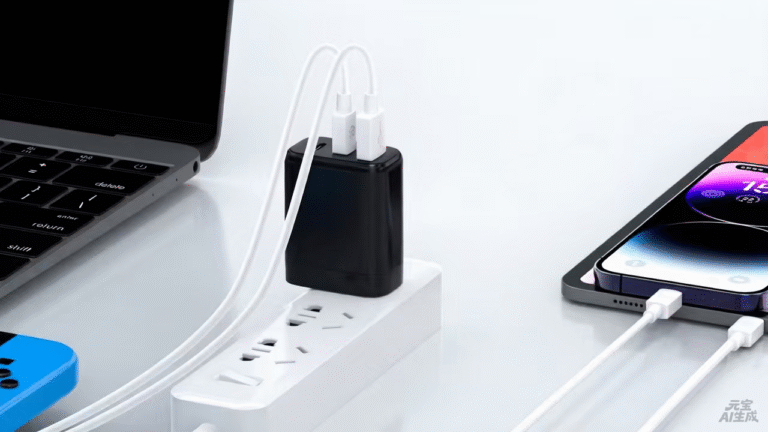
USB-C is spreading through medical devices because one connector can carry power, data and video, and USB Power Delivery can negotiate the right power level for each device. “Medical-grade USB-C charger” is a buying phrase that combines a universal connector with a medical context — and the two parts answer different questions. USB-C answers compatibility; the medical context answers which standards framework applies and which documents are required. This guide separates the two, explains the 60601-1 boundary, and gives a sourcing path for a USB-C medical charger line.
Key takeaways
- USB-C is a connector and negotiation standard; it does not carry a medical certification with it.
- Whether IEC 60601 applies depends on the device classification, confirmed by the buyer’s QA or regulatory team.
- Compatibility and certification are separate checks: the profile must be validated, and the documents must name the configuration.
Content updated: August 2026 — confirm current standards editions and model-specific details before ordering.
Scope note: This guide is industry information, not regulatory, legal or certification advice. No claim is made about any supplier’s medical certification status; standards applicability is confirmed per configuration.
Why USB-C Is Spreading Through Medical Devices
The connector is the visible reason: one reversible plug replaces a drawer of proprietary cables, which simplifies logistics, spares and training across a device family. The negotiation layer is the functional reason: USB Power Delivery lets one charger serve a phone at 20W, a tablet at 45W and a laptop at 65W or more, because each device requests the profile it needs.
For a medical device program, USB-C also simplifies the integration story. A device with a USB-C power input can use the same charger family as the laptops and tablets on the same cart, and the data capability means one cable can carry power and data where the device needs both. The full PD and cable rules belong to the PD hub on this site; the medical question is how the interface fits the device’s duty cycle, environment and documentation.
The adoption is not without constraints. USB-C connectors and cables must be validated for the device’s power request, the cable must be rated for the negotiated current, and the connector must survive the device’s use pattern — a ward device handled by trained staff faces different wear than a home-care device handled by patients. The universal connector standardizes the interface; it does not standardize the validation.
The standardization also changes the spare-parts story. One cable type across the device family simplifies the spare pool, and the charger family can be shared between the medical device and the IT equipment on the same cart. The simplification is real, but it is realized only when the profiles and cables are validated for every combination the fleet actually runs. A family that shares the connector but not the validation has standardized the interface while leaving the risk in place.
The data capability adds a second dimension to the same port. Where a device needs power and data on one cable, the USB-C interface reduces cable clutter and simplifies the connection story. The data path brings its own requirements — shielding, signal integrity and the device’s data protocol — and the validation covers both the power negotiation and the data behavior. The two are tested together because they share the cable and the connector.
The 60601-1 Boundary for USB-C Chargers
IEC 60601-1 is the base safety standard for medical electrical equipment, and a USB-C charger is evaluated against it only when the device it powers is classified as medical electrical equipment. The boundary is the same as everywhere in the medical power cluster: the classification decides the framework, and the buyer’s QA or regulatory team confirms it per configuration.
The practical consequences for a USB-C charger:
- The charger’s isolation, leakage and EMC behavior are reviewed against the applicable framework when the device classification requires it.
- The USB-C and PD behavior — profiles, negotiation, cable requirements — is validated against the device’s power request.
- The certificate and test report must name the exact configuration, including the USB-C port behavior and the cable.
The two reviews run in parallel and both belong in the project file. A charger that negotiates perfectly with the device but lacks the documents, or carries documents but negotiates wrongly, fails the program either way.
The boundary also explains what the phrase “medical-grade USB-C charger” does not mean. It does not mean the charger itself is a certified medical device; it means the charger is being evaluated for use in a medical context, with the framework decided by the device classification. A buyer who treats the phrase as a certification label will over-credit the product; one who treats it as a project description will ask the right questions — classification, documents and compatibility.
The standards boundary is confirmed per configuration, and it is reviewed when the device changes. A device program that moves a peripheral into a different classification, or a charger into a different device family, re-runs the boundary check and the document review. The boundary is not a one-time determination; it is a standing review point in the program.
Compatibility vs Certification
The distinction is the core of this topic. Compatibility is a technical property: the charger’s profiles cover the device’s request, the cable is rated for the power, and the device charges at the expected speed. Certification is a documentary property: the certificate and test report name the configuration and the applicable standard edition.
A charger can be fully compatible and uncertified for the program; it can also be certified for a different configuration and useless to the program. The two checks are separate and both are required:
| Check | Question | Evidence |
|---|---|---|
| Compatibility | Does it charge the device correctly? | Profile table, cable rating, real-device test |
| Certification | Is the configuration documented? | Certificate, test report, batch records |
Neither check substitutes for the other. The compatibility test is run with the real device; the certification review is run against the documents.
The order of the two checks matters in practice. Compatibility is validated first, because a charger that does not charge the device correctly is not a candidate regardless of its documents. Certification is reviewed in parallel with the platform shortlist, because the certificate coverage decides whether the platform can serve the market. Running the two tracks together — hardware validation and document review — keeps the shortlist honest and the timeline realistic.
The compatibility test should also cover the realistic combination, not just the single-device case. Where the charger serves a cart with a laptop and a phone at the same time, the split map for that combination is tested, and the cable is validated for the top profile. A charger that works alone but fails in the real combination has failed the program’s actual use case.
Sourcing a USB-C Medical Charger Line
The sourcing path for a USB-C medical charger line follows the same gates as the rest of the medical cluster:
- Define the device and its power request. Voltage, current, profile and cable.
- Confirm the classification. Which framework applies, decided by QA or regulatory.
- Shortlist platforms. USB-C charger platforms by power, ports and certificate coverage.
- Validate the sample. Real-device charging at the duty cycle, with the documents.
- Gate the volume order. Batch records and inspection match the approved sample.
The USB-C element adds one input to the familiar path: the cable. Because the cable is part of the negotiated configuration, it is specified with the charger, and the certificate story includes the cable’s role.
The line decision also includes the port strategy. A single-port charger serves a single device; a multi-port charger serves a stack, with a split map that must be published and validated. The port decision follows the device family and the cart configuration, and it is frozen with the platform rather than added later.
For the launch, the packaging and documentation story should name what the charger does for the device — the profiles, the cable and the split — rather than a generic wattage number. The medical context adds the document expectation: the certificate names the configuration, and the packaging should not overstate it.
USB-C Adoption Checklist for Medical Devices
A short checklist keeps the adoption deliberate:
- Device power request defined and matched to the charger’s profiles.
- Cable rated for the negotiated current, with an e-marker where required.
- Connector durability matched to the device’s use pattern.
- Classification confirmed and the framework named.
- Certificate and test report naming the exact configuration.
- Batch records for every shipment.
The checklist is the same shape as the cluster’s other checklists; the USB-C row simply makes the cable an explicit part of the configuration.
The checklist is run by the device team and the quality team together, because it spans hardware and documents. The hardware rows are validated with the real device; the document rows are reviewed against the configuration. Keeping the two perspectives in one checklist is what prevents the classic gap where the hardware works and the documents do not match it.
The GaN Charger Category at WECENT lists the USB-C platform range by power and ports, matching the boundary discussion in this guide to real SKUs, and the WECENT FAQ answers the protocol questions that come up during selection. To move from this guide to a project, submit the device list and power requests to WECENT’s project engineering team — the review returns the platform and configuration options with the document set for your exact program.
Frequently Asked Questions
Is a USB-C charger automatically medical-grade because it has USB-C?
No. USB-C is a connector and negotiation standard. The medical context is a separate question answered by the device classification and the documentation, confirmed per configuration.
Does a medical USB-C charger need different cables?
The cable must be rated for the negotiated power, with an e-marker where required. The cable is part of the configuration, and it is specified and documented with the charger.
Can a USB-C medical charger also charge laptops and phones?
Yes, when its profiles cover their requests. That is the point of USB-C: one charger, multiple devices, each negotiating what it needs. Confirm the profiles against the actual devices.
Does the USB-C port change what certification applies?
No. USB-C is a connector and negotiation standard; the certification framework follows the device classification and the target market, not the port. The port changes the cable and profile requirements, not the classification question.
How do I validate a USB-C medical charger before ordering?
Confirm the profile table covers the device requests, the cable rating matches the top profile, and the documents name the exact configuration and standard edition. The checklist turns the specification into a pass/fail gate.
Sources
- WECENT – GaN Charger Category
- WECENT – Quality Control
- WECENT – FAQ
- WECENT – Contact Us
- International Electrotechnical Commission – IEC 60601 Standards
- USB Implementers Forum – USB Power Delivery
This article is part of Medical Power Supplies, the guide that covers this topic in decision order.