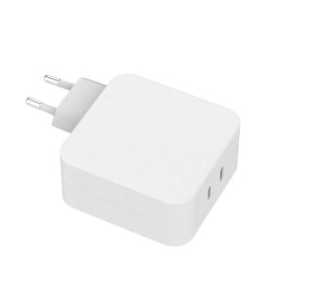
The best laptop USB-C power supply OEM partner is the one whose capabilities can be verified, and this ranking is built around the five that decide whether a partner can run the line: wattage-tier coverage, certification discipline, production testing, change control and batch traceability. Each capability ranks because it protects a different part of the line — the tiers protect the market fit, the certification protects the markets, the testing backs the certificate, and the change and traceability pair protect the program across reorders. The ranking is a verification order, and scoring the five keeps the partner decision defensible.
Key takeaways
- Five capabilities decide whether a laptop OEM partner can run the line: tier coverage, certification, testing, change control and traceability.
- Wattage-tier coverage is the first capability to confirm against the fleet audit.
- The scorecard is dated and re-run at the reorder, because capabilities change.
Content updated: August 2026 — confirm current certificates, test flows and terms per configuration before committing.
Five capabilities decide whether a laptop OEM partner can run the line
A laptop USB-C power supply line depends on the partner's capabilities across the whole lifecycle: the tiers it can build, the certificates it can hold, the tests it runs, the changes it controls and the batches it traces. The ranking below is ordered by when each capability matters — tier coverage at the brief, certification at the market launch, testing at the sample and pilot, and the change-traceability pair at every reorder.
| Rank | Capability | What it protects |
|---|---|---|
| 1 | Wattage-tier coverage | The market fit of the line |
| 2 | Certification discipline | The markets the line can enter |
| 3 | Production testing | The claims behind the certificate |
| 4 | Change control | The program after approval |
| 5 | Batch traceability | The reorders and the audits |
Wattage-tier coverage is the first capability to confirm
The first capability is tier coverage: can the partner build the wattage tiers the line needs — 65W for ultrabooks, 100W for full-size machines, and the 140W and 240W tiers that run on PD 3.1's EPR profiles for high-performance lines? The ranking puts this first because the fleet audit names the tiers, and a partner without the coverage cannot run the line no matter how strong the rest of the file is.
| Rank | What to verify in tier coverage | Why it ranks first |
|---|---|---|
| 1 | Existing platforms at the needed tiers | The line starts from proven bases |
| 2 | Profile and port options per tier | Each tier fits its category |
| 3 | Roadmap for the next tier | The line can grow |
Certification discipline is the second capability that protects the markets
The second capability is certification discipline: the partner's ability to hold and maintain the certificates the markets require. The ranking puts this second because the markets are the line's boundary — a certificate naming the exact configuration and standard edition is what listings, customs and corporate accounts ask for. The model-match rule applies: every document must name the exact model, configuration and market.
| Rank | What to verify in certification discipline | Why it ranks there |
|---|---|---|
| 1 | Certificate-to-configuration match | The fastest single evidence check |
| 2 | Market coverage in the matrix | The line can enter its markets |
| 3 | Document currency and editions | The evidence is current |
Production testing is the third capability that backs the certificate
The third capability is production testing: the partner's ability to verify in production what the certificate claims. The ranking puts this third because the certificate is a design statement and the test flow is the production proof. The buyer should hear which tests run on every unit and which run on samples, what the aging protocol covers and how failures feed correction.
| Rank | What to verify in production testing | Why it ranks there |
|---|---|---|
| 1 | Test position inside the line | Faults are caught early |
| 2 | Coverage of the certificate's claims | The design proof is production-proof |
| 3 | Records for every batch | The evidence is traceable |
Change control and batch traceability close the fifth capability pair
The fourth and fifth capabilities are the reorder pair: change control documents any revision and batch traceability keeps every shipment inside the evidence chain. The ranking puts them last because they matter after approval — a component change, a housing revision or a plug change shifts the certificate story, and the reorder without its own evidence is a new gamble. The partner that treats a change as a documented event and a shipment as a record is running the pair.
| Rank | What to verify in the pair | Why it ranks there |
|---|---|---|
| 1 | Written change-notification process | Every change re-enters the review |
| 2 | Batch records per shipment | Each order carries its own evidence |
| 3 | Receipt-check alignment | The shipment matches the approved sample |
Scoring the five capabilities keeps the partner decision defensible
The scorecard is the same for every candidate: five capabilities, one score per capability and the evidence attached to each score. The same person should score every candidate, or the criteria should be precise enough that two scorers reach the same number. The scorecard is also dated and re-run at the reorder — a partner that passed in March should still pass in October, with the evidence to prove it.
The evaluation also has a rhythm. The first pass is the document screen: certificates, test flow and a sample batch record, scored before any visit. The second pass is the sample and pilot: the configuration, the documents and the production results are verified together. The third pass is the reorder: the scorecard is re-run against the batch records and the change log. Each pass is cheaper than the last, because the file already exists and the question is confirmation rather than reconstruction. The rhythm keeps the partner decision current without redoing the whole evaluation every time.
The rhythm also protects the line at the refresh. When the laptop fleet moves to a new machine generation, the five capabilities are re-scored against the new requests — the tier coverage row, the certification matrix row and the test-flow row all shift with the fleet. A partner that passes the refresh with current evidence is a partner the line can grow with; one that fails a row at the refresh has surfaced the gap before the volume order, which is exactly when it should surface. The scorecard is the line's early-warning system, and the rhythm is what keeps it armed.
The five capabilities also work as a warning screen for the line. A quote that looks too perfect with no document set, a sample that "works" with no test plan, a change that ships without a notification or a reorder without batch records — each one is a failed row on the same scorecard. The screen catches the same problems earlier than a full evaluation, which is why the ranking is built as a checklist the buyer can run before committing to a laptop OEM partner.
The scorecard also sets the RFQ. A buyer who names the five capabilities in the request gets responses that answer them in order — the tier coverage, the certificate matrix, the test flow, the change process and the batch record approach — and the responses are compared against the same rows. The RFQ is the first pass of the evaluation, and the five capabilities are its structure.
The five capabilities in this ranking are the complete partner check for a laptop OEM line. A buyer who scores them at the brief, the pilot and the reorder has made the partner decision a verifiable one.
The evaluation standard is the same one used across the OEM cluster: WECENT's Factory page describes the manufacturing and quality context, the Quality Control page documents the production test flow and records, and the WEP Series GaN Chargers are the fixed-plug platform for single-region laptop lines. To run the five-capability review against a candidate, request the evidence set from WECENT's project engineering team — the review returns the tier coverage, the certificate matrix, the test flow and the batch record approach for the line.
Frequently Asked Questions
How do I verify a partner's wattage-tier coverage?
Ask for the platform list at the tiers the line needs — 65W, 100W, 140W and beyond — with the profile and port options per tier. Existing platforms are the strongest evidence.
Why does the certificate have to name the exact configuration?
Because certification describes a tested configuration. If the certificate names a different model, port layout or plug set, it does not cover the product under review — and the market entry story breaks at that point.
How do I check production testing?
Ask which tests run on every unit and which on samples, what the aging protocol covers and how failures feed correction. The batch records are the evidence.
Why do change control and traceability matter after approval?
Because a change can shift the certificate story and a reorder without its own evidence is a new gamble. The pair keeps the program aligned across orders.
How many partners should I evaluate?
Evaluate at least three against the same scorecard. The comparison is what gives the scores their meaning, and scoring every candidate against the same five capabilities keeps the decision fair.
What should the first RFQ ask for?
The certificate and test report naming the exact configuration and market, the production test flow, the change-control process and a sample batch record — asked in the RFQ so the answers arrive in order.
This article is part of Laptop Charger OEM & Fleet Programs, the guide that covers this topic in decision order.