Buyers and even product pages obsess over wattage, then ignore the specs that decide whether a charger is safe, quiet and durable. These five parameters — ripple, standby power, plug design, safety marks and output quality — matter more than the headline number.
Wattage is not the only spec that matters
Wattage describes capability, not quality. Two 30W chargers can differ dramatically in output cleanliness, standby draw, thermal behavior and safety margin. The ignored specs are where the cheap charger hides its compromises.
Ripple and output quality
Ripple is the residual AC fluctuation on the DC output. High ripple stresses the phone's power management, can cause audible noise and, in extreme cases, interferes with sensitive components. Good chargers keep ripple low; the spec is usually stated as millivolts (mV) peak-to-peak. USB PD compliance sets expectations, but quality varies by design.
Ripple is measured in millivolts and shows up in two ways: a constant low-level ripple that stresses input circuits, and burst noise during load changes that can confuse a phone's charging IC. Well-filtered designs hold ripple well under 100mV even at full load; cheap designs can exceed it by several times. Because most buyers cannot measure ripple, the honest signals are the published spec and the manufacturer's willingness to share test data.
Standby power and energy labels
Standby power is what a charger draws while plugged in with nothing attached. It matters for electricity bills at fleet scale and for regulatory labels: DOE Level VI and ENERGY STAR programs cap no-load draw, and a low standby number is a genuine quality signal.
Standby draw also matters for fleets: a hundred chargers left plugged in draw real electricity over a year even at 0.1W each. Efficiency labels quantify this — Level VI and ENERGY STAR set no-load caps and minimum active-mode efficiency — and a charger that meets them is built with better control circuitry, which correlates with better overall quality.
Standby power also affects the product's carbon story, which is increasingly part of B2B buying decisions. A fleet of 500 chargers left plugged in draws measurable energy even at 0.1W each, and efficiency labels give procurement a defensible specification. Brands that publish standby numbers and energy certification earn points with sustainability-minded buyers without changing a single hardware spec.
Plug type, foldability and physical fit
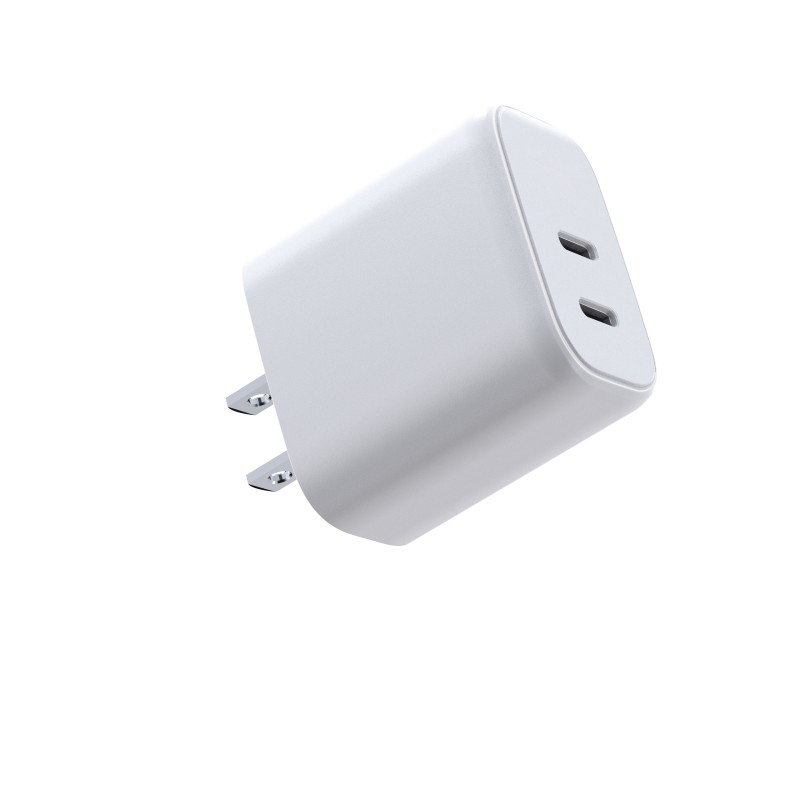
Physical design determines where the charger works: foldable plugs fit pockets and protect other luggage, fixed plugs are sturdier, and plug geometry must clear power-strip switches and wall warts. For travel SKUs, foldability and weight often matter more than an extra 5W.
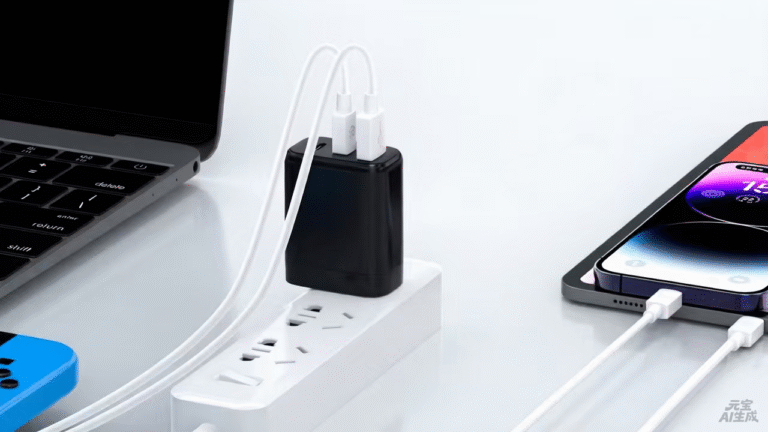
Physical fit failures are the most common post-purchase complaints after compatibility: a charger that blocks the adjacent outlet, a foldable plug that does not fold flat, or a plug shape that barely clears a power strip. Sellers should publish dimensions including the plug and a photo on a typical outlet. For travel SKUs, foldability is a functional spec, not a cosmetic one.
Safety marks and what they cover
Certification marks — CE, FCC, RoHS and model-dependent CCC, PSE, KC — indicate the charger passed defined safety and EMC tests. Product safety standards define what those marks mean; an uncertified charger may work fine until it doesn't.
Marks mean the product passed defined tests: CE covers EU requirements including EMC, FCC covers US emissions, and model-dependent marks like CCC, PSE or KC cover specific markets. A mark without a supporting certificate is meaningless, so ask for the certificate when it matters. Resellers especially should verify certification before listing — marketplace policies and liability follow the product, not the factory.
Certification scope varies by mark: CE covers EU safety and EMC directives, FCC covers US emissions (and, for power supplies, energy), while CCC, PSE and KC are market-specific. A charger can legally carry CE yet fail a different market's requirements, which is why multi-region products need multi-region certification. Check each target market's mark and ask for the certificate, not just the logo.
Building a short spec checklist for buyers
When comparing chargers, check five things beyond wattage: ripple spec, standby power, plug design, safety marks and the manufacturer's test documentation. A charger that publishes all five is more trustworthy than one that publishes only wattage — our quality-control process keeps exactly this data shareable.
Spec sheet terms decoded
- Ripple (mV): output cleanliness; lower is better.
- Standby / no-load power (W): energy drawn when idle; lower is better.
- Efficiency: output power ÷ input power; higher means less heat.
- Protections: OVP, OCP, OTP, short-circuit — safety circuits that should always be present.
- Certifications: the markets the product legally passes.
Two more terms belong in the glossary because they confuse buyers: "PD" versus "PPS" and "peak" versus "sustained." PD is the negotiation standard, PPS is the adaptive extension that fine-tunes voltage for battery health, and a charger can support one without the other. Peak output is the maximum a port can reach briefly; sustained output is what it holds over time, and the sustained number is the one that matches real charging behavior.
Which specs matter for safety
Protections and certifications dominate safety: over-voltage, over-current, over-temperature and short-circuit protection, backed by a recognized certification mark. Safety standards like IEC 62368-1 also cover touch temperature, so thermal data is a safety spec too.
Which specs matter for speed
Speed depends on protocol support (PD, PPS, proprietary), the phone's limit and cable quality — not just wattage. A 30W charger with PD and PPS will fast charge more devices than a 45W charger with only fixed-voltage output.
Protocol support is the speed spec: PD 3.0 with PPS covers the broadest device set, while fixed-output chargers may fast charge one brand and slow charge another. Voltage range matters too — a charger whose PPS window misses a phone's request range negotiates lower power. List the protocol table on the product page; speed-shopping buyers read it.
Which specs matter for travel
For travel, weight, foldable plugs, input range (100–240V) and multi-region certification matter most. A compact GaN charger with foldable EU/UK/US/AUS plugs is more useful than a heavier fixed-plug model with more ports.
Travel also demands surge tolerance and multi-voltage certification: a charger that handles 100–240V and carries the marks for every region in your itinerary is safer than a single-region model with an adapter. Foldability and weight complete the travel story. Publishing the input range and per-region marks turns a compliance detail into a travel feature.
A printable spec checklist
- [ ] Wattage matches devices
- [ ] PD + PPS protocol support
- [ ] Ripple spec published
- [ ] Standby power published
- [ ] 100–240V input range
- [ ] Safety marks for target markets
- [ ] Protections listed (OVP/OCP/OTP)
- [ ] Thermal and test documentation available
The checklist is only useful if it changes how you buy, so pair it with a habit: before ordering any charger, fill in every field from the published spec sheet and mark any that are missing. Missing fields are themselves information — a charger that publishes wattage but hides ripple, standby power and protections is making a statement about what it does not want you to compare. Apply the same checklist to every supplier and every price tier, because the discipline catches the quiet downgrade between sample and production. Keep the filled checklist with the purchase record; when a product underperforms, the checklist shows which spec was never actually delivered. For teams that buy in volume, this single habit converts spec sheets from marketing into an auditable procurement document.
FAQ
What is ripple in a phone charger?
Ripple is the small AC fluctuation left on the DC output. Lower ripple means cleaner power, less stress on the device and fewer noise issues; quality chargers publish it as mV peak-to-peak.
Does a charger use power when nothing is plugged in?
Yes — that is standby or no-load power. Well-designed chargers draw very little (often under 0.1–0.2W), which matters for energy labels and fleet-scale electricity use.
Which phone charger specs matter most for safety?
Protections (OVP, OCP, OTP, short-circuit) plus a recognized certification mark for your market. Published thermal and test data support the safety story.
Is a higher-wattage charger automatically better?
No. Protocol support, ripple, standby power, plug design and safety marks matter as much as wattage — sometimes more.
Building honest spec sheets for your charger line? Our team can provide ripple, standby and test data for every model. Contact us to see what a complete spec package looks like.
This article is part of Phone Chargers, the guide that covers this topic in decision order.