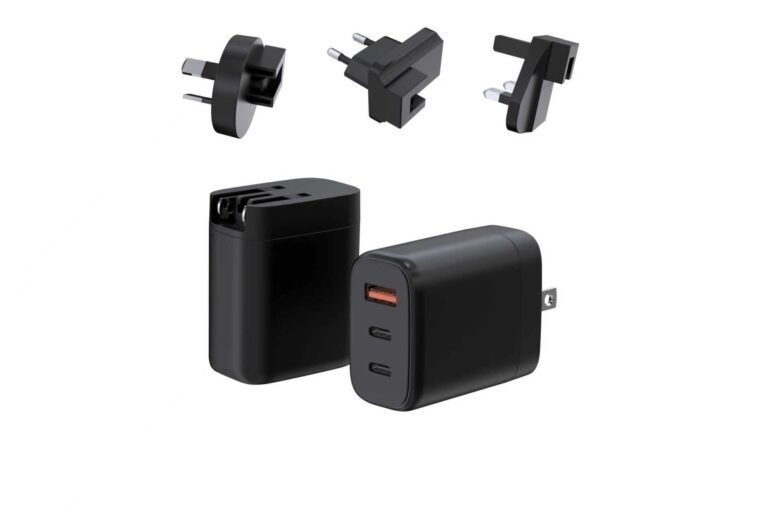
A medical power supply is not a consumer charger with a medical sticker — it is designed and certified to IEC 60601 so a single fault cannot reach a patient. For device OEMs sourcing one, this article is a manufacturer-evaluation checklist built around that standard, including the evidence you should demand before trusting “medical-grade”.
What Is a Medical Power Supply?
A medical power supply powers or charges medical electronic equipment — patient monitors, infusion pumps, ventilators, handheld diagnostics and medical carts. What makes it “medical” is not the wattage or connector, but the design and certification against medical safety standards, which set far stricter limits on electric shock protection and electromagnetic interference than consumer electronics allow.
Why Medical Chargers Need Special Standards (IEC 60601-1-2)
The IEC 60601 family exists because patients cannot always react to an electric shock — they may be unconscious, connected to conductive lines, or have compromised skin. Two parts matter most when you buy a power supply:
- IEC 60601-1 — general requirements for basic safety and essential performance of medical electrical equipment.
- IEC 60601-1-2 — electromagnetic compatibility (EMC), with limits far tighter than consumer EMC because an infusion pump or monitor must not misbehave near other equipment.
“IEC 60601 compliant” on a power supply normally refers to the applicable part of this family. The governing body is the IEC, and regions adopt the standard locally (for example, the UL/CSA versions in North America).
Key Specs: 2×MOPP, Leakage Current, EMC
Three numbers decide whether a supply is realistically usable in a patient-connected product. Treat each one as a design commitment that has to be proven per model, not assumed:
| Spec | What it means | Why it matters |
|---|---|---|
| 2×MOPP isolation | Two Means of Patient Protection between mains and patient | Reduces the chance of a single fault reaching the patient |
| Leakage current | Patient leakage current held to very low levels (typically ≤100 µA in normal condition) | A fault path through the patient must not deliver a harmful current |
| EMC per 60601-1-2 | Strict radiated/conducted limits and immunity | Prevents the charger from interfering with the device it powers |
A 2×MOPP design needs physical isolation distance (creepage and clearance), reinforced insulation and a transformer engineered for it — which is why “we can just relabel a consumer charger” is the wrong answer in this category. For the technical detail on MOPP vs MOOP, the UL Solutions medical resources and MDDI Online are the references, and the US side is governed by the FDA’s medical device program.
How to Choose a Medical Power Supply Manufacturer
Evaluation should be a document exercise before it is a price exercise. A serious partner can answer all of these, in writing:
- Standards coverage: Which exact standards (IEC 60601-1, 60601-1-2, regional versions) apply to your product, and does the factory have experience building to them?
- Certification path: Does the factory manage certification projects — test house, documentation, design iterations — or only sell certified off-the-shelf units?
- Design ownership: Can engineers explain the isolation design, leakage budget and EMC mitigation for their platform?
- Documentation and traceability: Are batch records, test reports and change management available to your QA team? An ISO9001-based system is a useful baseline: incoming material and BOM verification, ESD-controlled PCBA, board-level checks, 100% electrical and functional testing, hi-pot pressure tests, load aging, appearance checks and QA sampling with a per-batch shipment inspection report. Our quality control page documents exactly these gates, and test documentation can be shared under NDA.
- Commercial realism: Honest lead times, MOQ and a clear statement of what is and is not certified yet. Our OEM/ODM factory page for low-MOQ projects shows how small-batch starts are structured.
Test houses like Intertek publish practical guidance on medical certification; reading their material before supplier calls will make your questions sharper.
Certifications and Documentation Buyers Should Ask For
Before committing to a supplier, ask for this documentation set and review it like a design input:
- Certificate copies in the name of the legal manufacturer, not a generic “compliant” statement.
- The exact standard editions and regional adoptions (IEC vs UL/CSA versions).
- Test reports covering isolation, leakage current and EMC for the specific model.
- A certification roadmap if the product is still in development — what will be certified, by whom, and on what timeline.
- Change management — how component or design changes are reviewed so the certification stays valid.
OEM/ODM Medical Charger Checklist
If you are starting a project today, run it in this order so the certification work lands on the right path the first time:
- Define the device type and patient-contact class — this determines MOPP/MOOP and EMC requirements.
- Confirm target regions to fix the standard editions (EU/UK/US/other).
- Shortlist manufacturers with relevant experience, not just “power supply” experience.
- Ask for documentation before asking for price.
- Agree a certification roadmap with named test houses and dates.
- Build in samples and an audit step — the CE/FCC/RoHS guide for GaN OEM shows how certification documentation is verified in practice.
How We Approach Medical Charger Projects (Honest Scope)
To be transparent about our own position: WECENT is a GaN, USB-C and wireless charger factory (Shenzhen Bao’an HQ, dedicated manufacturing in Dongguan), and medical charging is an area we build to spec on a project basis. We do not claim every model is medically certified. What we bring is the engineering and documentation foundation a medical project needs: charger platforms from 20W–240W (model-dependent), an ISO9001 quality system with batch traceability, and a process for scoping the certification path for your target standard — including what we can and cannot cover before you commit. The factory capability snapshot is on the factory page, and a structured overview of OEM/ODM depth is on the OEM/ODM customization page.
For a medical charging project — monitor, pump, cart or handheld device — start the conversation through the contact page with your device class and target markets. We will tell you honestly what we can build and which certification path applies.
FAQ
What is the difference between IEC 60601 and IEC 62368? IEC 62368 covers IT/AV equipment; IEC 60601 covers medical electrical equipment and has stricter patient-safety and EMC requirements.
Is 2×MOPP always required? Not always — it depends on the patient-contact application (BF/CF classifications). A design review with the certification partner decides.
What leakage current is allowed in medical power supplies? Patient leakage current is typically limited to ≤100 µA under normal conditions; exact limits depend on the standard edition and application.
Can a consumer charger be used in a medical device? Only in clearly non-patient-connected accessories, and even then the EMC and documentation burden usually argues for a proper medical supply.
How long does medical certification take? Typically months, not weeks — budget for design iterations, test house time and documentation. Start certification planning early.
This article is part of Medical Power Supplies, the guide that covers this topic in decision order.