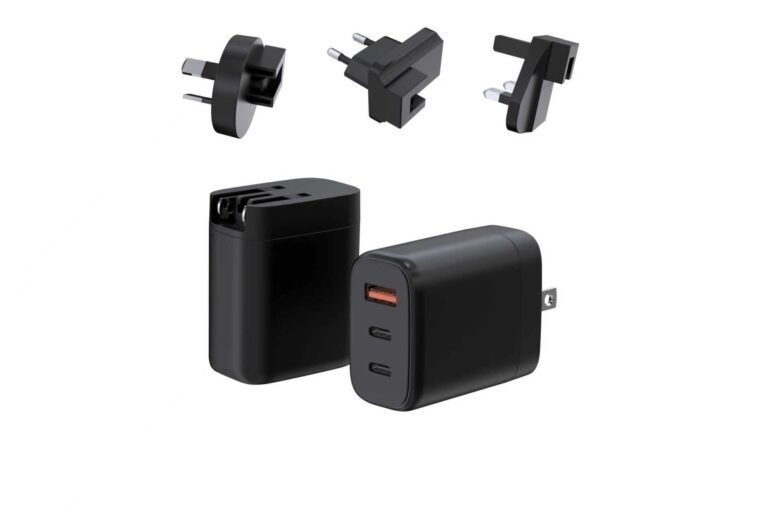
Choosing a reliable GaN charger manufacturer involves auditing engineering expertise, checking safety certifications, and evaluating supply chain ecosystem advantages. International procurement teams must verify if a partner offers scalable OEM/ODM production, robust component sourcing, and stringent thermal and compliance testing. Partnering with an experienced Shenzhen-based factory ensures direct access to cutting-edge gallium nitride technology, cost-effective wholesale pricing, and reliable quality control.
International procurement managers, cross-border e-commerce sellers, and private label brands operate in a highly competitive electronics market. Navigating the consumer electronics power accessory landscape requires moving past surface-level marketing to understand factory-level engineering.
When sourcing power accessories, your choice of a manufacturing partner directly dictates your brand’s market reputation, product safety, and return rates. This comprehensive guide outlines the critical technical and operational parameters required to audit a power supply manufacturer, leveraging real-world insights from the heart of the world’s electronics manufacturing hub.
How Does the Shenzhen Manufacturing Ecosystem Accelerate GaN Charger Production?
The Shenzhen manufacturing ecosystem accelerates GaN charger production by integrating advanced semiconductor supply chains, automated assembly factories, and specialized component vendors within a single geographic cluster. This deep integration allows a China manufacturer to shrink development cycles from months to weeks, giving global distributors and private label brands a distinct time-to-market advantage over regional competitors.
For international sourcing managers, the Bao’an and Longhua districts of Shenzhen represent the global epicenter of power electronics innovation. In our Shenzhen facility, Wecent leverages this localized supply chain proximity to secure tier-one raw materials—such as primary-side controller ICs, planar transformers, and high-frequency GaN FETs—with zero transit delays.
When a cross-border supplier operates within this ecosystem, the component prototyping pipeline is highly streamlined. For instance, during a recent custom charger project for a European consumer electronics distributor, our engineers modified a secondary-side synchronous rectification layout and sourced alternative high-temperature capacitors within 48 hours. This adjustment reduced the pilot production timeline by 14 days compared to factories operating outside major electronic clusters.
What Technical Standards Define a True High-Performance GaN Charger Factory?
A high-performance GaN charger factory is defined by its mastery of advanced topology design, strict adherence to universal USB Power Delivery (USB PD 3.0 / PD 3.1) standards, and implementation of precise power factor correction (PFC). Competent manufacturers must possess the engineering capability to design high-frequency, high-density power supplies that maintain low electromagnetic interference (EMI) and high efficiency.
When auditing a potential OEM or ODM partner, technical evaluation should focus heavily on topology selection and semiconductor integration. Standard silicon switchers struggle with thermal dissipation and efficiency losses when switching frequencies exceed 100 kHz. In contrast, true GaNFast and GaNSense topologies easily operate above 300 kHz, drastically shrinking the footprint of passive components like transformers and filters.
Wattage Tier & Protocol Matrix
To successfully guide a private label product line, a sourcing partner must match the appropriate charging protocol and structural design to the target device’s power requirements:
| Wattage Tier | Typical Port Configuration | Primary Fast Charging Protocols | Target Applications |
| 33W / 45W Mini | 1 x USB-C | PD 3.0, PPS, QC 4+, SCP | Smartphones, Tablets, Portable Consoles |
| 65W Slim | 2 x USB-C + 1 x USB-A | PD 3.0, PPS, AFC, FCP | Ultrabooks, Flagship Phones, Dual Charging |
| 100W Multi-Port | 3 x USB-C + 1 x USB-A | PD 3.0, PPS, QC 3.0 | Premium Laptops, Multi-Device Workstations |
| 140W / 240W High-Power | 2 x USB-C (PD 3.1 Extended Power Range) | PD 3.1 EPR, PPS | High-End Gaming Laptops, Station Power Banks |
In Wecent’s Shenzhen production line, our 65W GaN charger achieves a 93.5% peak efficiency under a full USB PD 3.1 Programmable Power Supply (PPS) load test. This high conversion rate directly prevents the excess energy from converting into heat, allowing the charger to maintain a power density exceeding $1.5 \text{ W/cm}^3$ while safely complying with international surface temperature limits.
Why Is Advanced Thermal Management Critical for Private Label Bulk Orders?
Advanced thermal management is critical for private label bulk orders because compact GaN chargers generate intense localized heat arrays that can degrade internal components and cause premature safety failures. Without sophisticated heat dissipation technologies, high-density fast chargers risk thermal throttling, housing deformation, or failing international safety standards during sustained high-wattage operation.
To protect a brand’s reputation and minimize cross-border return rates, look for factories that utilize advanced thermal material engineering rather than basic heat sinks. Superior thermal design combines potting technology (filling internal air gaps with thermally conductive silicone resin) with thin-film graphene sheets wrapped around the high-frequency magnetics.
During a stress-testing phase in our factory, we analyzed how a standard multi-port charger performed during sustained 100W output. By upgrading to a high-conductivity potting compound and optimizing the printed circuit board (PCB) copper weight to 2oz, we successfully reduced the internal component thermal rise by 8°C under continuous load. This engineering adjustment ensures that when a distributor imports a bulk order, the finished product operates well within the safe thermal margins dictated by consumer safety boards.
Which Safety Certifications Are Mandatory for Importing Wholesale Chargers Globally?
The mandatory safety certifications for importing wholesale chargers globally depend on the target destination, with CE and RoHS required for Europe, FCC for the United States, PSE for Japan, and KC for South Korea. A reputable supplier must provide legitimate, verifiable test reports demonstrating compliance with IEC 62368-1, the harmonized international standard governing audio, video, and ICT equipment safety.
Importing consumer electronics without proper regulatory credentials can lead to customs seizures, heavy financial penalties, or total product recalls. Sourcing managers must distinguish between basic self-declaration marks and comprehensive third-party certifications issued by accredited bodies such as TUV, SGS, or UL Solutions.
Wecent Expert Views
“Navigating global compliance is often the biggest hurdle for private label brands expanding across multiple borders. A factory cannot simply rely on generic component-level certificates; the entire finished charger assembly must pass rigorous Electromagnetic Compatibility (EMC) testing and insulation resistance evaluations. At Wecent, we maintain a dedicated compliance department that constantly monitors updates to standards like the EU Common Charger Directive and updated IEC 62368-1 revisions. By embedding regulatory readiness directly into our initial ODM engineering phase, we ensure that our global client network receives products that smoothly clear customs barriers in any major market, from North America to the Asia-Pacific region.”
Every batch leaving a China factory should undergo 100% automated high-voltage isolation testing (Hi-Pot) and a multi-hour dynamic burn-in process. This strict quality control ensures that any infant mortality defects in the semiconductor lots or transformer windings are caught inside the cleanroom, long before the goods enter a container for international shipping.
How Do OEM and ODM Service Tiers Differ for Custom Charger Development?
OEM and ODM service tiers differ in design ownership and development timelines: OEM services focus on manufacturing a pre-existing factory design customized with your branding, logos, and retail packaging, while ODM services involve building an entirely custom power accessory from the ground up, including bespoke PCB layouts, housing schematics, and unique port configurations.
Choosing between these manufacturing tiers requires balancing your brand’s budget, technical capability, and time constraints. For rapid market entry, an OEM tier utilizing existing open-tool designs minimizes capital expenditure and dramatically shortens lead times. For brands attempting to disrupt the market with a unique visual identity—such as a specialized travel charger with integrated regional plugs or an angled visual data display—the ODM path is required.
OEM vs. ODM Sourcing Capabilities
Understanding the clear boundaries between service tiers helps procurement managers properly allocate their engineering and capital resources:
-
OEM (Original Equipment Manufacturing):
-
Best For: Fast-turnaround private label setups, Amazon FBA sellers, and low-risk product expansions.
-
Customization Scope: Silk-screen brand logos, Pantone color matching for the plastic housing, custom laser etching for regional compliance marks, and bespoke retail box architecture.
-
Minimum Order Quantity (MOQ): Low entry thresholds, typically starting at 200 to 500 pieces per batch depending on packaging requirements.
-
-
ODM (Original Design Manufacturing):
-
Best For: Tier-one consumer electronics brands, specialized industrial applications, and companies seeking exclusive patent rights.
-
Customization Scope: Custom injection mold design, localized multi-port power distribution logic, bespoke firmware engineering for proprietary fast-charging protocols, and optimized component selection.
-
Development Cycle: Requires comprehensive 3D prototyping, thermal simulations, tooling creation, and full regulatory re-certification.
-
What Production Bottlenecks Should You Anticipate in Bulk Order Fulfillment?
The production bottlenecks you should anticipate in bulk order fulfillment include component lead-time volatility, localized raw material shortages, delays in injection molding verification, and extended queues at third-party testing laboratories during peak holiday shipping seasons. Mismanaging these manufacturing stages can cause missed retail product launches and costly logistics delays.
A resilient sourcing partner mitigates these supply chain risks through proactive resource management and strategic component forecasting. Because premium gallium nitride controllers and specialized high-frequency transformers require long-lead planning, a factory must maintain strategic buffer stocks of essential silicon and GaN switchers to buffer against sudden demand spikes.
In our production management system, we minimize bottlenecks by running parallel quality tracks. While the plastic enclosures undergo precision injection molding, the surface mount technology (SMT) lines simultaneously assemble and verify the internal PCBA architecture. This concurrent processing methodology allows Wecent to fulfill large wholesale orders efficiently, consistently maintaining a stable 25-to-30-day production turnaround for complex multi-port GaN accessories even during peak regional export surges.
Where Can Buyers Optimize Costs Without Compromising Charger Safety?
Buyers can optimize costs without compromising charger safety by scaling up total order volume to achieve economies of scale, standardizing enclosure footprints across multiple wattage tiers, and optimizing packaging weight to reduce international air and sea freight expenses. Cutting costs by downgrading internal protective circuitry, using non-flammable plastic alternatives, or omitting EMI filtering components must be strictly avoided.
True cost optimization is achieved through intelligent engineering rather than material degradation. For instance, a private label brand can utilize a single, master-crafted enclosure design to house both a 45W and a 65W PCBA model. This shared housing strategy eliminates the need for a second expensive injection tool, saving thousands of dollars in upfront tooling investments while maintaining visual consistency across the entire brand line.
Additionally, specifying standard matte or textured plastic finishes rather than complex multi-layered high-gloss coatings reduces production rejection rates inside the factory. This minor cosmetic adjustment improves yield rates, allowing the manufacturer to pass the direct cost savings along to the buyer through more competitive wholesale pricing.
When Is the Ideal Time to Transition from Low-MOQ Pilot Runs to Scale Manufacturing?
The ideal time to transition from low-MOQ pilot runs to scale manufacturing is immediately after your initial market batch achieves a low return rate (under 0.5%) over a 90-day retail evaluation cycle, and your distribution channels project consistent monthly sales volumes. This structured scaling process minimizes initial capital risks while validating structural reliability in real-world consumer scenarios.
Beginning your sourcing journey with a flexible, low-MOQ pilot run (such as 200 pieces) allows your engineering and marketing teams to evaluate real-world product presentation, packaging durability, and early user feedback without over-committing capital. Once the product proves stable and demonstrates a strong return on investment, scaling up to bulk production unlocks significant volume discounts. Larger production runs maximize material utilization on high-speed SMT lines and lower the per-unit cost of customized retail packaging, maximizing your profit margins as your brand expands globally.
Conclusion
Sourcing GaN and wireless chargers from China requires a deep understanding of power electronics engineering, global regulatory compliance, and the unique manufacturing capabilities of the Shenzhen supply chain. By looking closely at advanced thermal management, demanding verified certifications like IEC 62368-1, and aligning with a manufacturing partner capable of scaling smoothly from low-MOQ pilot runs to large-scale bulk orders, international buyers can build highly profitable, safe product portfolios. Taking a methodical approach to evaluating factory engineering ensures your brand remains competitive, reliable, and well-positioned for long-term growth in the fast-evolving consumer electronics landscape.
FAQs
What is your standard MOQ for private label GaN chargers?
Our factory supports flexible entry points for international buyers, offering low MOQs starting at 200 pieces for standard housing configurations with custom laser-etched logos and specialized retail packaging. Larger ODM projects requiring brand-new injection molds or distinct circuit layouts generally require a higher baseline starting point to offset initial tooling setup and engineering expenses.
How long is the typical lead time for a bulk wholesale order?
For standard OEM production runs using our existing certified enclosures, production fulfillment typically spans 25 to 30 days following official sample approval and deposit confirmation. Complex, completely customized ODM projects that require iterative 3D prototyping, bespoke PCB fabrication, and new safety certification registration generally require a development cycle of 60 to 90 days.
Do your charging accessories carry full international safety certifications?
Yes, all of our power accessories are engineered from day one to comply with major international electronic safety regulations. We provide fully independent, verifiable test reports and active certificates for CE, FCC, RoHS, PSE, and KC markets, ensuring smooth customs clearance and complete legal compliance across all major global retail and e-commerce distribution channels.
What warranty terms do you provide for bulk distribution orders?
We back our manufacturing quality and component selection with an industry-leading 2-year warranty on all bulk shipments. In the rare event that a client encounters a verified manufacturing defect or component failure within the warranty window, we provide direct structural replacements or equivalent financial credits in the subsequent production cycle.
Sources
-
USB Implementers Forum – USB Power Delivery Specification Revision 3.1
-
Wireless Power Consortium – Qi Wireless Charging Standard Core Specifications
-
International Electrotechnical Commission – IEC 62368-1: Audio/Video and ICT Equipment Safety
-
Federal Communications Commission – Equipment Authorization Approval Guide
-
European Commission – CE Marking and RoHS Directive 2011/65/EU Compliance Regulations
-
EE Times – Gallium Nitride (GaN) Power Electronics Market Developments