Shared desks fail their users when the only power source is a wall outlet across the room. Built-in charging — USB-C PD ports, pop-up outlets and wireless pads embedded in the furniture — turns a table into a workspace. This guide covers the options, the power planning, the safety and the OEM collaboration that make integrated charging work.
Why shared desks need integrated power
Hot desks and conference tables host different people every day, each with a laptop, phone and expectations. Without integrated power, the room has extension cords, dead laptops and meetings that start late. Integrated charging removes the bottleneck: power at every seat, cables managed, and devices charged before the next user arrives. The ROI is measured in meeting minutes and employee satisfaction, not just outlet counts.
The cost of missing power is measured in meeting minutes: every attendee who hunts for an outlet, every laptop that dies mid-presentation, every extension cord that becomes a trip hazard. Integrated USB-C PD per seat removes the hunt and the hazard at once. Facilities teams that budget for integrated charging treat it as furniture, not electronics — and the maintenance plan follows the furniture's lifecycle.
Pop-up, edge and under-desk charger options
The three integration styles serve different furniture:
- Pop-up modules: rise from the table surface when needed, ideal for conference tables.
- Edge modules: mount at the table edge or grommet, cheaper and simpler.
- Under-desk rails: attach below the surface with cables routed to the user, best for hot desks.
The choice balances visibility, installation cost and cable management. Pop-ups are the premium experience; under-desk rails are the retrofit-friendly workhorse.
The three styles differ in cost and serviceability: pop-up modules are the premium look but add moving parts and cleaning challenges; edge modules are simpler and easier to replace; under-desk rails are the retrofit workhorse. Each style needs service access, which is the detail most designs forget. The certified power modules used inside the furniture carry their own compliance requirements, and the certificate set should accompany the installation documents.
USB-C PD power for conference tables
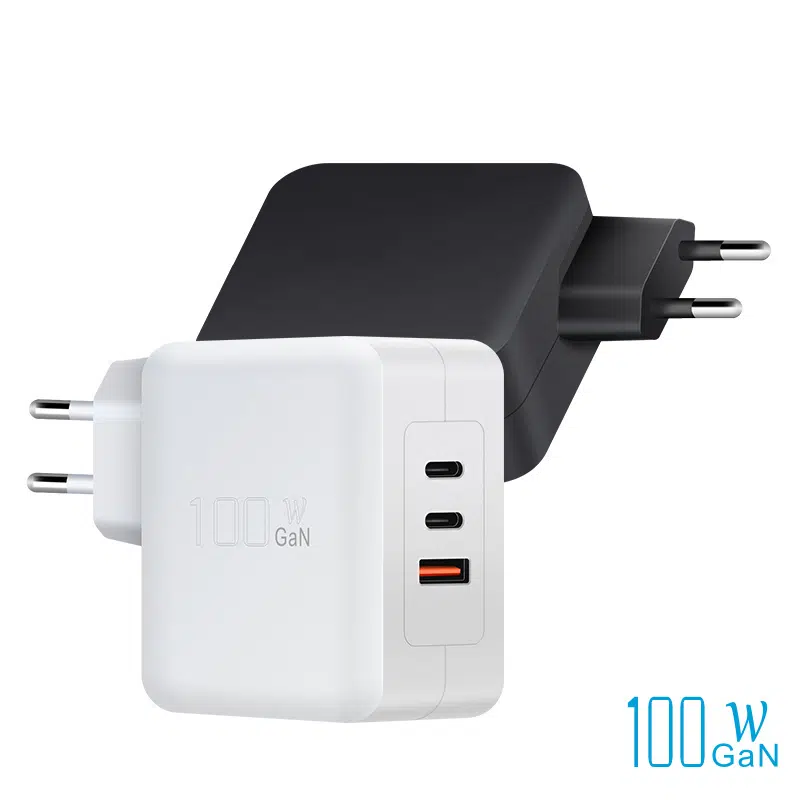
Conference-table power should be USB-C PD at 65–100W per seat to cover laptops, with a couple of 140W seats for presenter workstations. Per-seat PD modules hide the charger in the furniture and expose only the port — the cleanest integration. The power module's wattage drives the table's circuit plan, so decide the per-seat number before choosing the furniture.
The per-seat modules should also carry the certification story: energy-efficiency standards and safety marks are part of the furniture's compliance file, not optional extras. Facilities teams should ask integrators for the certificate set with the install, because an auditor will ask for it later. The USB PD negotiation each module runs is standard; the certification is what makes it institutional-grade.
Wireless charging embedded in furniture
Wireless pads embedded in tables serve phones and earbuds; Qi2 magnetic pads add alignment. The design trade-off is placement: a pad flush in the table surface collects dust and coffee, while a recessed or angled pad stays cleaner. Wireless is a convenience layer on top of USB-C PD, not a replacement for it.
Safety, certification and maintenance
Integrated charging is mains power inside furniture, so safety is non-negotiable: certified PD modules, proper grounding, surge protection and thermal management in enclosed spaces. Maintenance is the second half — modules fail, cables wear and vents clog, so the design should allow module replacement without rebuilding the table. A service plan with spare modules and a documented swap procedure is part of the purchase.
Planning charging with furniture makers
The planning conversation with the furniture maker covers four items: the per-seat wattage, the module type and placement, the cable routing and service access, and the certification documents for the integrated electronics. The furniture maker integrates the modules; the electronics supplier certifies them. Aligning the two early prevents the classic failure of beautiful furniture with inaccessible, uncertified charging.
The planning meeting should produce one shared document: the per-seat wattage matrix, the module layout, the cable routing and the certificate set. Without it, the furniture maker and the electronics supplier each assume the other owns the compliance file. A clear division of responsibility — modules certified by the electronics partner, integration validated by the furniture maker — prevents the classic failure of beautiful furniture with uncertified charging. The document also becomes the maintenance manual, naming the spare modules and the swap procedure that keep the table serviceable for its full life.
Power load planning for a full conference table
The load plan is the engineering backbone: a 12-seat table with 100W per seat can draw 1.2kW when fully loaded, which affects the room's circuit plan. Budget the simultaneous worst case (all seats charging), add margin, and split the table across circuits. The load plan is also the document facilities uses to avoid tripped breakers on meeting days.
Cable channels and service access in furniture
Channels and access are the parts users never see and facilities always need: cable channels that route power and data without pinching, and access panels that let technicians reach modules without dismantling the table. The design should state the service path in the documentation. A table with integrated charging but no service access is a one-time installation with no maintenance plan.
Testing furniture-integrated charging in real use
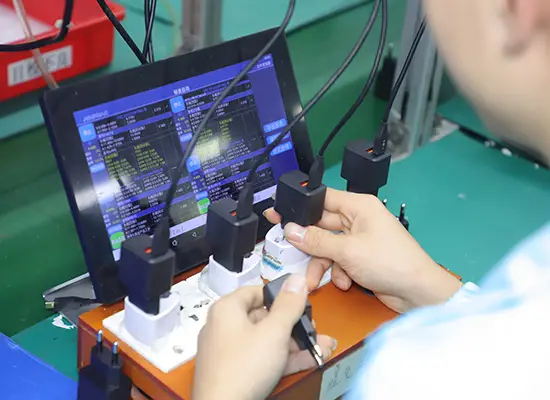
Test the integrated system the way users will use it: all seats occupied, laptops and phones charging, cables connected and disconnected repeatedly. Measure per-seat wattage under full load, check thermal behavior in the enclosed module spaces, and verify that a failing module can be swapped without disturbing other seats. The test report is the acceptance document for the installation.
Retrofit options for existing desks
Existing desks can be retrofitted with under-desk PD rails and grommet modules without replacing the furniture. The retrofit plan should audit the desk's power source, choose modules that fit the existing grommets, and route cables safely. Retrofits trade the premium look of integrated design for speed and cost — the right choice when the furniture is still good.
Retrofits are where most offices actually start: the furniture is still good, and only the power is missing. Under-desk PD rails and grommet modules install without replacing the table, and the per-seat wattage follows the same planning rules as new furniture. The retrofit audit should verify the circuit capacity first — adding 12 seats of 65W to a circuit already serving monitors and lamps is a breaker trip waiting to happen. An OEM partner can supply the modules with the load-planning data included.
Cost drivers in built-in charging projects
The cost drivers are per-seat wattage, module type, furniture integration labor, certification and maintenance spares. Pop-up modules cost more than under-desk rails; 100W per seat costs more than 45W; and certified modules cost more than uncertified ones at every step. The budget should include spare modules and the service plan, because integrated charging that cannot be repaired becomes integrated frustration.
FAQ
What power should a conference table provide per seat?
USB-C PD at 65–100W per seat covers laptops, with 140W seats for presenter workstations. The per-seat wattage drives the table's circuit plan.
Can existing desks get built-in charging?
Yes — under-desk PD rails and grommet modules retrofit into most desks without replacing the furniture. Audit the power source and grommet sizes first.
Is wireless charging in tables worth it?
As a convenience layer for phones and earbuds, yes — but it complements, not replaces, USB-C PD. Qi2 magnetic pads improve alignment; placement and cleanliness still matter.
What are the safety requirements for built-in charging?
Certified PD modules, proper grounding, surge protection and thermal management in enclosed spaces, plus service access and a maintenance plan. Certification documents should be part of the purchase.
Planning integrated charging for your office or furniture line? Send your table layouts and power requirements to our team through the contact page — we can supply certified PD modules and support your furniture integration project.
This article is part of Wireless Charger Products & OEM, the guide that covers this topic in decision order.