Mobile workstations sit at the top of the laptop power curve: they draw 100–240W under load, and how they charge depends on whether the brand standardized on USB-C or kept a proprietary connector. This guide compares the two routes and helps workstation buyers pick chargers, backups and fleet standards that actually work.
How workstation power needs differ from consumer laptops
Workstations pair high-core-count CPUs with discrete GPUs, which means sustained draws far above ultrabooks: 100W is common, 150–200W is realistic under rendering or simulation, and the peaks drive the charger spec. The OEM adapter is sized for the worst case; anything smaller drains the battery under load. That is the core difference from consumer laptops — the workload is not a spike, it is the job.
The difference is sustained draw, not peak: a workstation rendering or simulating pulls its maximum for hours, which is exactly the case that exposes undersized chargers. Power supply design practice treats sustained load as the design case for industrial hardware, and workstations deserve the same discipline. The charging spec should therefore state the sustained wattage, not the idle draw — and the buyer should test at the real workload before trusting any label.
USB-C PD limits and the EPR extension
Standard USB PD stops at 100W (20V/5A); the PD 3.1 Extended Power Range (EPR) extension raises the ceiling to 240W with 28V, 36V and 48V profiles. A 140W or 240W USB-C charger therefore depends on EPR support in the laptop, the charger and the cable. Workstations that support EPR can charge over USB-C at their full speed; those that predate it are capped at 100W over USB-C regardless of the charger.
The EPR extension is the technical story behind 140W and 240W USB-C charging: higher voltage profiles (28V, 36V, 48V) carry more power at the same 5A current, which is why the PD 3.1 specification opens the workstation category to universal chargers. The three-way requirement — laptop, charger and cable all EPR-capable — is the compatibility gate that most buyers miss. A 240W charger with a 60W cable is a 100W setup, and a laptop without EPR support ignores the extra profiles entirely.
Proprietary connectors and their trade-offs
Proprietary connectors exist to deliver the full wattage simply and cheaply: a barrel or proprietary jack avoids EPR negotiation, high-current cables and certification complexity. The trade-offs are real — one connector per brand, no universal compatibility, and bulky adapters that do not travel well. For fleets, proprietary connectors mean per-brand spare stock; for users, they mean the OEM brick is the only full-speed option.
Charging workstations while under full load
Under full load, the charger powers the components and whatever is left flows to the battery. A 140W charger on a workstation drawing 160W drains the battery slowly; a 240W charger on the same workload holds or gains. The rule is the same as any laptop: match the charger to the sustained draw, and treat "it works at idle" as irrelevant.
The sustained-load test is the one that matters for workstations: run the render or simulation that represents the job, connect the charger, and watch the battery for an hour. A charger that holds the battery level under the worst real workload is correctly sized; one that lets the battery drain is not, no matter what the label says. The same test exposes cable problems, because an under-rated cable sags exactly under sustained high current. Workstation users who run this test once, with the cable they will actually use, buy the right charger the first time.
Choosing backup and travel chargers
For backup and travel, the practical choices are:
- 100W USB-C: charges the workstation slowly or maintains it under light load; useful as a universal spare.
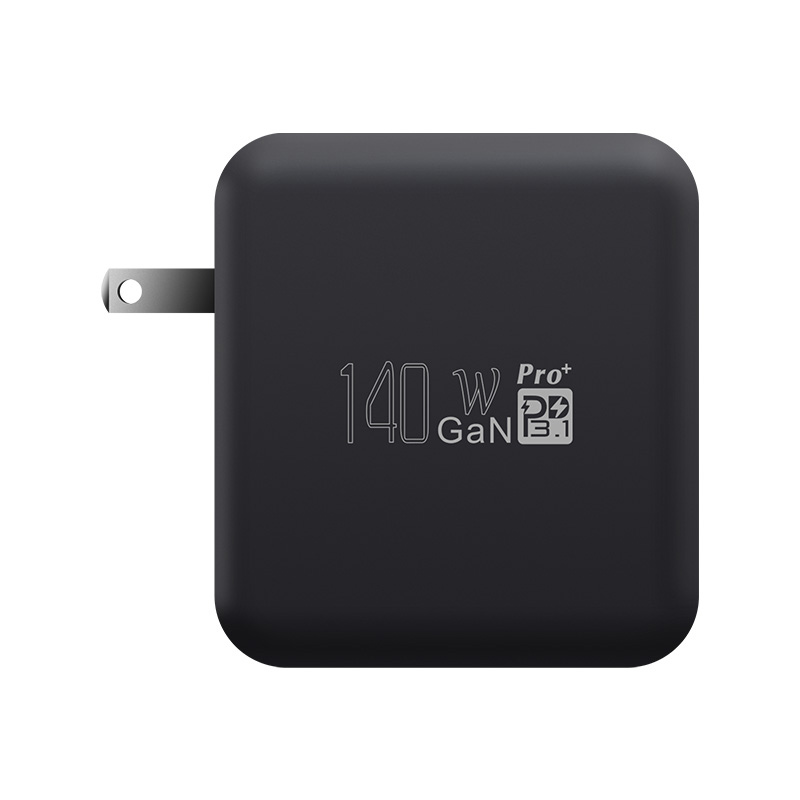
- 140W EPR USB-C: covers many workstations at full speed and doubles as a universal device charger.
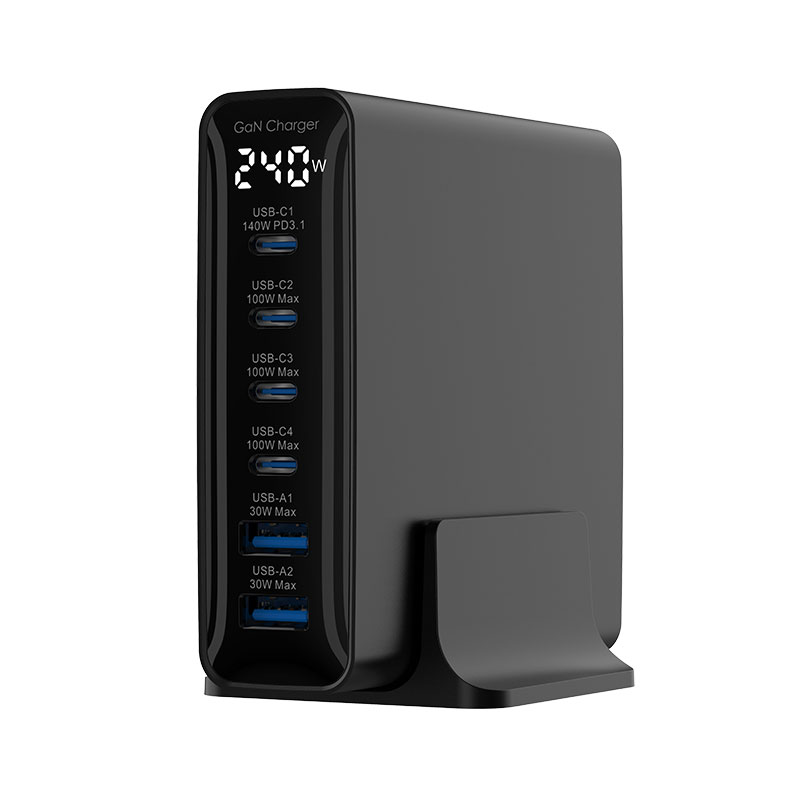
- 240W EPR USB-C: the top tier for the heaviest machines, with the caveat that the laptop, cable and charger must all support EPR.
The WEP-140-CCCA 140W charger and the WEG-240 240W model illustrate the two tiers.
The backup decision follows the risk: a workstation user who travels without a fallback risks a dead machine in a client meeting, while carrying the OEM brick plus a universal spare doubles the bag weight. The practical middle is an EPR-rated 100–140W charger as the travel spare and the OEM brick as the desk primary. USB-C charging hardware that negotiates across both roles earns its weight; the certification and cable rating are the parts that make the spare trustworthy.
What to standardize across a workstation fleet
For fleets, standardization beats per-user choices: one charger tier per workstation class, one cable spec (EPR-rated where needed), and one spare-stock policy. Standardizing on USB-C EPR where the hardware supports it simplifies inventory and travel; where proprietary connectors dominate the fleet, standardize the OEM adapter and a certified 100W USB-C spare for light use.
Workstation charger compatibility
Compatibility has three layers: the laptop's USB-C input limit, the charger's EPR support, and the cable's EPR rating. A laptop that caps USB-C at 100W accepts a 240W charger but negotiates only 100W; a laptop that supports EPR needs an EPR charger and cable to reach 140W+. Check all three before buying.
Charging while rendering or computing
Long render jobs are the stress test: the workstation draws its peak for hours, and an undersized charger converts the session into a slow battery drain. The fix is either a correctly sized charger or a workflow that starts with a full battery. Fleet buyers should size chargers for the longest-running workload, not the average one.
Backup charger options
The backup hierarchy: a certified 100W USB-C charger as the universal fallback, a 140W EPR unit for full-speed workstation charging, and the OEM adapter as the primary. Users who travel with only the OEM brick lose it and face a week of slow charging; a 100W USB-C backup covers the emergency without weighing down the bag.
Fleet standardization for workstations
Standardize on three things: the primary charger (OEM or EPR-matched), the universal spare (100W USB-C), and the cable spec (EPR-rated for the top tier). Publish the compatibility matrix per workstation model so procurement and users pick the same combination. The result is a fleet that charges predictably, with spares that fit every machine.
Choosing workstation charging hardware
The checklist for workstation charging hardware: the charger's wattage matches the sustained load, EPR support matches the laptop, the cable is EPR-rated for the top tier, and certification covers the target markets. Verify with a power meter under the real workload — the meter, not the label, is the specification.
FAQ
Can workstation laptops charge over USB-C?
Many can, at up to 100W over standard PD and 140–240W over PD 3.1 EPR where the laptop supports it. Check the laptop's USB-C input limit, because some models cap USB-C below their proprietary adapter's wattage.
What is the difference between 140W and 240W laptop charging?
Both use the PD 3.1 EPR extension. 140W covers most mobile workstations at full speed; 240W is for the heaviest machines and needs EPR support in the laptop, charger and cable.
Are proprietary laptop chargers better than USB-C?
For full wattage simplicity, yes; for compatibility and travel, no. Proprietary connectors deliver the full power with less complexity but lock you into one brand's ecosystem.
Can a third-party USB-C charger power a workstation?
At the negotiated rate — typically 100W for standard PD or up to 140/240W with EPR support. Verify the laptop's USB-C limit and the charger's EPR profile before relying on it.
Standardizing workstation charging for your fleet? Send your device list and workloads to our team through the contact page — we can match 140W and 240W chargers to your machines and verify them in testing.
This article is part of Medical Power Supplies, the guide that covers this topic in decision order.