Most iPhone chargers survive upgrades longer than people expect — and a few should be retired. The practical rules are simple: USB-C PD chargers carry over, 5W-era adapters cap your speed, and old or damaged chargers are safety risks regardless of compatibility.
What carries over between iPhone generations
Any USB-C PD charger from the last several years works with current iPhones. A 20W charger that fast-charged an iPhone 12 will fast-charge an iPhone 15, 16 or 17 — Apple's fast-charge guidance applies across generations. Connector changes (Lightning to USB-C) change the cable, not the charger — USB-C is the connector that carries PD.
The USB-C PD ecosystem is the reason chargers age well: any charger that speaks PD 3.0+ will negotiate with any modern iPhone, and only the cable changes with the connector. This continuity is worth naming in product copy — “works with iPhone 12 through current models” is a stronger claim than a single model number and reflects how buyers actually upgrade.
Lightning-era chargers with USB-C phones
If your iPhone uses USB-C, a USB-C-to-Lightning cable is obsolete; you need a USB-C-to-C cable. The charger itself is still fine — swap the cable, not the brick. For older Lightning iPhones, the old cable keeps working as long as it is not damaged.
When old chargers limit charging speed
An old 5W or 12W adapter charges a modern iPhone at a fraction of its fast-charge speed. If your charger predates USB-C PD or is rated below 18W, upgrading to 20W or higher is the single biggest speed improvement you can make without changing anything else.
The speed gap is concrete: a 5W adapter takes an iPhone from empty to full in roughly 3–4 hours, while a 20W adapter reaches 50% in 30 minutes and full in about 1.5 hours. Anyone complaining that a new phone charges slowly with an old brick is almost always experiencing this gap. The upgrade path is one certified 20W+ charger, and it fixes the complaint regardless of phone model.
The speed gap is also a battery-health story: slow charging is not bad for the battery, and some users deliberately charge overnight at low speed for longevity. The upgrade decision is therefore about convenience, not safety. What matters is knowing the gap exists — a buyer who expects 30-minute top-ups and gets a 5W trickle is a disappointed buyer, whether the setup is safe or not.
Safety reasons to retire old adapters
Retire adapters with frayed cables, cracked housings, buzzing sounds, or heat far beyond normal. Old uncertified chargers and counterfeit "Apple" bricks are the highest risk — safety standards like IEC 62368-1 define what a safe charger should meet, and genuine certification is the baseline.
Age itself is not the risk — condition is. Heat damage, cracked housings, loose connectors and counterfeit parts all raise the risk profile, and an adapter that has been dropped repeatedly may have internal damage invisible from outside. The practical rule for households: retire anything that is cracked, hot, buzzing or from an unknown brand, and replace it with a certified charger rather than reusing it in a child's room.
Planning a household charger refresh
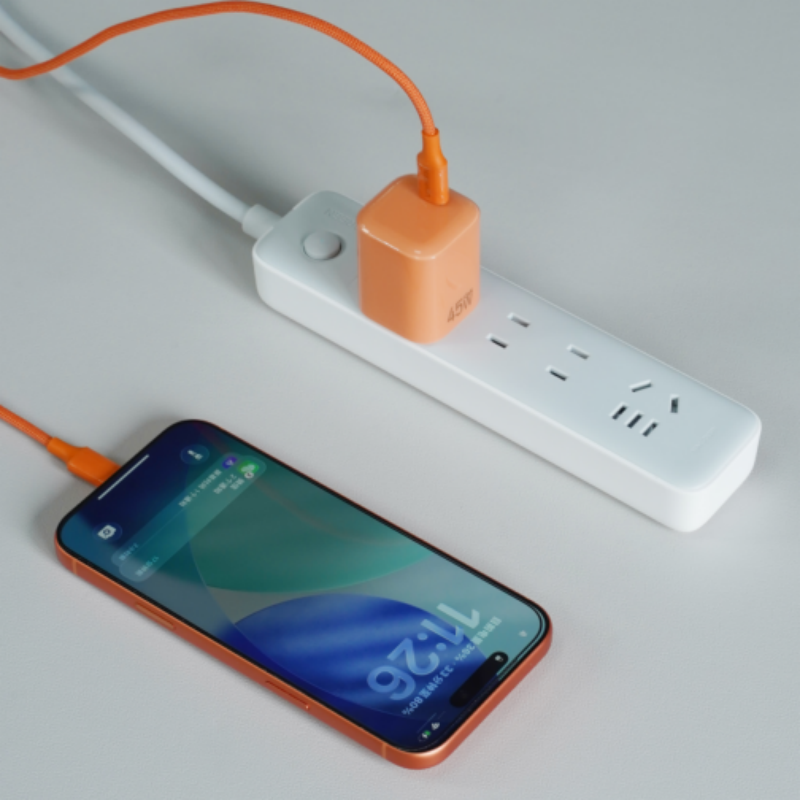
Audit the drawer once a year: keep certified PD chargers, replace sub-18W adapters with a 20–45W GaN model, and recycle anything damaged. One 45W Cosmic Orange charger can replace several slow adapters for a household.
A household refresh is a budget event, so plan it like one: audit the drawer, sort chargers into keep/replace/recycle, and set a small budget for the replacements. The keep pile should contain only certified PD chargers of 18W or higher; everything else goes to replacement or recycling. The replacement order matters: buy the chargers first, then the cables, because the cable type depends on the charger's ports. Doing the audit once a year, ideally before the holiday season when chargers go on sale, keeps the household's charging infrastructure ahead of device arrivals instead of permanently behind them.
Eco-friendly disposal and recycling options
Electronics should be recycled, not trashed. Many regions offer electronics donation and recycling programs that accept chargers and cables; some retailers collect small electronics at their stores. Check local rules before disposal.
Chargers contain small amounts of valuable and hazardous materials, and their cables are often recyclable as part of electronics programs. Before disposal, check whether a local retailer, manufacturer takeback or municipal program accepts small electronics. If you manage a fleet or refurbished business, build recycling into the refresh process — it is a visible sustainability story and a compliance requirement in more markets each year.
Charger compatibility across generations
| iPhone era | Connector | Works with modern chargers? |
|---|---|---|
| iPhone 8–14 | Lightning | Yes, with USB-C-to-Lightning cable |
| iPhone 15+ | USB-C | Yes, with USB-C-to-C cable |
| Any (5W-era adapter) | Any | Works, but slow — replace |
When older chargers slow you down
Older chargers slow you down whenever they deliver less than the phone requests: morning top-ups take longer, and heavy use while charging drains instead of fills. If your phone fast-charges in 30 minutes with a 20W brick and takes hours with your old one, the old one is the bottleneck.
Household charger refresh strategy
Refresh in tiers: one 20W per phone, one 45W for the newest Pro, one 65W multi-port for the shared desk, and one 3-in-1 wireless station for the nightstand. Buying GaN chargers that outlast upgrades means the next iPhone launch changes cables, not bricks.
Refresh in waves tied to device arrivals: when the household adds a USB-C iPhone, buy USB-C-to-C cables and keep the old bricks for secondary rooms; when a Pro model arrives, add a 45W charger to the desk; when the second iPad arrives, move the shared desk to 100W. Each purchase replaces the weakest link instead of adding to the drawer.
Recycling old chargers responsibly
Before recycling, remove the phone-specific cables you still need, then drop the rest at a certified e-waste collection point. Never put lithium-containing or damaged devices in household trash, and wipe nothing sensitive — chargers carry no data, but the same programs often accept phones too.
Buying chargers that last through upgrades
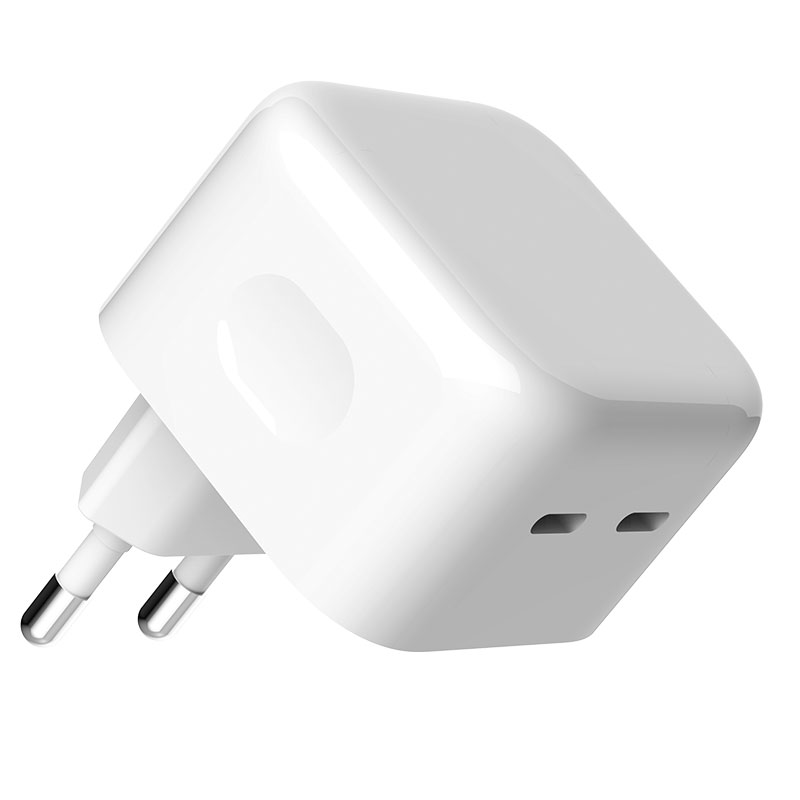
Choose USB-C PD chargers with broad protocol support and certification for your markets. A charger that fast-charges today's iPhone will fast-charge the next one; one built on an old fixed-voltage design will not. The 35W GaN/PD charger is the modern baseline that survives upgrade cycles.
Two specs decide charger longevity: protocol support (PD 3.0+ with PPS for Android fallback) and certification for your markets. Avoid chargers built around a single fixed output, because they negotiate poorly with newer devices. A certified PD/PPS GaN charger is the rare accessory that outlives the phone it was bought for.
Longevity is also a firmware and protocol story: chargers with updateable firmware or broad protocol tables handle new device behavior better than fixed designs. When comparing candidates, ask which protocol revisions the charger supports and whether the vendor maintains the compatibility list. A charger that keeps negotiating with new devices for five years is the rare purchase that genuinely amortizes.
FAQ
Can I reuse my old iPhone charger with a new iPhone?
Yes, if it is a USB-C PD charger of 18W or higher — you may only need a new cable. Old 5W adapters still work but charge very slowly.
Is it safe to keep using an old charger?
If it is undamaged and genuinely certified, yes. Retire chargers with frayed cables, cracks, buzzing or unusual heat, and never use uncertified or counterfeit adapters.
When should I replace my iPhone charger?
Replace it when it is damaged, when it lacks fast-charge capability, or when it cannot keep up with your phone's needs. Otherwise, USB-C PD chargers carry over for years.
Do I need a new charger for every iPhone upgrade?
No — the cable changes with the connector, but a 20W+ USB-C PD charger works across generations.
Refreshing your household or product line with upgrade-proof chargers? Send your targets to our team through the contact page — our GaN lineup is built to carry across device generations.
This article is part of iPhone Chargers, the guide that covers this topic in decision order.