The quietest desktop charger is the one without a fan — and fanless design is exactly what GaN enables. But fanless is only good when the thermal design is right: a fanless charger that derates under load is quiet and useless. This guide covers why fans exist, how fanless GaN hubs manage heat, and how to specify quiet chargers for offices.
Why some chargers use fans and others don't
Fans exist to remove heat from power stages that run too hot for passive cooling: high-wattage adapters and charging hubs that push 200W+ in a small enclosure. The cost is noise, dust intake and a moving part that eventually fails. GaN's efficiency reduces the heat load, which lets designers remove the fan entirely at many wattages — the fanless desktop hub is the result of that efficiency.
The fan decision is a wattage and enclosure math problem: above a certain power density, passive cooling cannot shed the heat within the size and temperature targets, and a fan becomes the cheaper answer than a bigger enclosure. GaN moves the threshold by reducing losses, which is why GaN technology resources describe efficiency as the enabler of fanless designs. The buyer-facing consequence is a simple question: does the product meet its sustained rating without a fan? The answer separates quiet engineering from fan-dependent design.
Fanless thermal design in GaN hubs
Fanless thermal design does the fan's job with structure: potting compounds conduct heat to the case, aluminum shields spread it, copper planes carry it sideways, and the enclosure shape creates natural convection paths. The design must also manage hotspots — the GaN device, transformer and capacitors each need a path to the surface. The result is a charger that runs warmer than a fan-cooled one at the same wattage, but silently and without moving parts.
Fanless design is also a thermal engineering discipline: the same conduction, spreading and natural convection principles that cool industrial electronics apply inside a charger, scaled down. GaN's efficiency — documented in EPC's technology resources — reduces the heat that fanless designs must move. The fanless claim is only honest when paired with thermal data, because silence without sustained output is a failure, not a feature.
Noise, dust and reliability trade-offs
The trade-offs are concrete: fans add noise (audible at night or in quiet offices), pull in dust that clogs and insulates, and are the most failure-prone component in a charger. Fanless designs eliminate all three at the price of a larger enclosure or a lower sustained rating. For a desk product that runs for years, the reliability gain from removing the fan often outweighs the size cost.
The trade-offs compound over time: a fan that pulls dust eventually runs hotter as the fins clog, and a hotter charger derates earlier and ages capacitors faster. The thermal management research behind fanless design shows how structure and materials replace airflow. For offices that buy chargers for five-year lives, the fanless option's reliability advantage is measurable in replacement cost, not just comfort.
Evaluating thermal behavior in real use
Evaluate a fanless charger the way it will be used: sustained multi-port load at 25°C and 40°C ambient, skin temperature measured after 30 minutes, and the derating curve. The key number is sustained output, not the peak on the box. A fanless 140W hub that holds 140W for an hour is a real product; one that steps down to 100W in twenty minutes is a fanless-looking 100W charger.
Specifying quiet chargers for offices
For office procurement, write the spec as: "fanless design, sustained output at rated wattage for 60 minutes at 40°C ambient, skin temperature within the safety limit, no audible noise." The fanless requirement is a reliability and comfort spec, and the sustained-output requirement is the guardrail that prevents quiet-but-weak products from winning the bid.
The office spec should also name the measurement: skin temperature at defined points, sustained output at the rated wattage for 60 minutes, and a derating curve at 40°C ambient. A quiet charger that passes those tests is a reliable asset; one that cannot publish the data is a risk regardless of its silence. Procurement should ask for the thermal test report with the bid, the same way it asks for certificates. The quiet claim and the thermal evidence belong in the same document, because silence without sustained performance is just a quieter failure.
Questions to ask before buying a desktop hub
- Is the design fanless, and what is the sustained multi-port output?
- What is the skin temperature after 30 minutes at full load and 40°C ambient?
- What is the derating curve, and at what ambient does output drop?
- Which components are the hotspots, and how are they cooled?
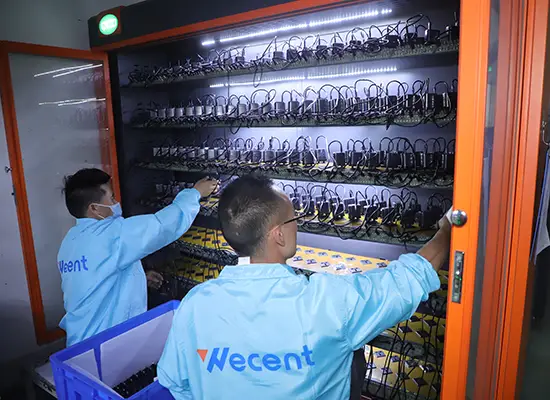
- Can you share thermal test data and photos as evidence?
The questions should probe the difference between the label and the behavior: sustained multi-port output, skin temperature at full load, the derating curve and the thermal test evidence. A supplier that answers with data is engineering; one that answers with adjectives is marketing. The certified hub options publish thermal data precisely because the quiet claim needs the performance claim to back it up — quiet and weak is a failure, quiet and sustained is a product.
Why fanless matters
Fanless matters because desk chargers live in earshot: a fan that spins up under load is a distraction in a quiet office, a home office at night, or a bedroom nightstand. Fanless also removes the dust and failure points that shorten charger life. For buyers, fanless is a quality signal — it implies the efficiency and thermal design are good enough to skip the fan, and the power supply design references that document this trade-off are worth reading before comparing hubs.
Thermal design without fans
The engineering toolkit for fanless: high-efficiency GaN to reduce heat at the source, thermal potting to move it, aluminum and copper to spread it, and enclosure design to vent it naturally. Each tool costs something — potting adds material, shields add weight, larger enclosures add footprint. The best fanless designs balance all four so the charger sustains its rating without the thermal margin eroding.
Noise comparisons
Noise comparisons are simple: a fanless charger is silent at every load, while a fan-cooled one adds a whine or hum that grows with load. The difference matters most in quiet environments and at night. For product content, publish the noise statement ("fanless, silent operation") alongside the sustained-output data, so buyers associate quiet with performance, not with weakness.
Reliability trade-offs
The reliability trade-off is favorable to fanless in the long run: fans are the first moving part to fail, and their absence removes the dominant wear mechanism. The remaining risk is heat — a fanless design that runs hot ages capacitors faster, which is why the sustained-output and temperature specs matter more than the fanless claim itself.
Choosing quiet desktop chargers
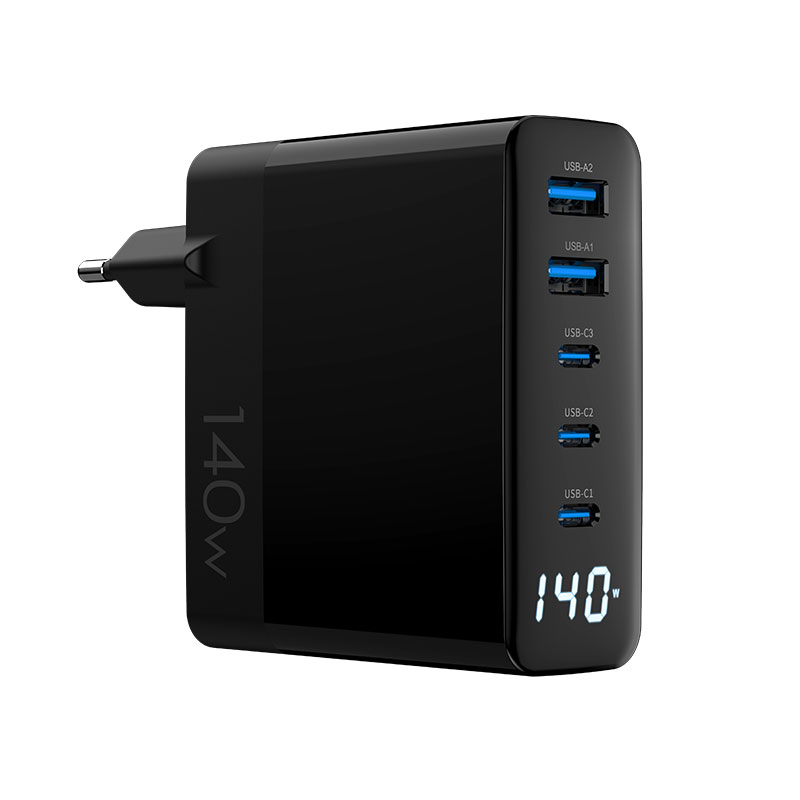
The checklist for a quiet desktop charger: fanless design, sustained output at the rating, skin temperature inside the safety limit, and thermal test data to back both. The WEG-140W-2A3C 140W hub is the fanless tier to compare against; the aging and reliability verification data shows how the thermal design holds over time.
FAQ
Do desktop chargers have fans?
Some high-wattage ones do, to remove heat; most GaN desktop hubs are fanless because efficiency reduces the heat load. Fanless designs are silent and have fewer moving parts to fail.
Is a fanless charger less powerful?
Not necessarily — fanless GaN hubs sustain high wattage with good thermal design. Check the sustained multi-port output and derating curve rather than assuming fanless means weak.
Why does my charger make noise?
If it has a fan, the fan spins under load and produces the noise. A fanless charger is silent; noise usually means a fan-cooled design or a defective fan.
How do I choose a quiet charger for the office?
Specify fanless design, sustained output at rated wattage for 60 minutes at 40°C, and skin temperature within the safety limit — then ask for the thermal test data.
Choosing quiet, reliable chargers for your office or product line? Send your wattage requirements to our team through the contact page — we can share fanless thermal designs and test data.
This article is part of Desktop & Multi-Port Charging, the guide that covers this topic in decision order.