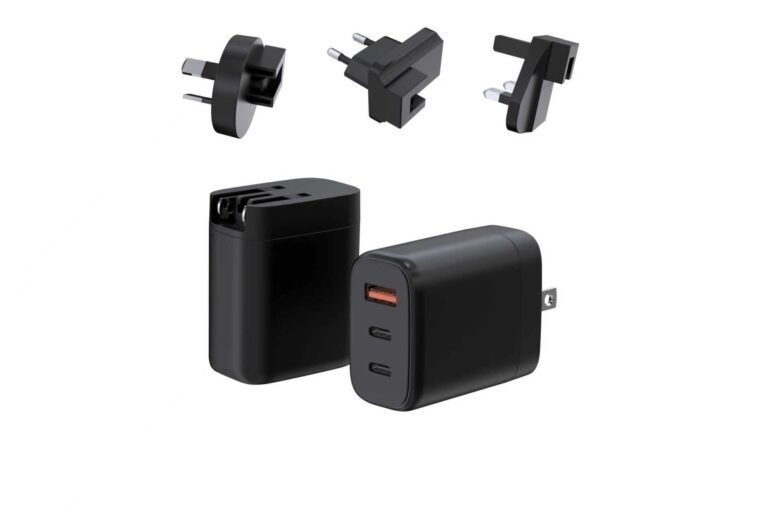
The 240W USB-C charger exists for machines that actually request it — workstations and high-end gaming laptops whose power budgets exceed the 140W tier. The honest buying question is not "can I get 240W?" but "does my device stack need it?" This guide covers the power budget first, which machines justify 240W, the thermal design at high power, the cables that carry it, and the buying judgment for high-wattage SKUs.
Key takeaways
- The power budget decides the tier; 240W is reserved for machines that request it.
- High power is a thermal story: sustained output, not peak numbers.
- The cable is part of the 240W configuration, not an accessory.
Content updated: August 2026 — confirm model-specific power requests and cable requirements before ordering.
Scope note: This guide is general industry information; high-power and cable requirements are confirmed against current specifications and product details.
The Power Budget First
The 240W decision starts with the power budget, not the wattage number. List the devices, add the simultaneous load and apply headroom, and the result either justifies the tier or does not. A workstation that requests 200W needs a charger above its request; a laptop that requests 100W does not need 240W.
The budget is a calculation frame, not a guess: the devices' real requests, the combinations that run at the same time and the margin for start-up. The calculation is recorded with its assumptions, because the same stack can justify different tiers under different workloads.
The budget also answers the "what if" question. A stack that will add a second high-power machine or a demanding peripheral in the next year may justify the headroom now; one that is stable does not. The roadmap is part of the budget.
The budget is also the language of the conversation with the supplier. When the buyer sends the simultaneous-load table rather than a wattage request, the supplier can propose the tier with evidence — and the buyer can compare proposals on the same basis. The budget turns the purchase into a specification.
The budget review is repeated when the stack changes. A new machine, a new peripheral or a new workload shifts the numbers, and the tier decision is revisited with the same calculation. The budget is a living document, and the habit keeps the tier honest.
| Tier | Serves | Justified when |
|---|---|---|
| 65W | Ultrabooks, phone-plus-tablet stacks | The fleet sits in the laptop tier |
| 100W | Full-size laptops plus accessories | The stack fits the 100W class |
| 140W | High-performance laptops, EPR | The machine or stack requests above 100W |
| 240W | Workstations, high-end gaming | The simultaneous load justifies the top tier |
Assumption: tiers are planning bands; the power budget and the device requests decide the actual tier.
Which Machines Justify 240W
Workstations and high-end gaming laptops are the machines that request 240W-class power. Under sustained load — rendering, simulation, gaming — they draw continuous power, and the charger must hold its rated output rather than peak briefly.
The justification is per machine: the original adapter's rating and the official specification decide the request. A machine that shipped with a 240W adapter is the 240W customer; one that requests less is served by a lower tier. The match is confirmed, not assumed.
The 240W tier also covers the multi-device edge case: a high-power machine plus a second device, with the split map showing the combination. The tier's value is the sustained high-power lane, and the split story is secondary.
The machine review also includes the connector story. Some high-power machines use USB-C; others still use proprietary connectors, and the charger decision is only relevant for the USB-C ones. The audit separates the USB-C fleet from the proprietary exceptions before the tier is chosen.
The justification is recorded, not assumed. The machine list, the requests and the reason for the tier are filed with the purchase, so the 240W decision is explainable to the team and the next buyer. A documented justification is a decision; an assumed one is a preference.
Thermal Design at High Power
High power is a thermal story. A 240W charger running near its limit generates heat, and the thermal design — airflow, components, enclosure — decides whether it holds output or throttles. The sustained behavior under load is the specification.
The thermal review records the ambient, the session length and the case-temperature measurement points. A charger that holds 240W for an hour in a cool room may throttle in a warm one, and the buyer needs to know which behavior the real environment will see.
The thermal story also includes the charging location. A 240W charger in an enclosed desk drawer or a tight bag has a different thermal reality than one on an open desk. The placement is part of the design conversation.
The thermal review should also include the charging pattern. A machine that charges under load during a long session stresses the charger differently than one that charges overnight at idle, and the pattern decides which behavior matters. The test runs the pattern the machine actually lives.
The thermal data belongs in the specification with the profile. The sustained output, the ambient and the measurement points are recorded, and the record is what the buyer and the auditor read. A thermal claim without the conditions is a number; with them, it is data.
Cables That Carry 240W
The cable is part of the 240W configuration. The profile requires an e-marked cable rated for the higher current, and an under-rated or non-e-marked cable caps delivered power regardless of the charger. The cable is specified with the charger, not bought separately.
The cable check is one line but decisive. A 240W charger with a basic cable negotiates at a fraction of its rating, and the "why is it slow" question is answered by the cable before anything else. The packaging states the requirement, and the support story repeats it.
The cable also carries a quality dimension: length and construction affect the delivered profile. The specified cable is matched to the charger's top profile and the device's request, and the combination is validated with the real machine.
The cable story also has a spare dimension. A 240W configuration needs a spare cable rated for the profile, and the spare is part of the kit rather than an afterthought. The support story answers the cable question before it is asked.
The cable is also the most common failure point in a high-power setup. A cable that was fine at 100W may drop the EPR profile, and the symptom is a slow or absent charge. The cable check is the first line of troubleshooting, and the kit carries the rated spare.
Buying Judgment for High-Wattage SKUs
The buying judgment for high-wattage SKUs:
- Audit the machine. Does it request the tier?
- Read the profile. Does the charger offer the request?
- Check the cable. Is it rated and e-marked for the profile?
- Confirm the thermal. Does it hold output in the real environment?
- Verify the documents. Does the certificate name the configuration?
The judgment prevents the two classic errors: buying 240W for a machine that requests less, and buying it without the cable and thermal support. The tier is a match, not a status symbol.
The judgment also covers the multi-device reality. A 240W charger with a second port serves a phone or accessory alongside the workstation, and the split map for that combination is part of the check. The tier's value is confirmed against the real use, not the headline.
Finally, the judgment includes the documentation. The certificate names the model and configuration for the market, and the file is kept with the machine records. The high-wattage SKU is a match, a configuration and a document set — all three are confirmed together.
A verification note for buyers: The first document is the profile table and the split map, and the first hardware check is the sustained output under load. A high-wattage spec sheet without the profile and the thermal data is marketing until the table and the test arrive.
The 240W decision maps onto the WEG Series GaN Chargers at WECENT, the high-power multi-port platform, and the Quality Control page describes the production test flow and records. To confirm whether the 240W tier fits your machines, submit the device list and power requests to WECENT's project engineering team — the review returns the profile, cable and documentation proposal for the configuration.
Frequently Asked Questions
Does every high-performance laptop need a 240W charger?
No. The machine's request decides it — a laptop that shipped with a 140W adapter is served by the 140W tier. The power budget and the original adapter's rating are the authority.
Is 240W safe for a lower-power machine?
Yes, when the voltage matches and the device negotiates the profile it needs. The negotiation picks the profile, and the charger delivers what is requested.
What cable does a 240W charger need?
An e-marked cable rated for the higher current, capable of carrying the profile; without it, the negotiation falls back and delivered power drops.
Why does my 240W charger run hot?
High power produces heat, and the thermal design decides whether the charger holds output or throttles. The sustained behavior in the real environment is the specification to check.
How do I know if I need the 240W tier?
Run the power budget: the simultaneous load plus headroom, confirmed per machine. If the stack requests above 140W, the 240W tier is the match; otherwise a lower tier serves it.
This article is part of USB-C PD and PPS, the guide that covers this topic in decision order.