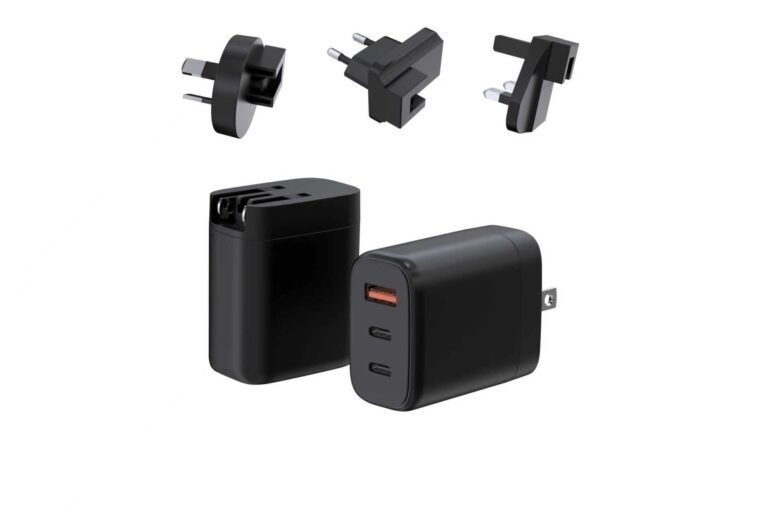
USB PD certification is the compliance path that lets a charger brand use the USB logo and demonstrate interoperability: testing through the USB-IF, a TID for the product and test reports that document the results. Certification is part of the launch plan, not a last-mile step, and it sits alongside — not instead of — the safety certifications each market requires. This guide covers what USB-IF certification covers, the logo, TID and test reports, how it differs from safety certification, planning certification into the launch, and budgeting its time and cost.
Key takeaways
- USB-IF certification demonstrates interoperability and the right to use the USB logo.
- The TID and test reports are the evidence; the logo is the result.
- USB-IF certification is separate from the safety certifications each market requires.
Content updated: August 2026 — USB-IF process details follow current official material; confirm specifics with the program.
Scope note: This guide is general industry information; no specific TID status is claimed for any product.
What USB-IF Certification Covers
USB-IF certification verifies that a product conforms to the USB specification and interoperates with the ecosystem: the power delivery behavior, the connector and the protocol are tested against the standard, and the product earns a TID and the right to use the USB logo.
The certification's value is interoperability. A certified charger has been tested against the specification and the ecosystem, which is the evidence that the "works with USB-C" claim is grounded. The logo and the TID are the visible result.
The certification scope is specific to the configuration. The tested product, its version and its behavior are recorded in the test report, and the certification applies to that configuration. A change to the product re-enters the certification question.
The certification also carries a currency dimension. The USB specification evolves, and the certification is checked against the current version when the product or the line changes. A certification from a previous generation is context, not current evidence.
The scope and the currency together are the certification's truth. A buyer who reads the TID, the version and the configuration has the full picture; one who reads the logo alone has a claim.
Logo, TID and Test Reports
The logo, the TID and the test report are three parts of one story:
| Element | What it is |
|---|---|
| Logo | The visible mark of conformance |
| TID | The product's unique identifier in the USB-IF database |
| Test report | The documented results behind the logo |
The TID is the traceable part: it names the product in the official database, and buyers can look it up. The test report is the evidence, and the logo is the claim. All three should agree on the product and its configuration.
The traceability matters for the brand and the buyer. A product with a TID that can be verified is different from one with a logo that cannot be traced, and the difference is the certification's credibility.
The database check is a one-line task. The buyer looks up the TID, confirms the product and the version, and the certification is verified. The check is the same discipline as the model-match rule elsewhere in the cluster.
The traceability also feeds the support story. When a compatibility question arises, the TID and the report are the reference, and the support team reads them with the customer. The certification is part of the product's service record.
USB-IF vs Safety Certifications
USB-IF certification and safety certification answer different questions. USB-IF verifies interoperability with the USB ecosystem; safety certification verifies that the product meets the electrical safety requirements of a market. Both are required for a complete charger launch, and neither substitutes for the other.
The market list decides the safety story: CE and RoHS for the EU, FCC and a recognized safety mark for the US, and the applicable schemes for other markets. The USB-IF story is the interoperability layer on top, and the two are planned together in the launch.
The distinction also affects the document set. The USB-IF report demonstrates conformance to the USB spec; the safety certificates demonstrate compliance with the market. The buyer's file holds both, and each answers a different question.
The two stories also have different timelines. The USB-IF process runs on its own calendar, and the safety certifications run on the market's. The launch plan schedules both in parallel rather than treating them as one step.
The distinction is also a marketing discipline. A package that shows the USB logo and the safety marks is telling two accurate stories; one that blurs them is overstating. The claims match the documents, and the documents are the boundary.
Planning Certification Into the Launch
Certification is planned into the launch, not scheduled at the end:
- Confirm the configuration that will be certified.
- Schedule the testing against the launch timeline.
- Budget the lead time for the test house and the process.
- Freeze the configuration so the certification matches the product.
- Publish the evidence — TID, logo and report — with the launch.
The plan is the difference between a certification that supports the launch and one that delays it. A configuration that changes after testing starts re-enters the question, which is why the freeze comes before the test.
The plan also names the owner. The certification is coordinated by the product team, executed by the test house and reviewed by the compliance team, and the plan records who does what. The ownership makes the timeline real.
The launch plan also includes the reorder story. Each reorder carries the certification evidence, and the review confirms the product still matches the certified configuration. The certification is a standing discipline, not a launch event.
Budgeting Certification Time and Cost
Certification time and cost are configuration-dependent and confirmed with the test house and the program. What is predictable is the shape: the testing, the documentation and the review take lead time, and the buffer belongs in the launch plan before the date is promised.
The budget also includes the re-test question. A configuration change after certification may re-enter the process, and the change plan accounts for the re-test lead time. The certification budget is part of the change budget.
The cost is amortized across the product's life and the line it anchors. A certified platform generates certified SKUs where the configuration matches, which is why the certification is planned as a platform asset rather than a per-SKU expense.
The budget also includes the contingency. Test results can require iteration, and the plan holds buffer for the second round. The contingency is part of the timeline, and the launch date is set against it.
The certification decision closes with the same discipline as the rest of the cluster: the configuration is frozen, the evidence is traceable and the documents are kept current. The USB-IF story is the interoperability layer, and it is maintained the same way every order — against the specification, with the evidence attached.
For the brand starting the certification conversation, the practical first step is the frozen configuration: the product, its version and its behavior, written down before testing begins. The configuration is the input to the test plan, the timeline and the budget, and a certification planned around a frozen spec is a certification that supports the launch. The USB logo is the result; the TID, the report and the discipline are the substance.
A verification note for buyers: The first document is the TID and its database entry, with the test report behind it. A logo without a traceable TID is a claim; the TID and the report are the evidence.
Certification planning starts with the platforms themselves: the GaN Charger Category at WECENT lists the range by power and ports, and the Quality Control page describes the production test flow and records. To plan certification for a charger line, submit the configuration and target markets to WECENT's project engineering team — the review returns the certification path and document plan for the line.
Frequently Asked Questions
What is USB-IF certification?
Verification that a product conforms to the USB specification and interoperates with the ecosystem, evidenced by a TID, the logo and a test report.
What is a TID?
The product's unique identifier in the USB-IF database. It makes the certification traceable, and buyers can look it up to verify the claim.
Is USB-IF certification the same as safety certification?
No. USB-IF verifies interoperability; safety certification verifies electrical safety for a market. Both are required, and neither substitutes for the other.
When should certification be planned?
At the start of the launch, with the configuration frozen before testing. Certification planned as a last step delays the launch; planned early, it supports it.
What happens if the configuration changes after certification?
The certification question is re-entered for the changed configuration. The change plan accounts for the re-test lead time and the documentation update.
This article is part of USB-C PD and PPS, the guide that covers this topic in decision order.