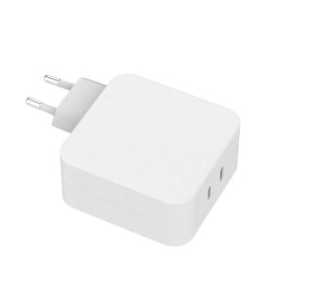
The 100W laptop charger is the replacement for the original brick that came with a full-size laptop — the one that is too big for the bag and too heavy for the desk. A 100W GaN charger delivers the full-size laptop’s power in a compact form, charges the phone from the same brick, and works across markets with the right plugs. This guide covers the laptops that need 100W, the dual-port behavior in practice, the size and thermal tradeoffs, the certification picture, and the specs to sample before committing.
The Laptops That Need 100W
The 100W tier serves the machines that request more than the 65W workhorse can deliver:
- Full-size 15–16-inch laptops that negotiate 100W over USB-C.
- Professional and creator machines with discrete GPUs under load.
- Multi-device users who want a laptop brick that also charges a phone.
The reference is the original adapter’s wattage: a laptop that shipped with a 100W adapter needs a 100W or higher charger, and a charger rated below the request charges slowly or not at all under load. The 100W tier is the tier where the laptop and the phone finally share one brick.
The multi-port variant belongs in the same decision. A 100W charger with two or three ports serves the laptop plus a phone and earbuds from one brick, which is the desk-and-bag scenario the tier exists for; the port count and the split map decide how much of the 100W reaches each device. For a line, the 100W single-port and multi-port variants are two SKUs with different buyers — the minimal traveler and the multi-device desk user.
What 100W Dual-Port Output Looks Like in Practice
A 100W charger is usually a dual-port design, and the split behavior is the spec that matters:
| Scenario | Typical allocation |
|---|---|
| Laptop alone | Full 100W on the USB-C port |
| Laptop + phone | A split such as 65W + 12W or similar |
| Phone only | The phone negotiates its own ceiling |
The WET-100W-C GaN adapter from WECENT lists a USB-C output up to 100W and a dual-port split with the USB-A port taking a smaller share — the exact numbers are in the product specification. The practical point is that the laptop keeps enough power to run while the phone tops up, and the split map is the document that confirms the combination.
Expert view — WECENT project engineering team: The 100W buyer’s first question is usually “will it charge my laptop and phone at once,” and the answer is in the split map, not the total. A 100W dual-port charger that delivers 65W + 12W in combination runs a laptop and tops a phone; one whose second port delivers less changes the experience. Read the split before ordering.
Size, Weight and Thermal Tradeoffs
The 100W tier sits at the size-versus-power frontier:
- GaN shrinks the brick. A 100W GaN charger is dramatically smaller than the original 100W bricks of a few years ago.
- Weight follows size. A lighter brick earns a permanent spot in the bag.
- Heat is the tradeoff. 100W sustained output generates heat, and the housing must reach a stable plateau; the thermal behavior is the spec the catalog never shows.
The comparison habit is to check the physical dimensions and the sustained behavior, not just the wattage. Two 100W chargers can differ meaningfully in the bag and under load.
The 100W-versus-140W choice belongs in the same review: a 100W tier serves the full-size laptop market, and the 140W tier exists for machines that request more. The decision is driven by the fleet audit — the models and their official requests — not by the desire to future-proof with a bigger number, because the higher tier costs more and serves devices that rarely appear in the mainstream fleet.
The thermal measurement method completes the comparison: run the charger at its rated output for an hour in a defined ambient, measure the housing temperature at the same point, and record whether the output holds. The plateau, not the peak, is the number that separates a real 100W charger from a label.
The travel use case adds the plug dimension: a 100W charger with interchangeable EU, UK, US and AUS heads covers the business trip, and the foldable or compact form keeps the brick bag-friendly. The WET series pairs the 100W output with interchangeable plugs, which is the configuration that replaces the original brick and the travel adapter in one purchase.
Certifications for Cross-Border Lines
The 100W tier ships across markets, and the certification story follows the destinations:
- Plug configuration. Each market’s plug variant is a configuration, and the certificate names it.
- Input range. A 100–240V input covers the voltage story; the certificate still follows the market.
- Safety marks. CE, FCC and the relevant regional marks apply, with the certificate matching the shipped configuration.
The certification plan belongs in the line review before the first sample, because a 100W charger destined for multiple markets carries a document stack per destination.
Sample the Specs Before You Commit
- Confirm the PDO table covers the laptop’s 20V request at 100W.
- Check the split map for the laptop-plus-phone combination.
- Measure the size, the weight and the sustained thermal behavior.
- Confirm the plug set and the certificates for each market.
- Validate with the real laptop and phone before volume.
For a 100W line, the WET Series GaN charger models include the 100W dual-port platform with interchangeable plugs, and the GaN charger category page shows the wider power range. The WECENT OEM team can confirm the PDO tables, split maps and documentation for your configuration.
The retail tiering closes the line plan: a 65W workhorse, a 100W full-size tier and a 140W premium tier give the shelf a ladder that matches the laptops buyers carry. The 100W tier is the volume position in that ladder — the tier where the full-size laptop buyer lands — and its packaging should show the laptop-and-phone combination, because that image is the product’s promise.
The cable-included decision rounds out the line: a 100W charger that ships with a 5A e-marked cable delivers its full profile out of the box, while a bare charger leaves the buyer to source the cable and risks the “slow charging” review that follows an under-rated cable. For the tier where the buyer expects the complete solution, the cable belongs in the box and in the specification.
The 100W story, in one line: the tier that replaces the full-size laptop’s original brick with a compact charger that also serves the phone — read the split, sample the thermal behavior, and the tier earns its place in the line.
The verification with the real laptop closes the decision: run the machine under load, confirm the 100W negotiation through the rated cable, and measure the sustained temperature. The sample that holds its output and stays cool is the sample worth scaling; the one that throttles is the reason the spec sheet is never the final word.
And the 100W close: match the tier to the fleet, read the split, verify the sustained heat, and the compact brick earns the place the original brick never had.
The 100W decision, in short: the fleet sets the tier, the split sets the experience, the sustained test sets the truth, and the cable sets the delivery.
And the last check: the sample holds the output, the cable carries the profile, and the certificate names the configuration — the 100W tier is then ready for the shelf.
For a 100W line, the sample is the final referee: if it holds sustained output with the laptop under load and stays cool in the bag, the spec sheet has earned its place.
Frequently Asked Questions
What laptops need a 100W charger?
Full-size laptops that negotiate 100W over USB-C — the reference is the original adapter’s wattage. Machines that shipped with 100W adapters are the 100W customers.
Can a 100W charger charge a laptop and phone at once?
Yes, when the split map covers the combination — a dual-port design delivers the laptop’s share plus a smaller share for the phone. The split is in the specification.
Is a 100W GaN charger smaller than the original brick?
Usually dramatically smaller. GaN’s efficiency and frequency advantages shrink the power stage, which is why the 100W tier became bag-friendly.
Can I use a 100W charger on a 65W laptop?
Yes. The laptop negotiates its own ceiling and draws only what it needs; the 100W charger is safe and simply has headroom for other devices.
Do I need a special cable for 100W?
Use a cable rated for the profile — 5A e-marked for the full 100W output. An under-rated cable caps the delivered power.
Can WECENT supply a 100W charger for my line?
Yes. WECENT is an OEM/ODM partner with 100W dual-port platforms. Share your target devices and markets with the project team for a configuration.
Sources
- WECENT – WET Series GaN Chargers
- WECENT – GaN Charger Category
- WECENT – FAQ
- WECENT – Contact Us
- USB Implementers Forum – Official Website
- European Commission – Official Website
This article is part of Laptop Chargers, the guide that covers this topic in decision order.