The 30–45W tier is where most phone-charger volume lives, but it is easy to build a lineup that confuses buyers with near-identical SKUs. The fix is segmentation: each wattage point should serve a distinct device mix, and port layout, price and plug variants should follow that logic.
Why the 30–45W tier matters for phone lines
This band covers the daily fast-charge needs of nearly every modern phone, plus small tablets and earbuds, negotiated over USB Power Delivery. It is high-volume, price-sensitive and competitive — which means SKU discipline pays off more here than anywhere else in the lineup.
The tier is where volume economics work: components and tooling are shared across SKUs, certification costs are modest relative to revenue, and the wattage covers the devices most buyers actually own. A brand that nails segmentation here builds the revenue base that funds flagship SKUs. The risk is the opposite — an undifferentiated shelf of 33W, 35W and 40W look-alikes that cannibalize each other and confuse the buyer.
30–33W: the daily phone tier
30–33W chargers are the workhorse: they fast charge most phones, stay small, and are cheap enough for bundled or entry-level SKUs. A 33W GaN charger like the WEG-33W-1A covers phone-only users and pairs well with foldable plugs for travel.
The 30–33W tier is also where protocol coverage is easiest to get right: PD plus PPS in a compact single- or dual-port package covers the widest device set at the lowest cost. Because the components are mature and the thermal envelope is forgiving, this tier tolerates aggressive pricing without sacrificing reliability. For a brand entering the market, it is the least risky place to establish quality before moving up-market.
35–40W: dual-device flexibility
35–40W units add headroom for phone plus earbuds, or a small tablet, with one extra port. The 35W GaN/PD charger sits in this band: single-device fast charging plus a second port for accessories.
The 35–40W band earns its place with a specific buyer: the person who charges a phone and earbuds, or a phone and a small tablet, and wants both to reach useful speed without carrying a brick. The dual-port layout matters more than the extra watts — a 35W charger with two ports serves a genuinely different routine than a 35W single-port model. Retail data tends to confirm the pattern: the dual-port 35W SKU outsells the single-port 30W in households, while the single-port version wins in travel bags. For a brand, that split justifies stocking both and labeling them by use case ("phone plus earbuds" versus "travel backup") rather than by wattage alone, because buyers self-select by scenario long before they compare spec tables.
45W: covering phones and small tablets
45W is the crossover point: it fast charges phones with headroom and charges small tablets at full speed. It is also the floor for charging a compact ultrabook at a usable pace, which makes it the natural "phone plus small tablet" SKU in a segmented lineup.
The 45W tier carries an expectation buyers bring from laptops: it should handle a small ultrabook or a large tablet, not just a phone. That expectation shapes the design — the port layout and thermal budget must support sustained 45W output, and the PPS profile should cover the devices in the tier's marketing. Positioning 45W as "phone plus small tablet" while quietly handling ultrabooks is the honest middle ground.
Port layouts that differentiate SKUs
Port count and type are the clearest differentiators within the tier.
- Single-port 30–33W: minimal, cheap, travel backup.
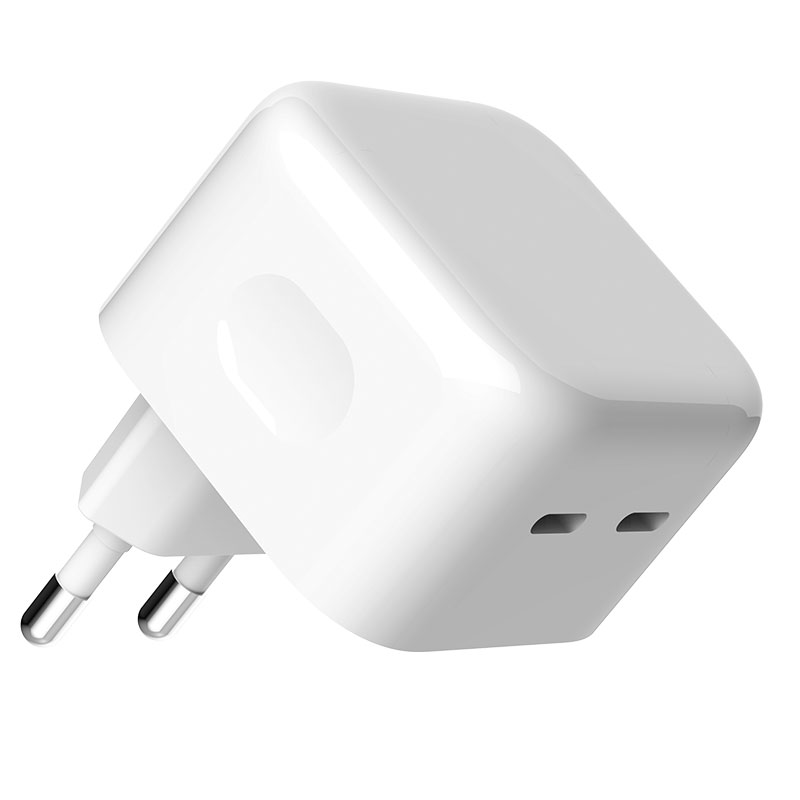
- Dual-port 33–35W: phone + earbuds, the most common mix.
- Dual-port 45W: phone + tablet or two phones.
- 1A1C 45W: legacy USB-A compatibility for older cables.
Port type matters as much as count: a 1A1C layout serves buyers with older cables, a 2C layout suits two modern USB-C devices, and a single-port version exists for price-point and travel use. Within the same wattage, the port mix changes which buyer the SKU serves more than any marketing copy. Keep the mapping simple in listings — one port type per buyer persona, not a matrix that requires a degree to read.
Building a segmented lineup without SKU chaos
Limit the lineup to three SKUs per region: a 30–33W single, a 35W dual, and a 45W dual. Each covers a distinct buyer; anything more cannibalizes. Certify and stock the smallest set that covers your market's device mix.
SKU discipline extends to accessories: one cable SKU per region, one pouch design across tiers, and one certification per plug variant keeps the back office simple. The three-SKU rule (entry, volume, premium) applies to wattage, ports and packaging alike. Every added variant multiplies inventory, certification and support cost, so add one only when it serves a measurably different buyer.
Device coverage by wattage tier
| Tier | Devices covered | Best SKU shape |
|---|---|---|
| 30–33W | Most phones | Single-port, foldable plug |
| 35–40W | Phone + earbuds | Dual-port |
| 45W | Phone + small tablet | Dual-port 1A1C or 2C |
Protocol support is the differentiator that wattage alone cannot show: a 30W charger with PD and PPS covers iPhones, Samsung and Pixel at their fast-charge speeds, while a 45W charger with fixed-voltage output only may serve fewer devices faster on paper. Publish the protocol list per tier and the device coverage it implies; buyers search for "charges my phone" more than they search for a wattage number.
Feature differentiation beyond wattage
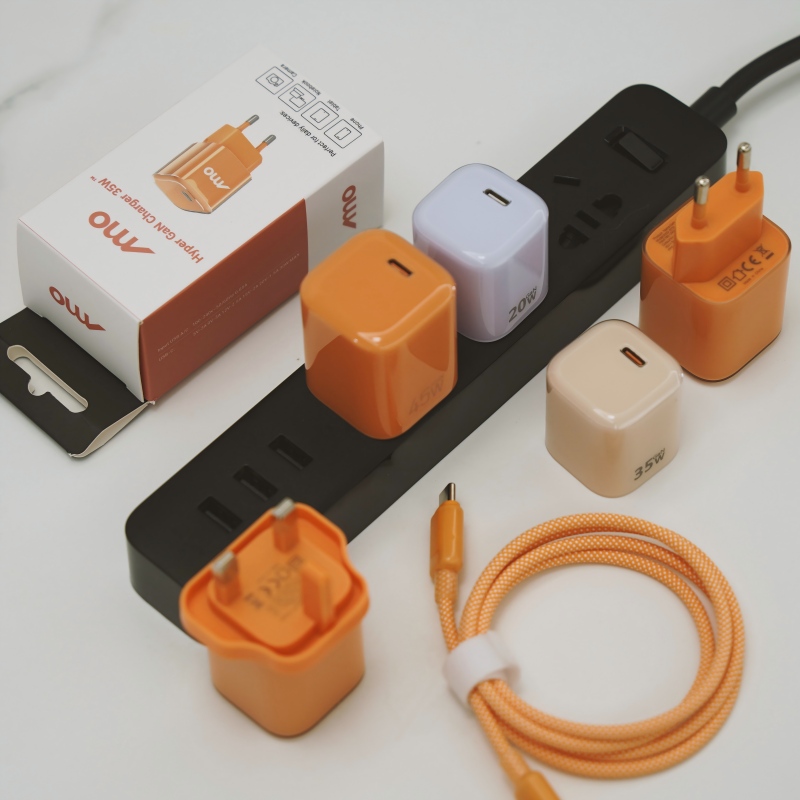
Within the same wattage, differentiate by features: foldable plugs for travel, LED or smart display for premium — the differentiators that multi-port GaN lines use to avoid cannibalization — cable-included kits for gifting, and colorways for retail shelves. Wattage sells the spec; features sell the story.
Pricing bands across the tier
Expect a clear step between tiers: 30–33W at the entry band, 35–40W a step up, and 45W at the top of the small-wattage range — with the underlying power supply design deciding what each tier really delivers. Keep the price gaps aligned with real capability differences so buyers can self-select without reading fine print.
The price ladder should encode real value steps: entry 30–33W at the budget band, 35–40W dual port as the volume SKU with the best margin mix, and 45W at the top as the premium upsell. Keep the gap between bands large enough that buyers self-select upward, but small enough that the premium tier still converts. Bundle the 45W with a cable for the highest average order value.
Regional plug variants for the lineup
EU, UK, US and AUS plug variants multiply SKU counts, so plan them deliberately, following USB Type-C connector requirements: foldable plugs reduce packaging size and can share one enclosure across regions with interchangeable prongs. Certification (CE, FCC, RoHS and model-dependent CCC/PSE/KC) must be planned per SKU.
Building a tiered launch plan
Launch the 35W dual-port first as the volume SKU — compact GaN platforms make the tier inexpensive to iterate —, then add 30–33W entry and 45W premium around it. This sequencing lets you validate demand on the core SKU before committing tooling and inventory to the others. Our OEM/ODM program supports exactly this staged approach with low MOQs from 200 pcs.
FAQ
What is the difference between a 33W and 35W phone charger?
Minimal in practice — both fast charge most phones. The 35W tier often adds a second port or PD flexibility, while 33W units optimize size and cost.
Is a 45W charger worth it for a phone?
For phone-only use, 30W is usually enough. 45W adds tablet coverage and future headroom, so it makes sense as the top of a small-wattage lineup.
How do I choose between 30W and 45W for my brand?
Match the wattage to your buyer's device mix: phone-only users get 30W, phone-plus-tablet users get 45W. Stocking both with clear price separation avoids cannibalization.
Do all 35W chargers support PD?
No — check the protocol list. For broad compatibility, spec USB PD with PPS support so the charger covers iPhones, Samsung and other Android brands.
Planning a segmented phone-charger lineup? Send your target markets and volume to our team through the contact page — we will map wattage tiers, ports and plugs to your SKU plan with low-MOQ OEM options.
This article is part of Phone Chargers, the guide that covers this topic in decision order.