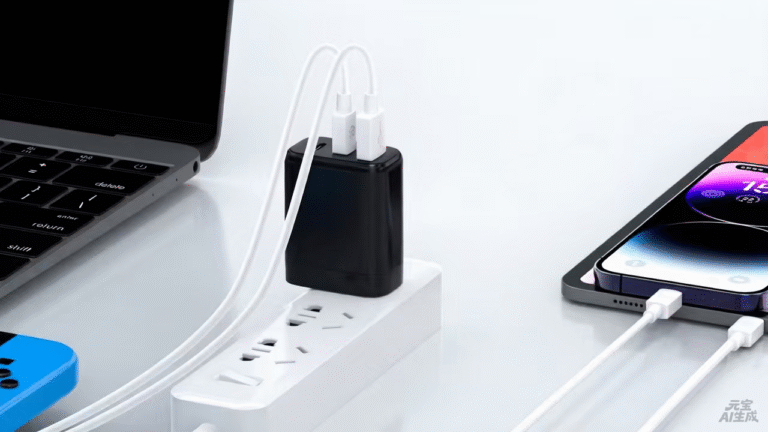
The 240W GaN charger is the top of the USB-C power ladder, and it is also the easiest tier to over-buy. The machines that genuinely request 240W — high-performance workstations and gaming laptops — are a small part of the market, and the buyers who need the tier are the ones whose devices ask for it, not the ones who want the biggest number. This guide covers who really needs 240W, how to build a power budget before the spec decision, the multi-port combinations at 240W, when 100–140W is enough, and the questions to ask before sourcing a 240W line.
Who Really Needs 240W
The 240W tier serves a narrow, real user base:
- High-performance workstations with CPUs and GPUs running sustained loads.
- Gaming laptops with high-power components drawing the maximum while gaming.
- Multi-device power users who want one charger to cover a workstation plus a phone and accessories.
The honest framing is that 240W is a niche tier: the mainstream laptop market lives at 65W and 100W, and the premium market at 140W. The 240W buyer is the power user whose devices explicitly request the maximum — and the request is the qualification, not the desire.
The gaming and workstation worlds are where the niche becomes real: a gaming laptop running a demanding title and a workstation rendering a heavy project both draw sustained high power, and the machine’s original adapter is the reference. The 240W tier exists for these users and the multi-device setups built around them — and it is the tier where the power budget, not the marketing, should make the final call.
A Power Budget Before a Spec Decision
The 240W decision should start with arithmetic, not aspiration:
- List the devices. The laptop or workstation, the phone, the tablet, the accessories.
- Sum the simultaneous load. The devices that run at once, at their real draw.
- Add the margin. The charger must cover the worst case with headroom.
- Compare against the tiers. 100W, 140W and 240W are the available steps; choose the smallest tier that covers the budget.
The power budget is the document that prevents over-buying: a workstation that draws 180W under load plus a phone is a 240W customer; a laptop that draws 100W is a 140W customer at most. The budget turns the decision from marketing into math.
The budget also reveals the difference between peak and sustained needs. A machine that briefly draws 200W during a burst but averages 120W across a session does not need a 240W charger; one that sustains 180W for hours does. The sustained number is the one to budget against, and it is the number the original adapter’s rating reflects — which is why the adapter is the first reference.
Expert view — WECENT project engineering team: The 240W question we hear most is “should I future-proof with the biggest charger,” and the answer is no — a 240W charger costs more, weighs more and serves devices that rarely appear in the mainstream fleet. Build the power budget, read the device requests, and let the math decide the tier. The budget is the honest salesperson.
Multi-Port Combinations at 240W
At 240W, the multi-port behavior is the specification that matters:
| Scenario | Typical behavior |
|---|---|
| Single workstation | Full 240W on the high-power port |
| Workstation + phone | The workstation keeps most of the power; the phone takes a share |
| Full desk | The split map shows every combination, from the laptop port down to the accessory ports |
The split map for a 240W multi-port charger lists combinations such as the high-power port carrying the workstation plus smaller allocations for the other ports. The map is the document to read before ordering, because the total and the delivered shares are different numbers.
The thermal reality at 240W is the last gate: sustained output at this level demands serious thermal design, and the housing must reach a stable plateau rather than climbing. The factory evidence — aging under load, thermal measurements and the batch records — is what separates a genuine 240W platform from a label, and the sustained test on the bench is the buyer’s own version of the same check.
When 100–140W Is Enough
The honest boundary:
- 100W serves full-size laptops and multi-device desks without a workstation.
- 140W serves premium laptops and light workstations.
- 240W is for the machines that request the maximum and the multi-device setups built around them.
The boundary check is the device request: if no device in the fleet asks for more than 140W, a 240W charger buys weight and cost without buying speed. The tier ladder exists to match the devices, not to impress the shelf.
Questions to Ask Before Sourcing a 240W Line
- Which devices in the target market genuinely request 240W?
- What is the sustained power budget, and does the 240W tier cover it with margin?
- What is the split map for the multi-port combinations the buyers will run?
- Which e-marked cable ships with or is specified for the full output?
- What is the thermal behavior at 240W sustained, and what is the factory test evidence?
- What certificates exist for the configuration in each target market?
For a 240W evaluation, the WEG series chargers include the high-power platform, and the WECENT project managers can confirm the profiles, split maps, cable requirements and thermal data for your target machines. The WECENT FAQ library covers the PD and EPR questions behind the tier.
The sourcing path for a 240W line follows the same discipline as the individual decision: audit the target machines, build the power budget, confirm the split map for the multi-device combinations, specify the e-marked cable, and verify the sustained thermal behavior with the factory evidence. The line is a niche product for a real user base, and the budget is the filter that keeps it honest.
The alternative tiers are the honest fallback: a 140W charger covers the premium laptop market, and the 100W tier covers the mainstream. The 240W line earns its place only where the fleet’s machines request it — and the request, not the desire, is the qualification that keeps the line focused.
The 240W tier, in the end, is a verification product: the power budget decides the need, the split map decides the experience, the e-marked cable decides the delivery, and the sustained test decides the truth. The buyer who runs all four gets the maximum tier without the over-buy — and the line that targets it precisely serves the workstations and gaming machines that genuinely request it.
The 240W Budget in Practice
The power budget is a one-page exercise: list the devices, sum the simultaneous load, add the margin, and compare against the tiers. A workstation that sustains 180W plus a phone is a 240W customer; a laptop that draws 100W is a 140W customer at most; and the tier ladder exists to match the devices rather than to impress the shelf. The same page also records the split map combinations and the e-marked cable, so the specification and the delivery live on the same document.
The budget is the honest filter for the whole 240W decision: it prevents the over-buy that adds weight and cost without adding speed, and it prevents the under-spec that leaves a workstation slow under load. The line that plans with the budget targets the real users, and the buyer who runs it buys the tier the devices actually need.
The tier, in the end, is reserved for the machines that request it — and the power budget is the filter that keeps the reservation honest.
The buyer’s final note: the 240W charger is a specialty product, and the specialty is earned by the machines that request it — the budget, the split and the cable make it work.
Frequently Asked Questions
Who needs a 240W charger?
High-performance workstations and gaming laptops that request 240W, plus multi-device setups built around them. The device request is the qualification.
Is 240W better than 140W?
Only for devices that request it. A machine that draws 140W does not charge faster from a 240W charger; the higher tier adds cost and weight without adding speed.
Do I need a special cable for 240W?
Yes — an e-marked cable rated for the full current. The cable is part of the power delivery at 240W.
Can a 240W charger charge a phone?
Yes. The phone negotiates its own ceiling and draws only what it needs; the 240W charger simply has headroom for the whole stack.
How do I decide between 140W and 240W?
Build the power budget: sum the simultaneous load, add margin, and choose the smallest tier that covers it. The device requests decide the tier.
Can WECENT supply a 240W charger for my line?
Yes. Yes — WECENT offers OEM/ODM from multi-port platforms rated up to the high-power tiers. Share your target devices and power budget with the project team for a configuration.
Sources
- WECENT – WEG Series GaN Chargers
- WECENT – GaN Charger Category
- WECENT – FAQ
- WECENT – Contact Us
- USB Implementers Forum – Official Website
- U.S. Department of Energy – Official Website
This article is part of GaN Chargers, the guide that covers this topic in decision order.