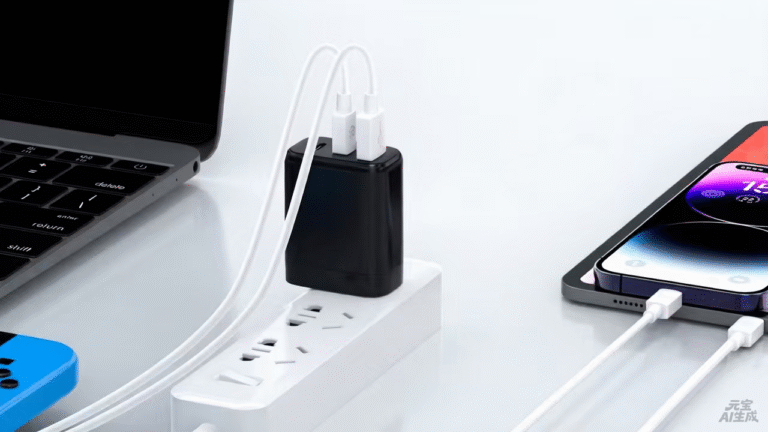
The travel laptop charger is the one-charger answer for global trips: an interchangeable-plug design that covers the destination markets, a wattage tier matched to the machine, and a packing list that keeps the kit simple. The plug strategy, the input coverage and the airline rules are the three decisions. This guide covers interchangeable versus foldable plugs, input voltage and destination coverage, packing the right wattage, airline carry rules, and a packing checklist for international trips.
Key takeaways
- The plug strategy follows the itinerary: interchangeable for multiple markets, foldable for one.
- The input range and the wattage tier are confirmed against the destinations and the machine.
- The airline rule is part of the packing decision where batteries are involved.
Content updated: August 2026 — airline and destination rules change; confirm current guidance for your route.
Scope note: This guide is general travel guidance; airline and destination requirements are confirmed with the current authorities.
Interchangeable vs Foldable Plugs
The plug strategy follows the itinerary. An interchangeable-plug charger carries a base plus heads for EU, UK, US and AUS, replacing a bag of adapters with one product. A foldable-plug charger suits a single region, with the pins folding into the body.
| Strategy | Best for | Trade-off |
|---|---|---|
| Interchangeable | Multi-market trips | Multiple heads to carry |
| Foldable | Single region | One plug, no heads |
The choice is an itinerary decision. A traveler who crosses borders regularly gets the interchangeable design; one who stays in a region gets the foldable simplicity.
The plug story is also the certificate story for a line. Each market's plug is part of the tested configuration, and the regional matrix records it.
The plug decision also affects the kit's weight. Interchangeable heads add a small pouch to the bag; a foldable design keeps the charger one piece. The traveler weighs the flexibility against the simplicity.
The plug choice is also a future-proofing input. A traveler whose itinerary expands can choose the interchangeable design now, so the kit survives the next trip list. The roadmap is part of the plug decision.
Input Voltage and Destination Coverage
The charger's input range must cover the destinations. A 100–240V input handles the voltage range of most markets; a 220V-only input does not. The input range is confirmed against the itinerary.
The input range is also the safety story. The charger is designed for the input voltages it lists, and using it within that range is the designed condition. The destination's plug and voltage are confirmed together.
The input coverage is verified per trip. A new destination with a different voltage or plug re-runs the check, and the kit is adjusted. The coverage is a living input.
The input range is also the charging behavior's baseline. A charger within its input range delivers its rated behavior; one outside it may not charge at all. The destination check protects the session.
The voltage story also connects to the airline rule. The charger itself travels in hand luggage as a rule, and the input range is confirmed against the destination rather than assumed from the box.
Packing the Right Wattage for the Trip
The wattage tier follows the machine. A traveler with an ultrabook packs 65W; one with a full-size machine packs 100W; one with a high-performance laptop packs 140W. The tier is matched to the machine's request.
The packing also includes the multi-device story. The same charger tops up the phone and tablet, so the tier is chosen with the whole kit in mind. The combination is validated before the trip.
The wattage is also a weight decision. A higher tier adds size and weight, and the traveler balances the tier against the bag. The balance is a packing decision.
The wattage is also a headroom decision for the trip. A machine that runs demanding workloads on the road benefits from a tier with margin; one that is lightly used does not. The workload is part of the packing input.
The wattage and the cable are packed together. The cable is rated for the top profile, and the kit carries it with the charger. The cable is half the system, and the travel kit includes it.
Airline Carry Rules for Chargers
Chargers travel in hand luggage as a rule, and power banks follow the airline's capacity limits. The rules vary by airline and regulator, and the guidance for the route is confirmed before departure.
The airline check covers the whole kit: the charger, the cables and any power bank. The bank's capacity is chosen within the limit, and the kit is packed to the rule. The check is part of the packing list.
The rules also change, so the check is repeated per trip rather than assumed. The current guidance is the authority, and the kit is adjusted to it.
The airline check also covers the spare. A spare bank or a spare cable in the kit follows the same rules, and the packing list accounts for it. The kit is planned to the rule as a whole.
The airline story is also a planning input for the purchase. A traveler whose routes have strict capacity limits chooses the bank within the limit, and the choice is made at purchase, not at the gate.
A Packing Checklist for International Trips
- The charger matched to the machine and the multi-device kit.
- The plug heads for every destination.
- The input range covering the destinations' voltages.
- A rated cable for the top profile.
- A power bank within the airline's capacity limit.
The checklist is run before every international trip, and the kit is adjusted to the itinerary. The checklist is the travel habit.
The checklist is also the review point. When the itinerary or the machine changes, the list is re-run and the kit is updated. The checklist is a living travel plan.
The travel charger decision closes with the same discipline as the rest of the cluster: the itinerary is confirmed, the plug and input are matched, the wattage is sized to the machine and the airline rule is checked. The trip is the specification, and the kit is built from it — one charger, the right heads, the right wattage, verified and packed.
For the traveler, the practical first step is the itinerary written down: the destinations, their plugs and voltages, and the airline rules for the route. The itinerary is the input to the kit, and a kit built from the itinerary is a kit that can be defended at the gate and at the desk. The travel charger is a small decision with a clear method — and the method is what keeps the bag light and the laptop charged on every trip.
And when the itinerary changes, the method repeats: re-confirm the plugs, re-check the voltages, re-size the wattage against the machine and re-run the airline rule. The travel kit is a living configuration, updated with each trip rather than frozen at the first purchase. That is the difference between a traveler who carries a bag of adapters and one who carries a single charger that works everywhere — the second one planned it, and the plan is the habit.
The same planning discipline applies whether the trip is a week-long business circuit or a year of global travel: the destination list drives the plugs, the machine drives the wattage and the airline drives the battery rule. The travel laptop charger is the most practical piece of the kit precisely because it is the most planned — and a traveler who treats it as a plan, not an afterthought, arrives everywhere with a charged machine and a light bag.
A verification note for travelers: The first check is the destination list — the plugs, the voltages and the airline rules — and the second is the machine's wattage request. The kit is built from the itinerary, and the itinerary is the specification.
The travel kit starts with the WET Series GaN Chargers at WECENT, the interchangeable-plug platform, and the Travel Charger Category shows how the chargers combine into kits. To confirm the travel configuration for your trips, submit the itinerary and machine list to WECENT's project engineering team — the review returns the plug, tier and cable proposal for the kit.
Frequently Asked Questions
Should I choose interchangeable or foldable plugs?
The itinerary decides it: interchangeable for multi-market trips, foldable for a single region. The choice is a travel decision, not a preference.
What input range do I need for international travel?
A 100–240V input covers the voltage range of most markets. Confirm the range against the destinations and the plug against the itinerary.
How do I pack the right wattage?
Match the tier to the machine's request and the multi-device kit, then balance the size and weight against the bag. The combination is validated before the trip.
What are the airline rules for chargers?
Chargers travel in hand luggage, and power banks follow the airline's capacity limits. Confirm the current guidance for the route before departure.
What should my travel packing list include?
The matched charger, the plug heads, the input coverage, a rated cable and a power bank within the limit. The checklist is run before every trip.
This article is part of Laptop Chargers, the guide that covers this topic in decision order.