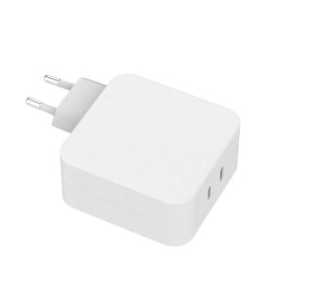
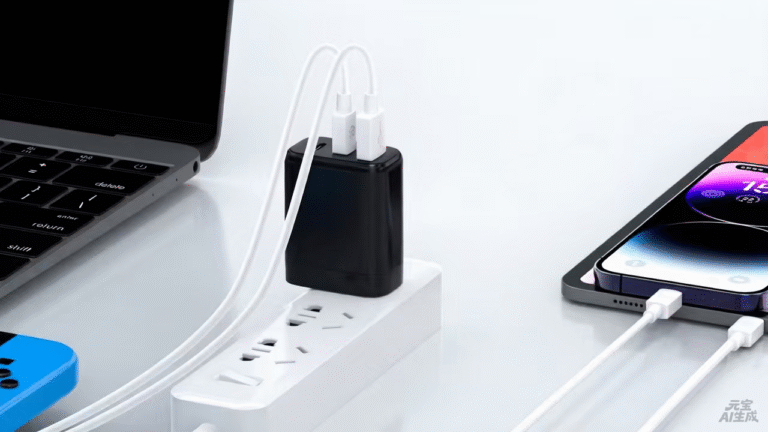
An adapter is a device or component that lets two otherwise incompatible things work together — most commonly in tech, a power adapter that converts wall power for a device. “Adapter” and “adaptor” are the same word with different spellings; this guide explains the meaning, the spelling question, and the adapter terms you will actually see on labels.
Adapter or Adaptor: Which Spelling Is Correct?
Both are correct. “Adapter” is the standard spelling in American English and is dominant in technical writing; “adaptor” appears more in British English and in some legacy usage. The meaning is identical. If you are writing for an international tech audience, “adapter” is the safer default — and it is the spelling used by standards bodies.
What Does “Adapter” Actually Mean?
At its core, an adapter makes incompatible things work together. In electronics it has three common uses: a power adapter that converts mains voltage to a device’s input, a plug adapter that changes the physical plug shape, and a protocol or port adapter (like a USB-C to HDMI dongle). All three share the same idea — bridging a mismatch.
Common Adapter Terms: Power Adapter, Plug Adapter, Dongle
The words on the shelf map to different jobs:
- Power adapter — converts AC to the DC a device needs (also called a charger or wall wart).
- Plug / travel adapter — changes only the plug shape, no voltage conversion.
- USB-C / port adapter (dongle) — converts one port or protocol to another, for example USB-C to HDMI.
For the power side, the distinction between adapter and converter matters — see our article on adapter vs converter for travel.
How “Adapter” Is Used in Electronics vs Everyday Language
In everyday language, “adapter” is a generic word for anything that adapts. In electronics, it is a precise category with standards behind it — voltages, plugs, protocols and certifications. When you buy or source one, the label matters more than the name: check the output voltage and current, the plug type, and the safety marks.
What Is a USB Adapter? (Power, Data, Video)
In the USB world, “adapter” covers three different products, and they are often confused.
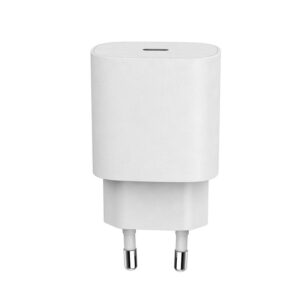
- Power adapter — the wall charger that converts AC to USB power.
- Data / port adapter — converts one USB port to another (USB-C to USB-A, for example).
- Video adapter — converts USB-C to HDMI or DisplayPort for monitors.
The label usually says which one it is, but “USB adapter” alone is ambiguous — check the ports and the spec before buying.
Power Adapter vs Charger: Same Thing or Not?
“Power adapter” and “charger” are used interchangeably, and technically they are slightly different.
A power adapter simply converts power to the voltage and current a device needs. A charger adds charging management — current limiting and a charge curve for a battery. In practice, most phone and laptop “chargers” are both: a power adapter with a charging controller. For a device without a battery, the same adapter is just a power supply.
Adapter in Networking: What Does It Mean?
In networking, “adapter” means something different again — the hardware that connects a device to a network.
A network adapter (NIC) is the component that lets a computer talk to a network, wired or wireless; a USB network adapter adds Ethernet or Wi-Fi to a device that lacks it. It is the same “make incompatible things work together” idea, applied to data instead of power. Context decides the meaning — power, ports or networking.
FAQ
Is “adaptor” a wrong spelling? No — it is a valid British variant of “adapter”.
Is a power adapter the same as a charger? In everyday usage, yes — a charger is a power adapter with charging circuitry for a battery.
What is the difference between an adapter and a converter? An adapter changes the plug; a converter changes the voltage. See the full explanation in our adapter vs converter guide.
Do I need a travel adapter or a converter? For dual-voltage chargers, only a travel adapter; for single-voltage appliances, a converter.
Can I OEM a branded power adapter? Yes. MOQ from 200 pcs, logo and packaging customization — see the GaN charger product line, the OEM/ODM page, or the contact page.
References: Merriam-Webster and Cambridge Dictionary for the spelling usage, Wikipedia’s AC adapter article for the technical definition, and Grammarly’s blog for language notes.
Further reading: Dictionary.com, Oxford Learner’s Dictionaries.
This article is part of Compliance & Power Supplies, the guide that covers this topic in decision order.