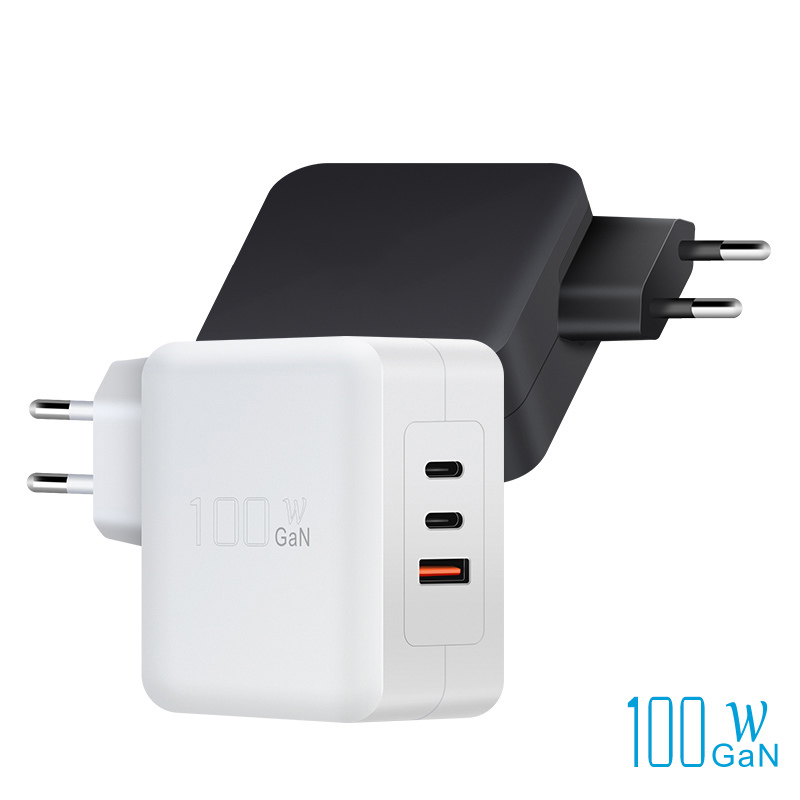
Chargers are the most common electronics in an office and the least inspected. A counterfeit brick or an overloaded power strip can cause the fire that no one planned for, and the liability lands on the employer. This guide covers approved marks, load planning, employee-owned charger policy, incident response and compliant sourcing.
Why office charging needs safety oversight
Offices accumulate chargers faster than policies: employees bring their own bricks, procurement buys the cheapest bid, and power strips multiply under desks. Each charger is a small electrical device, and the aggregate risk is real — counterfeit chargers fail, damaged cables arc, and overloaded strips overheat. EHS teams that treat chargers as an asset class with a policy, rather than an unmanaged background item, close the gap between reality and the fire code.
The risk is aggregate: hundreds of chargers across desks, many employee-owned and unverified, drawing power through strips that were never audited. The safety standards that govern chargers exist because the failure modes are real, and an office policy is the control that makes the standards effective. EHS teams that treat chargers as managed assets — approved marks, load audits, replacement paths — close the gap between the fire code's assumptions and the office's reality.
Approved marks and what they mean
Approved marks are the first line of defense: CE covers EU requirements, FCC covers US emissions, and UL-listed or equivalent marks indicate tested safety for the US market. The mark alone is not proof — the certificate behind it is — but its absence is a disqualifier. An office policy that requires approved marks on every charger eliminates the highest-risk devices without debate.
The mark ecosystem is worth decoding for procurement: CE is self-declared, UL and equivalent marks involve independent testing, and FCC covers emissions rather than safety. Each market has its own expectations, and the energy-efficiency programs add another layer for US procurement. An office policy that requires independent safety certification plus energy standards is the practical, defensible bar.
Load planning for outlets and power strips
Load planning is the engineering the fire code assumes: count the devices per circuit, sum their draw, and stay well under the breaker and strip ratings. A 15A circuit carries about 1,800W, and a desk with two 100W chargers, a monitor and a lamp uses only a fraction — but a daisy-chained strip of six chargers plus heaters or kettles approaches the limit. The rule is no daisy-chaining, surge-protected strips only, and a circuit plan per room.
Load planning is a circuit-by-circuit exercise: list the devices, sum the draw, and keep every circuit under 80% of its rating with no daisy-chained strips. A desk with two certified chargers and a monitor is trivial; a strip feeding six chargers plus a kettle is the incident waiting to happen. The plan should be documented per room and audited after every equipment move, because the risk follows the furniture, not the policy document.
Policy for employee-owned chargers
Employee-owned chargers are the policy's hardest case: employers cannot inspect every brick, but they can require approval marks and prohibit obvious hazards. The practical policy: certified chargers welcome, uncertified or damaged chargers prohibited, and a company standard available through IT for those who need one. Enforcement is about education and replacement access, not confiscation — employees comply when the safe option is easy.
The employee-owned charger policy works when it is framed as safety education plus easy replacement: a poster-sized one-pager explaining approved marks and the free replacement path, backed by a stock of certified chargers at the IT desk. Employees comply when compliance is free and easy; they ignore policies that lecture and confiscate. The policy should also name the signs to report — heat, smell, sparks, buzzing — and the reporting path. Over time, the replacement data tells facilities which brands and models dominate the office, which informs the next procurement round — that feedback loop is the policy's quiet payoff.
Incident response and documentation
An incident response plan answers three questions before the incident: who checks the burning smell, who isolates the power, and who documents the device. Every charger-related incident — smoke, sparks, heat, breaker trips — should be logged with the device's brand, model and origin. The log becomes the evidence for insurance claims, supplier accountability and policy updates. Documentation is the difference between a learning incident and a liability.
The response plan should be drilled, not just written: who checks the smell, who isolates the circuit, who photographs the device and logs the details. The log's value appears months later when insurance asks for evidence or procurement asks which SKU to re-qualify. Quality documentation from the charger supplier — certificates, batch records, test reports — turns the log from an incident note into a complete evidence chain. Documentation is what separates a managed risk from a liability.
Sourcing compliant chargers for offices
Office procurement should source chargers with certification evidence, per-batch inspection reports and a warranty that covers the deployment. OEM programs can provide branded chargers with the documentation built in, and bulk orders should include the certificate set per market. The sourcing spec is one line: "approved marks for the market, certification evidence on file, batch traceability." Compliance then follows the purchase, not the other way around.
Office charger risks
The risk hierarchy: counterfeit and uncertified chargers are the highest risk (unknown components, failed safety circuits), damaged cables and connectors are next (arcing and heat), and overloaded power distribution is the systemic risk (trips and thermal damage). Each risk has a control: approved marks, inspection, and load planning. EHS teams that manage all three reduce the office's electrical incident rate to near zero.
Approved marks explained
The mark language matters: "CE" is a self-declared conformity mark, "UL Listed" means tested by an independent lab, and "FCC" covers emissions rather than safety. For offices, the strongest requirement is an independent safety certification (UL/ETL or equivalent) for the US market, plus CE for EU offices. The certificate, not the sticker, is the evidence; procurement should request it.
Load planning for outlets
The load plan per outlet: keep total draw under 80% of the circuit rating, never daisy-chain strips, and separate high-draw devices (chargers, heaters, kettles) onto different circuits. A simple label on each strip with its load limit turns the plan into practice. Facilities should audit power distribution quarterly, especially after holiday decorations and equipment moves.
Employee charger policy
The policy should be short enough to post: approved marks required, damaged chargers replaced free through IT, no daisy-chaining, and chargers unplugged when unused for long periods. The replacement path is the enforcement mechanism — when the safe charger is free and easy, employees choose it. Track replacements; a rising replacement rate is a signal to audit the charger population.
Sourcing safe office chargers
The sourcing checklist: approved marks per market, certificate evidence on file, batch traceability, a warranty with a replacement path, and — for branded programs — the logo and finish consistent with the office brand. The quality-control testing evidence and certified GaN chargers give procurement the documentation an auditor or insurer will ask for.
FAQ
What makes an office charger unsafe?
Counterfeit or uncertified chargers, damaged cables and connectors, and overloaded power strips are the main risks. Approved marks, inspection and load planning control all three.
Are UL-listed chargers required for offices?
Not universally by code, but they are the strongest safety evidence for the US market. An office policy requiring independent safety certification is the prudent standard.
Can employees use their own chargers at work?
Yes, with a policy: approved marks required, damaged chargers replaced through IT, and a free company standard available for those who need one.
What should an office do after a charger incident?
Isolate the power, document the device's brand, model and origin, and log the incident. The log supports insurance claims, supplier accountability and policy updates.
Building a safe charger program for your office? Send your deployment size to our team through the contact page — we can supply certified chargers with the documentation your EHS team needs.
This article is part of Compliance & Power Supplies, the guide that covers this topic in decision order.