Employee travel charging is an IT problem wearing an admin costume: the wrong charger means a dead laptop in a client meeting, a support ticket, or a risky unapproved purchase. This guide turns travel charging into a policy with a standard spec, a global plug plan, a support workflow and a per-employee cost — the way IT handles every other asset.
Why travel charging is an IT problem
Travel charging fails in three predictable ways: employees grab the wrong charger from the spares drawer, they buy uncertified chargers in a foreign market when the original dies, or they carry three chargers because the standard is unclear. Each failure produces downtime, expense and risk. A written standard with a defined spec and a replacement path converts all three into predictable processes.
The failure chain is familiar to every IT team: a traveler's charger dies abroad, they buy an uncertified brick from a kiosk, and the laptop (or the employee's safety) pays the price. A written standard with a certified charger spec removes the improvisation. The policy also protects the company's energy and compliance story — certified chargers meet efficiency standards, which matters when travel expense reports are audited.
Defining a standard charger spec for employees
The standard spec should be one line of procurement language: "USB-C PD 3.0+, 65W minimum, 100W preferred for laptop-plus-device travel, PPS supported, certified for target markets, with an EPR-rated cable for 140W-class laptops." The wattage is set by the fleet's laptop mix and the travel workload; the protocol and certification lines are non-negotiable. Employees should not have to choose — the policy chooses for them.
The spec should be written for procurement, not for engineers: one line that names the wattage, the protocol, the certification and the cable. Employees do not need to understand PPS profiles — they need a SKU that works. The USB Type-C ecosystem makes the one-line spec possible: PD 3.0+, 65W minimum, 100W preferred, certified for the markets the company operates in. Publish the SKU number in the travel portal so the policy is a link, not a decision.
Global plugs and voltage for international staff
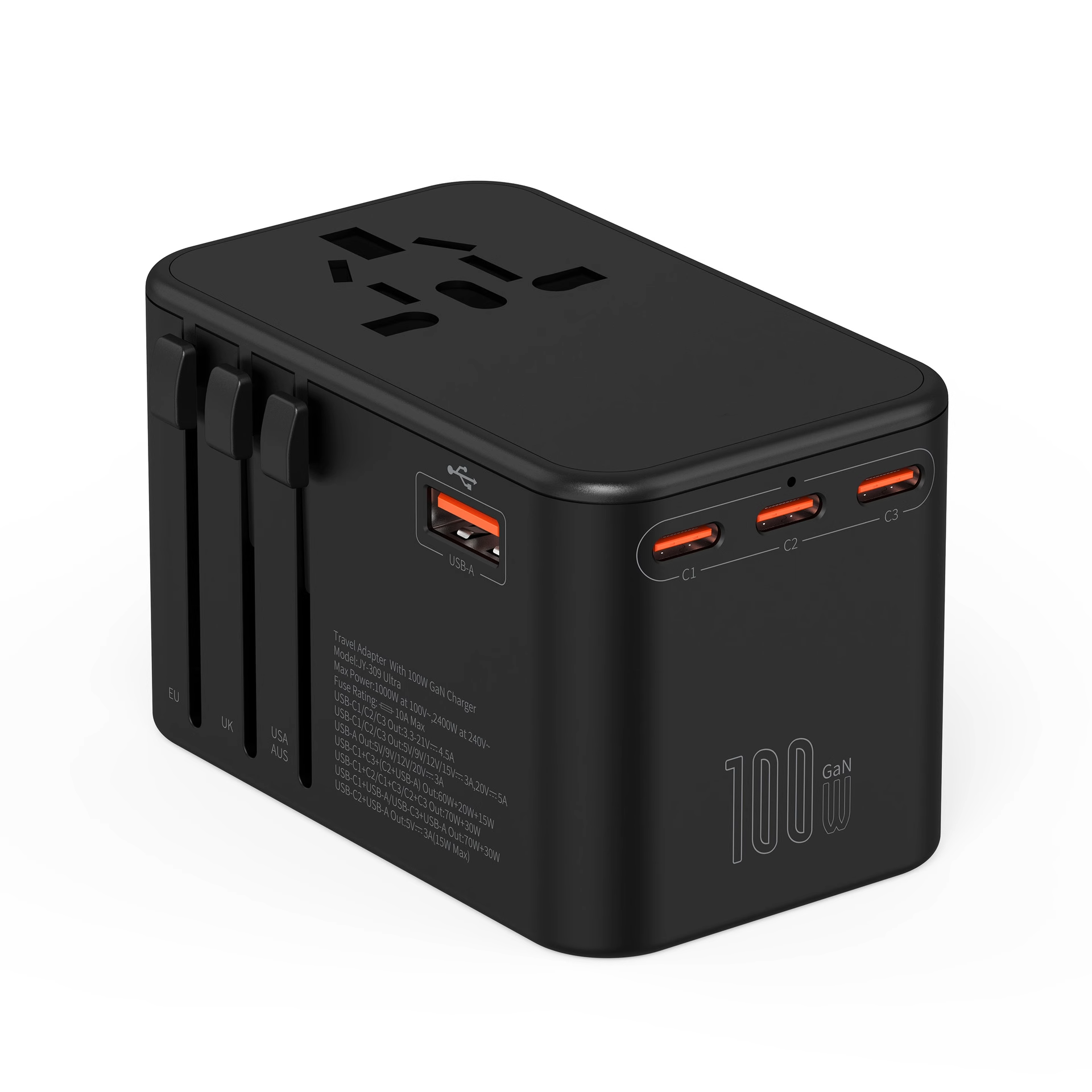
Global travel adds two requirements: 100–240V input range and multi-region plugs. The cleanest standard is a single charger with interchangeable EU/UK/US/AUS prongs, which covers the main business-travel regions in one SKU. For teams that rarely cross regions, a fixed-plug SKU per region is cheaper. The policy should state which regions the standard covers and which variant each employee receives.
The plug decision is also an inventory decision: the multi-plug SKU costs more per unit but replaces three regional SKUs in the warehouse, and it reduces the chance that a traveler packs the wrong variant. The voltage story is simpler — every modern charger accepts 100–240V — but the policy should state it, because employees still assume travel chargers need adapters. The practical standard is one multi-plug charger for frequent international travelers and regional fixed-plug SKUs for everyone else, with the matrix published in the travel portal. The policy's job is to make the right choice the easy choice.
Support, spares and replacement workflow
The support workflow is the policy's second half: employees report a dead charger, IT verifies (a quick power-meter check or a swap test), and a replacement ships from the spare pool. The spare ratio mirrors fleet practice — 5–10% — and replacements are logged against the employee's asset record. A charger that fails mid-trip is replaced from the nearest regional office's stock or shipped overnight; the workflow should name both paths.
The workflow has a travel-specific wrinkle: the spare pool must cover trips in progress, not just desks. Keep a small regional stock for frequent-travel offices and an overnight-shipping path for the rest. Each replacement should be logged against the employee's asset record, which feeds the TCO model and the claim-rate analysis. The quality documentation that comes with certified chargers makes the verification step a formality rather than an investigation.
Security and brand considerations
Security matters twice in travel charging: the charger itself must be genuine and certified (counterfeit bricks are both a safety and a data risk at airports and hotels), and branded chargers reduce the chance of theft or loss. Private-label or branded OEM chargers with the company logo also make the asset identifiable and harder to resell. Certification evidence should be on file for every SKU.
Security also extends to the cable and the negotiation: a certified USB PD charger negotiates properly with corporate laptops, while an uncertified brick may fall back to slow or unstable profiles. Standardizing on one USB-C SKU simplifies the security story — one known-good device, one certificate set, one support path. Efficiency matters for the company's energy story too: ENERGY STAR certification is a simple procurement filter that aligns the travel policy with sustainability goals.
Rolling out the policy without friction
Rollout succeeds when it removes friction: issue the charger with the laptop, publish a one-page policy card (spec, plugs, replacement path, what not to buy), and provide an ordering SKU in the procurement system. Grandfather existing chargers that meet the spec, and collect the rest at refresh time. The test of the rollout is whether a new hire can get the right charger without asking anyone.
Choosing one spec that covers most laptops
One 100W USB-C PD charger covers the overwhelming majority of corporate laptops at their USB-C limit: ultrabooks, mainstream business laptops and many workstations. The exceptions — 140W+ machines and proprietary-only ports — get a documented exception with their own SKU. Standardizing the majority on one spec shrinks inventory, support and the compatibility question set.
Regional charger variants for global teams
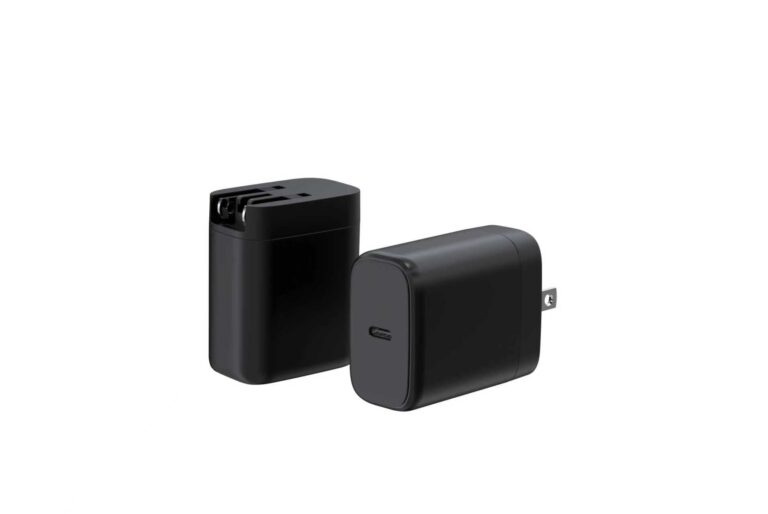
For global teams, define the variant matrix: fixed-plug US/EU/UK/AUS SKUs for region-bound staff, and the multi-plug SKU for frequent international travelers. Each variant carries its own certification set, and the matrix should be published so procurement orders the right stock per region. The charger itself is identical internally; only the plug module differs.
Tracking and reissuing chargers
Track chargers like any asset: serialized or barcode-labeled, logged to the employee record, and returned at offboarding. Reissue after return with a condition check (cable wear, connector damage, case cracks). The tracking data also feeds the TCO model — claim rates per SKU and per region tell procurement which charger to keep and which to replace.
Costing the policy per employee
The per-employee cost is charger price plus cable plus spares allocation plus support time, spread over the asset life. A $30 charger with a 4% annual claim rate costs less per employee-year than a $25 charger with a 12% claim rate once support time is included. Present the math in the policy approval document; finance approves policy that shows lifecycle cost.
Measuring adoption and feedback
Measure three things after rollout: charger issue rate per new hire (adoption), support tickets mentioning chargers (effectiveness), and travel feedback from frequent fliers (experience). The metrics tell you whether the spec is right — if travelers still buy chargers on the road, the policy is not covering their use case, and the spec needs adjustment.
FAQ
What should a corporate travel charger standard specify?
USB-C PD 3.0+, 65W minimum (100W preferred), PPS supported, 100–240V input, multi-region plugs for international staff, certification for target markets, and an EPR-rated cable for high-wattage laptops.
Should employees buy their own travel chargers?
No — the policy should provide the standard charger so employees never buy uncertified bricks on the road. The replacement workflow and spare pool cover the failure cases.
How many spare chargers should a company keep?
5–10% of the fleet, plus regional emergency stock for frequent travelers. Track claims by SKU and reorder on a schedule, not when complaints peak.
Does a standard 100W charger cover most laptops?
Yes — 100W USB-C PD covers ultrabooks, mainstream business laptops and many workstations at their USB-C limit. Only 140W+ machines and proprietary-only ports need exceptions.
Building a travel charging standard for your company? Send your fleet mix and travel regions to our team through the contact page — we can supply branded chargers with global plugs and the documentation your policy needs.
This article is part of Travel Chargers & Plug Adapters, the guide that covers this topic in decision order.