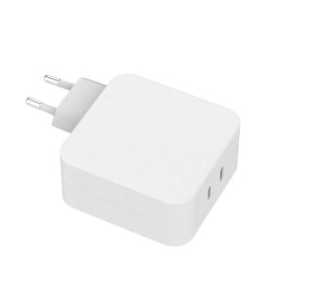
US efficiency rules for external power supplies set the minimum performance a charger or adapter must meet before it can be sold, and they are enforced through documentation as much as through testing.
This article covers the scope, the two performance figures that matter, the evidence required and how the requirement shapes the design.
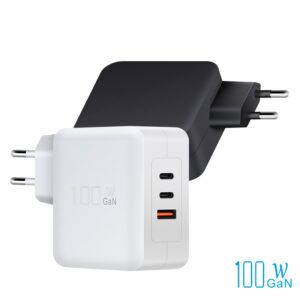
Which adapters does DOE Level VI cover?
External power supplies in scope.
The rules cover external power supplies as defined by the US energy conservation programme, which includes most wall adapters and chargers sold with consumer electronics.
The definition of an external power supply, and the products brought into scope by later amendments, determine whether a specific adapter is covered. The regulatory text is published in the US Code of Federal Regulations (10 CFR Part 430), with programme information from the Department of Energy (DOE: appliance and equipment standards).
Chargers bundled with a device and sold separately are both typically in scope, which means the requirement travels with the SKU rather than with the bundle.
Average efficiency and no-load limits
Two figures define compliance. The first is average efficiency across the load range, which prevents a product from performing well only at one operating point. The second is no-load power consumption, which limits how much energy the adapter may draw when it is plugged in but not charging anything.
| Requirement | What it measures | Why it matters commercially |
|---|---|---|
| Average efficiency | Performance across the load range | Determines the topology and component choices |
| No-load power | Consumption with no device attached | Affects standby design and control strategy |
| Marking | Statement and identification on the product | Checked at listing and in market surveillance |
| Documentation | Test evidence and compliance statement | Requested by retail and marketplace reviewers |
Test methods and accredited laboratories
Compliance is demonstrated through testing against the prescribed method by a laboratory acceptable to the programme, with results recorded per model. Because the figures depend on the load points measured, the test report has to be read rather than assumed.
For a brand, the practical step is to confirm that the factory’s test evidence names the model and the standard applied, and to keep the report with the compliance file rather than with the marketing material.
Marking and compliance statements
The marking requirement links the product to its compliance statement, so the model code on the adapters has to match the code in the report. A mismatch between a product family name and the tested model is the most common reason a compliance review stalls.
That relationship also affects product changes: a new plug variant or a new power stage is a different model and needs its own evidence.
State and federal layers
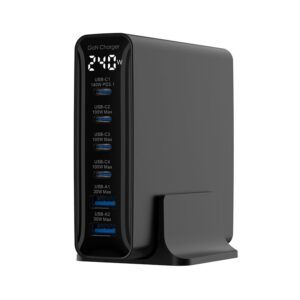
Federal requirements sit alongside state-level programmes, which adds requirements for specific markets. Where a product is sold nationally, the practical approach is to meet the strictest applicable set and to document which programmes were considered.
State programmes such as California’s add their own scope and documentation expectations, and they are enforced through the same retail and marketplace channels.
Design implications: topology and standby behaviour
The two figures push design in two directions. Average efficiency favours topologies and components that behave well across the load range rather than at a single point, which is where switching-device selection matters, and component vendors publish the relevant characteristics (Infineon: gallium nitride).
No-load consumption favours control strategies that reduce standby draw without compromising start-up behaviour, which is a firmware and control-loop question as much as a hardware one.
What to request from a supplier
Three items answer most compliance questions: the model-level test report naming the standard, the compliance statement linking the marking to the model, and the batch inspection record showing the units shipped were built to that specification.
WECENT’s certification-ready designs cover DOE and CEC among other schemes depending on the model, with 100% functional testing, hi-pot pressure testing and load aging recorded per batch at the quality control gates; documentation is available under NDA through the OEM/ODM programme, and the platform range is listed in the product catalogue. Where the same product is sold in the EU, the external power supply rules there apply as well (Regulation (EU) 2019/1782), and EMC evidence follows frameworks such as the FCC Part 15 rules (47 CFR Part 15).
Keeping the evidence current
Evidence has a working life: components change, the regulations are amended and the product is revised. A practical discipline is to review the compliance file whenever the BOM or the production site changes, and to record the review against the model code.
That habit is cheaper than a market surveillance query, which is resolved with the same documents but under time pressure.
FAQ
Does DOE Level VI apply to phone chargers?
The rules apply to external power supplies in scope of the US energy conservation programme, which includes most wall adapters and chargers sold with or separately from consumer devices. The applicable definition and amendments should be checked against the regulatory text for the specific product.
What is the no-load power limit?
It is the maximum power the adapter may draw when plugged in with no device attached, and it is one of the two headline figures in the rules alongside average efficiency across the load range. Both are demonstrated through testing.
Who tests for compliance?
Testing is performed against the prescribed method by a laboratory acceptable to the programme, with results recorded per model. The report should name the model and the standard applied, and be kept with the compliance file.
Does a new plug variant need new testing?
A new power stage or a different model designation generally requires its own evidence, because the compliance statement links the marking to a specific model. Confirming this before tooling avoids a later gap.
What documents should a buyer request?
The model-level test report naming the standard, the compliance statement linking the marking to the model, and the batch inspection records showing the shipped units were built to that specification.
This article is part of Compliance & Power Supplies, the guide that covers this topic in decision order.
Selling adapters into the US?
Share the models, wattage tiers and target channels, and WECENT will confirm the test evidence, documentation and marking available for the programme.