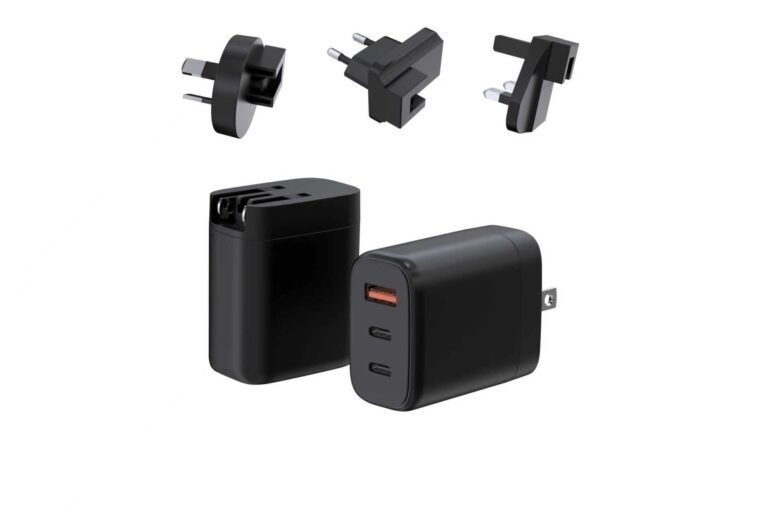
The best BF class medical adapter is the one whose applied-part classification matches the device it powers. Because the BF class is tied to a patient-contact story—not to a generic medical label—the ranking below is organized by patient-contact level: Type B for non-patient-contact and body-surface cases, Type BF for patient contact through a floating applied part, and Type CF for direct cardiac applications. In every class, the protection expectation, the leakage and isolation data, and the document set must travel together and name the exact configuration.
(Last modified date: September 7, 2026)
What is a BF class medical adapter? A BF class medical adapter is a power adapter specified for a medical device whose applied part contacts the patient through a floating applied part—meaning the patient is not directly conductive to the heart through the device. The BF classification raises the leakage and isolation expectations versus Type B, and it must be confirmed per configuration in the certificate and test report, not inferred from a label.
Key Takeaways
- Applied-part classes (B, BF, CF) describe how close the device gets to the patient and the protection expectation that follows.
- BF class covers patient contact with a floating applied part; CF sets the strictest leakage expectations.
- The classification and the leakage data travel together in the document set, confirmed per configuration.
- Documentation must name the model, the standard edition, and the configuration—a generic family statement does not complete the class.
- Name the applied-part class explicitly in the RFQ, sample approval, batch records, and incoming inspection to keep the evidence chain consistent.
Applied-Part Classes: What B, BF and CF Mean for an Adapter
The applied part is the part of the device that comes into contact with the patient, and its classification—Type B, Type BF or Type CF—describes the protection expectation the power supply must meet. Type B covers non-patient-contact and body-surface applications, Type BF covers patient contact with a floating applied part, and Type CF covers direct cardiac applications with the strictest expectations. The class is the specification input: the adapter’s isolation and leakage story has to match the device’s applied-part story.
| Applied-Part Class | Patient-Contact Story | Protection Expectation |
|---|---|---|
| Type B | Non-patient-contact or body surface | Baseline isolation and leakage behavior |
| Type BF | Patient contact, floating applied part | Stricter leakage expectations for the floating part |
| Type CF | Direct cardiac contact | The strictest leakage expectations |
The class is not a quality ranking: a Type B design is not worse than a BF design. Each class fits the application it serves, and the buyer matches the adapter to the device classification rather than choosing the highest class.
Type B Applications: Non-Patient-Contact and Body-Surface Cases
Type B applications cover devices that do not touch the patient or touch only the body surface—monitoring accessories, IT peripherals, and general clinical equipment. For this class, put the classification confirmation first, then the output match, then the document set.
| Priority | What to Look For | Why It Ranks There |
|---|---|---|
| 1 | Confirmed Type B classification | The protection expectation matches the application |
| 2 | Output class matched to the device | The electrical fit is exact |
| 3 | Baseline isolation and leakage data | The behavior is documented |
Type B is the entry level of the classification, but it is still a documented decision: the buyer names the class, the configuration, and the market, and the report carries the data.
Type BF Applications: Patient Contact With a Floating Applied Part
Type BF applications cover devices that touch the patient through a floating applied part—many patient monitors, infusion pumps, and bedside devices fall into this family. Here the leakage expectation comes first: the floating applied part raises the bar, and the adapter’s isolation and leakage story must meet the BF expectation. A configuration that fits electrically but cannot document the BF behavior does not complete the class.
| Priority | What to Look For | Why It Ranks There |
|---|---|---|
| 1 | Documented BF leakage behavior | The floating-part expectation is met |
| 2 | Isolation data naming the configuration | The report is specific, not generic |
| 3 | The standard edition the design follows | The evidence is current |
The BF check covers the whole chain: the adapter, the cable, and the device are one configuration, and the classification applies to the system as it is actually used. Confirm the applied-part story with the device team before ordering.
Type CF Applications: The Strictest Leakage Expectations
Type CF applications cover direct cardiac contact and set the strictest leakage expectations in the classification. The ranking is the most conservative: the configuration must meet the CF expectation, the test report must document it with conditions, and the document set must name the exact configuration. A CF claim without the report is not a candidate.
| Priority | What to Look For | Why It Ranks There |
|---|---|---|
| 1 | CF leakage behavior documented with conditions | The strictest expectation is proven |
| 2 | The full system chain confirmed | Adapter, cable, and device are one configuration |
| 3 | The standard edition and market requirements | The evidence matches the deployment |
How the Classification Travels Through the Document Set
The document set is where the classification becomes verifiable. The certificate names the tested configuration and the standard edition; the test report carries the leakage and isolation data with their conditions; and the batch records keep reorders inside the same evidence chain. Every document must name the exact configuration, because the classification applies to the configuration as tested, not to a family of similar products.
The leakage data also carries its environment. The measurement conditions—the input range, the ambient, and the measurement points—are part of the evidence, and the buyer reads the report with the conditions rather than the summary line.
- RFQ: name the class explicitly—BF class adapter for a floating applied-part device—so the supplier quotes against the right protection expectation.
- Sample approval: the approval record states the class, the configuration, and the market; the golden sample becomes the reference for that class.
- Batch records: keep reorders inside the same evidence chain.
- Receipt check: compare the shipped unit with the approved configuration—model, class, standard edition, and documents—and stop the batch on any mismatch.
Matching the Class to the Device: The Buyer’s First Compliance Step
The applied-part classification is the buyer’s first compliance step because everything else follows from it. The device’s patient-contact story dictates the class, the class dictates the protection expectation, and the expectation dictates the configuration and the documents. A buyer who matches the class first builds the rest of the specification on a stable foundation; one who skips the class discovers the gap at the audit.
The same discipline applies at the reorder and the refresh: the class and the documents are confirmed per configuration, and any change re-enters the review. The applied-part story is a standing requirement, not a one-time checkbox.
Frequently Asked Questions
What is the difference between Type B, BF and CF applied parts?
Type B covers non-patient-contact and body-surface applications, Type BF covers patient contact with a floating applied part, and Type CF covers direct cardiac contact with the strictest leakage expectations. The device classification decides the class.
Is a BF class adapter automatically higher quality than a Type B one?
It is not a quality ranking; it is a protection-expectation ranking. Each class fits the application it serves, and the buyer matches the class to the device classification rather than choosing the highest one.
How do I know which applied-part class my device needs?
The device’s patient-contact story and the applicable standard’s classification decide it. Confirm the class with your QA or regulatory team per configuration.
What documents prove the BF classification?
The certificate and test report naming the exact configuration and standard edition, with the leakage and isolation data and their conditions. The document set, not the label, establishes the class.
Can one adapter cover multiple applied-part classes?
Only if the test report and the documents name each configuration and class it covers. A generic family statement does not complete the model match.
What should I confirm before the first BF sample?
The device classification, the applicable standard edition, the output profile, and the document set you require—each named before the sample arrives.
Related Articles
- BF Class Medical Adapters: Patient Contact Levels in Power Supplies
- Medical Charger OEM: FAQ Answers Sourcing Teams Actually Need
- How Wireless Charging Works: Inductive Charging and Qi2 Explained
Official Resources
References
- Original article cited WECENT’s GaN Charger Category, Quality Control, FAQ, and Contact pages as sources. Standards applicability and applied-part classification are confirmed with the buyer’s QA or regulatory team per configuration.
This article is part of Healthcare Device Charging, the guide that covers this topic in decision order.