The launch of a flagship phone is a production deadline, not a marketing moment. Accessory teams that wait for retail units to land before approving a charger design lose the first weeks of demand, and the buyers who plan too early risk tooling a specification that the retail unit does not need.
Apple’s own fast-charging guidance now names specific adapter classes for the iPhone 18 Pro generation, which makes the specification question unusually concrete for anyone building an iPhone 18 charger SKU for a brand, distributor or retail line.
What charger does an iPhone 18 need?
A 60W USB-PD 3.2 adapter with AVS support.
Apple specifies a 60W-capable adapter using Adjustable Voltage Supply and USB-PD 3.2 for the fastest results on the Pro models, while a 35W-or-higher adapter covers wireless fast charging.
Apple’s published fast-charging guidance is the primary specification document for this generation. For the iPhone 18 Pro and iPhone 18 Pro Max, Apple states that charging to 50 percent in around 15 minutes requires the USB-C cable supplied in the box together with either the Apple 40W Dynamic Power Adapter with 60W Max or a comparable third-party adapter rated at 60W or greater that uses Adjustable Voltage Supply (AVS) and supports USB Power Delivery 3.2 (Apple Support: Fast charge your iPhone). For wireless fast charging on the same models, Apple specifies a MagSafe charger combined with an adapter rated 35W or higher.
Apple also lists the requirements for the previous generations on the same page: iPhone 17 models and iPhone Air reach 50 percent in around 20 minutes with a 40W adapter or higher, while iPhone 15 and later models fast charge with a USB-C cable and an 18W-or-greater USB-C Power Delivery adapter. That split matters commercially, because one charger platform can serve several generations of buyers while only the newest generation needs the AVS-capable tier.
| Device generation | Adapter class named by Apple | Cable | What an accessory line needs |
|---|---|---|---|
| iPhone 18 Pro / Pro Max | 60W-capable USB-PD 3.2 adapter with AVS; 35W or higher for wireless fast charging | USB-C cable (in-box type) | One 60W+ AVS-capable PD SKU, plus a MagSafe-compatible wireless option |
| iPhone 17 series / iPhone Air | 40W adapter or higher (20W or higher for iPhone 17e and iPhone Air) | USB-C cable | 40W PD tier as the flagship bundle, 20W tier for accessory kits |
| iPhone 15 and later | 18W or greater USB-C PD adapter | USB-C cable | Entry bundle tier; still the volume tier in retail |
| Earlier iPhone models | 18W or greater USB-C PD adapter | USB-C to Lightning cable | Legacy bundle tier for refurbished and trade-in channels |
Compliance planning sits on top of the electrical specification: since the EU common charger rules (Directive (EU) 2022/2380) the USB-C connector has become the default interface for the categories it covers, which is one more reason to keep the plug and cable architecture stable across a product family.
Why the iPhone 18 charging speed changes what a bundled charger must deliver
A 60W-capable requirement changes the bill of materials, not just the label. The adapter has to hold its rated output across the AVS range without exceeding its thermal budget, which pushes designs toward higher-efficiency topologies and better thermal paths than an 18W brick needs. In practice that means a GaN-based platform, a larger magnetic component, and a housing that can dissipate heat without a fan.
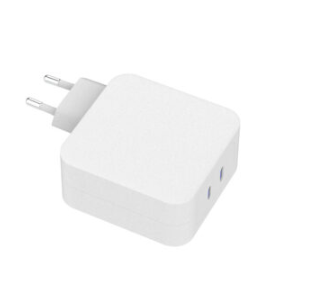
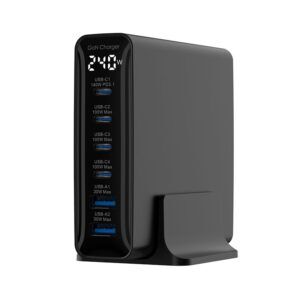
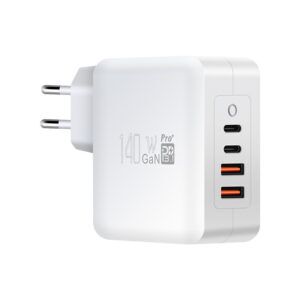
WECENT manufactures GaN wall chargers across a 20W–240W range in the WEG, WEP and WET series, which allows one supplier to cover the 20W entry tier, the 40W and 60W-plus tiers and the higher tiers used for laptop bundles from the same quality system. For a brand, the practical benefit is a single test regime, one set of protection behaviours and one packaging grid across the whole line instead of three unrelated designs.
Protection behaviour deserves its own line in the specification. Over-voltage, over-current, over-temperature and short-circuit protection are named in the brief for these platforms, and they are the first items a QA team looks for when a retail partner requests test documentation.
USB-C port changes and what they mean for cable and plug selection
With USB-C established across the current iPhone generations, the cable becomes part of the guaranteed performance claim rather than an accessory afterthought. Apple’s guidance ties the in-box cable to the fastest result, which means a third-party bundle has to match the cable’s current rating and its e-marker behaviour, not just its connector shape.
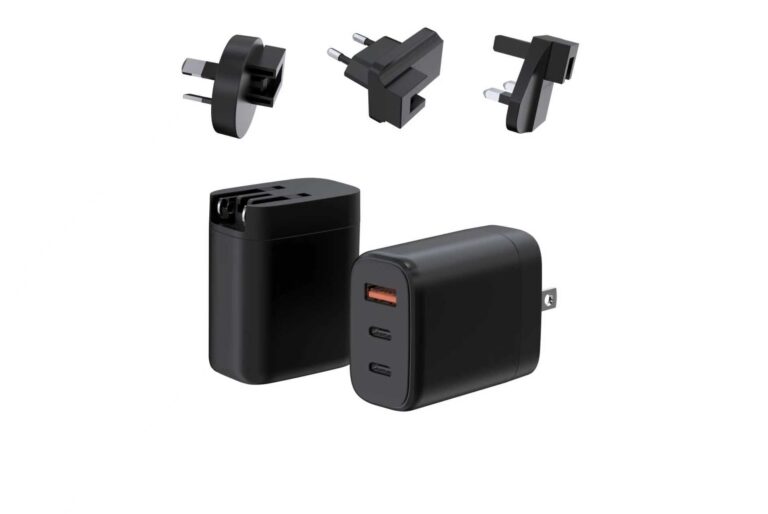
Plug configuration is the second half of the decision. A single charger platform can ship with EU, UK, US and AUS plug variants, which keeps one electrical design while satisfying four retail markets — the model used across WECENT’s WEG and WEP ranges. Buyers should lock the plug variants before tooling, because a plug change after tooling affects the housing, the tooling set and the certification sample set, not only the packing list.
For markets with their own marking schemes, certification adds lead time that is easy to underestimate: CE for the EU, FCC for the US, plus schemes such as PSE, KC and CCC where they apply, all model-dependent.
Wattage tiers that cover an iPhone 18 launch line
Most accessory programmes do not need one charger for the flagship and nothing else. A tiered line lets a brand sell an entry bundle, a mid-tier bundle and a premium bundle without designing three unrelated products. The tiers below map to the adapter classes Apple names for the current and previous iPhone generations.
| Tier | Typical retail role | What it covers | Internal link |
|---|---|---|---|
| 20W–30W PD | Entry bundle, accessory kit, corporate gifting | iPhone 15-and-later fast charging; 20W-or-higher wireless fast charging for iPhone 15 and earlier | GaN charger category |
| 40W–45W PD | Flagship bundle for iPhone 17-class devices; travel kits | 40W-or-higher fast charging for iPhone 17 models and iPhone Air | WEP 100W GaN charger |
| 60W+ PD 3.2 with AVS | Premium bundle for iPhone 18 Pro buyers | The adapter class Apple names for iPhone 18 Pro fast charging | GaN charger category |
| 100W–140W PD | Multi-device sets for laptop and phone buyers | Charging a phone and a laptop from one brick | GaN charger category |
Two practical notes for buyers. First, the highest tier in a launch line is rarely the volume tier; it exists to give the range a credible top end and to serve buyers who also charge laptops. Second, keeping every tier on one mechanical platform reduces tooling and packaging costs across the line.
A third consideration is the split map on multi-port units. If a 65W charger divides its budget between a phone and a laptop, the phone may still receive its full negotiated profile while the laptop slows down, or the reverse, depending on how the ports are prioritised. Publishing that behaviour per port prevents the mismatch between the packaging claim and what a buyer measures at home.
Certification and compliance checklist for an iPhone accessory SKU
Compliance for a phone charger is a set of file requirements as much as a set of tests. The EU external power supply regulation (Regulation (EU) 2019/1782) sets efficiency and documentation expectations for the adapters it covers, while the US Department of Energy rules (10 CFR Part 430) govern external power supply efficiency on that side of the market. Radio and electromagnetic compliance for a switching supply is handled under the FCC Part 15 framework in the US (47 CFR Part 15).
WECENT’s certification-ready designs cover CE, FCC, RoHS, CEC, DOE, CCC, PSE and KC depending on the model, and the brief is explicit that coverage varies by model rather than being universal. A buyer’s checklist should therefore name the exact model and market for each certificate, and keep the electrical safety and EMC reports with the model code they were issued against.
Where a product carries a wireless charging function, the relevant certification path changes again, and Qi-related requirements come from the Wireless Power Consortium rather than from the power supply regulations (Wireless Power Consortium: Qi).
From spec sheet to a 200-piece trial: a sample and pilot plan
The gap between an approved sample and a shippable batch is where most accessory programmes lose time. A workable sequence starts with a specification freeze on the electrical class, plug variants, colourways and packaging grid, then a sample round that produces units with the final label artwork and the final cable.
WECENT quotes low MOQ from 200 pcs per model with fast samples, which allows a brand to validate a SKU on retail shelves or marketplaces before committing to a production run. The trial batch is also the point where a buyer should collect the evidence they will need later: measured output across the load range, thermal behaviour at rated load, and the inspection record for the batch.
Third-party inspection and transit testing are worth planning at the same time. Transit test protocols such as those published by ISTA (ISTA) give the packaging decision an objective pass-fail criterion instead of a visual judgement.
Packaging and in-box bundling decisions that affect unit cost
Bundling is where an accessory line quietly gains or loses margin. Adding a cable changes the box dimensions, the master carton count and the freight cost per unit; adding a pouch changes them again. Deciding the bundle before the packaging dieline is drawn is cheaper than changing both afterwards.
A practical approach is to define one retail box that accommodates the charger alone and a second variant with the cable, keeping the same footprint where possible. This keeps the shelf presence consistent while allowing a brand to price an entry SKU and a premium SKU from the same tooling and artwork family.
For marketplace sellers, the same decision affects listing logistics: a heavier bundle changes shipping bands and return rates, and a well-packed retail box reduces damage claims more reliably than extra outer protection.
When to lock the charger design relative to the phone launch
The design freeze should sit before the launch, but not so early that it locks in a specification the phone does not use. A safer sequence is: qualification of the electrical class against published platform requirements, tooling release, certification samples, then the retail-ready batch, with packaging artwork treated as the item that can move latest.
Because certification lead time varies by market, a launch line that targets several regions should start the earliest market first and phase the rest. Buyers who treat certification as a post-launch task usually end up shipping one market late rather than several markets on time.
The reorder decision matters as much as the launch. A model that sells through in the first weeks needs a batch plan that does not restart from a sample round, which is why the golden sample and the batch records from the pilot run are worth keeping with the programme file.
Common mistakes brands make when validating a flagship accessory
Three mistakes repeat across accessory programmes. The first is specifying the charger against the phone’s marketing wattage rather than against the adapter class the platform vendor actually names. The second is certifying a sample that no longer matches the production build, usually after a housing or cable change made for cosmetic reasons. The third is treating the retail box as a design task rather than a logistics decision, then discovering that the master carton count no longer fits the pallet pattern.
A fourth mistake is documentation drift: certificates, test reports and labels that refer to different model codes. For a distributor this is the difference between a quick listing approval and a month of back-and-forth with a marketplace compliance team.
The reliable countermeasure is to keep one programme file per SKU containing the specification freeze, the golden sample record, the batch inspection report and the certificate set for each market, and to update it whenever the design changes.
FAQ
What charger will an iPhone 18 use?
Apple specifies a 60W-capable USB-PD 3.2 adapter with Adjustable Voltage Supply for iPhone 18 Pro fast charging, used with the in-box USB-C cable. A comparable third-party 60W-or-greater adapter with AVS support meets the same stated requirement; wireless fast charging on those models needs a MagSafe charger and a 35W-or-higher adapter. Verify the current requirement on Apple’s support page before publishing product claims.
Is the iPhone 18 going to have USB-C?
Apple’s current fast-charging guidance for the iPhone 18 Pro generation names a USB-C cable as the cable required for fast charging, and EU common charger rules make USB-C the default interface for the covered device categories. For an accessory line this means designing the plug, cable and certification around USB-C rather than a proprietary connector.
How much will an iPhone 18 charger cost at wholesale?
Unit cost depends on the wattage tier, plug variants, cable and packaging bundle, certification scope and order volume, so a single figure would be misleading. WECENT quotes from a specification, and MOQ starts at 200 pcs per model, which lets a brand validate one SKU before committing to a larger production run.
How fast can a first batch of iPhone 18 chargers be produced?
A realistic programme starts with a specification freeze, sample approval and certification samples, then moves to a pilot batch. Exact lead times depend on the certification markets involved and on whether the plug variants and packaging are new; WECENT confirms the schedule per project after the specification and target markets are fixed.
Can one charger platform cover iPhone 18 and earlier models?
Yes, within the adapter classes each generation names. A 60W-or-greater PD 3.2 platform covers the newest Pro models, while an 18W-or-greater PD platform covers iPhone 15-and-later fast charging and earlier models with a USB-C to Lightning cable, which is why tiered lines keep the entry tier in production.
Planning an iPhone 18 accessory line?
Send the target markets, wattage tiers and bundle structure, and WECENT will confirm the matching platform, certification scope and MOQ from a written specification.