
Chargers imported from China to the US are subject to a duty rate that depends on their HS code, plus any Section 301 tariffs currently in effect — and the rate can change with little notice. This guide explains how to look up the code and rate yourself, and how tariffs affect your OEM pricing decisions.
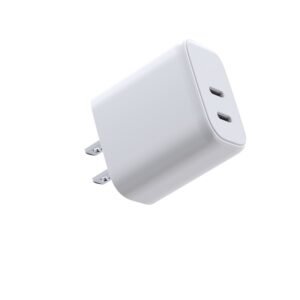
What Tariffs Apply to Chargers Imported from China to the US?
Chargers fall under the US Harmonized Tariff Schedule (HTS), typically classified as static converters or power supplies. The base duty rate for these lines is usually a few percent, and Section 301 tariffs have added additional duties on many Chinese-origin goods. Because the combined rate changes with trade policy, always verify the current rate at the time of shipment rather than trusting an old article.
How to Use the USITC HTS Search (Tariff Calculator)
The authoritative tool is the USITC HTS search: enter the product description or the 8/10-digit code, and it returns the duty rate plus any additional notes. For binding rulings on how a specific charger is classified, the CBP publishes rulings you can search. This is the same source customs brokers use, so it is the number to plan against.
HS Codes for Chargers and Power Adapters
Power adapters and chargers are generally classified under HTS 8504.40 (static converters), with 8504.40.95 covering many power supplies. Wireless chargers may classify differently. The correct code depends on the product’s function and construction, so confirm the classification before you estimate duty — a misclassified shipment can mean back duties and delays.
Section 301 and Recent Tariff Changes (2026)
Section 301 tariffs on Chinese goods have been adjusted several times, and 2026 rates should be confirmed against current notices rather than assumed from prior years. The practical implication for buyers: the all-in landed cost — factory price, freight, duty and fees — is what you compare, not the FOB price alone. This is why importers often ask factories for incoterms and documentation support, which our market-by-market shipping guide covers.
How Tariffs Affect OEM Pricing and MOQ Decisions
Tariffs change the economics of order size: higher duty raises the per-unit landed cost, which can justify larger consolidated shipments and shorter planning cycles. When you get an OEM quote, ask for the HS code your supplier expects and the incoterms, so your logistics team can model duty accurately. Our OEM/ODM page explains how quotations are structured, and a pilot order at low MOQ lets you validate the real landed cost before scaling.
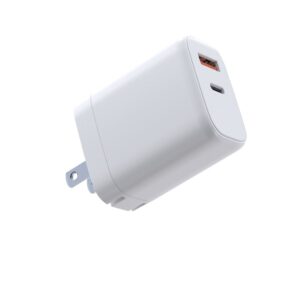
How to Find Your Product’s HS Code
The HS code decides the duty rate, and finding it is a structured search rather than a guess.
- Start with the description — search the USITC HTS with words like “static converter” or “power supply.”
- Narrow to the 8/10-digit line — the full code includes the base heading plus the national digits.
- Check rulings — CBP rulings on similar products show how customs classifies them.
- Confirm with a broker — for a binding answer, ask the customs broker who clears the shipment.
A wrong code means wrong duty, possible back assessment and customs delays — worth thirty minutes of checking.
DDP vs DAP vs FOB: Incoterms for Importing Chargers
Incoterms decide who pays for freight, duty and risk at each step — and they change your landed-cost math.
- FOB — the seller delivers to the port; you pay freight, insurance and duty.
- DAP — the seller delivers to your door; you handle import clearance and duty.
- DDP — the seller pays everything including duty; simplest for you, higher price.
For first imports, DDP removes surprises; for ongoing volume, FOB with your own broker is usually cheaper.
How Tariffs Affect Charger Prices: A Simple Example
A concrete example makes the tariff math tangible. Suppose a charger’s FOB price is $5 and the landed cost adds freight and fees of $1.
With a base duty of 3% on the value plus any Section 301 addition, the duty on the goods value is a fraction of a dollar per unit — visible but small at the unit level, and meaningful across a container of thousands. The bigger cost drivers are usually freight, MOQ planning and certification spread, which is why importers model landed cost per unit before committing to order size.
FAQ
What is the duty rate on chargers from China? It depends on the HS code and current Section 301 rates — verify on USITC HTS at the time of import.
Who pays the tariff? The importer of record pays; in practice it is built into the landed cost you plan against.
Can the factory help with classification? A good supplier provides the expected HS code and documentation, but final classification is the importer’s responsibility.
Do wireless chargers have a different code? Often yes — confirm the classification for the specific product.
Can I start with a small order to test landed cost? Yes — MOQ from 200 pcs. Start on the contact page.
References: USITC HTS, CBP, Wikipedia on the Harmonized System, and Flexport’s blog for import cost modelling.
Further reading: SCMP, Freightos.
This article is part of Charger OEM & Wholesale, the guide that covers this topic in decision order.