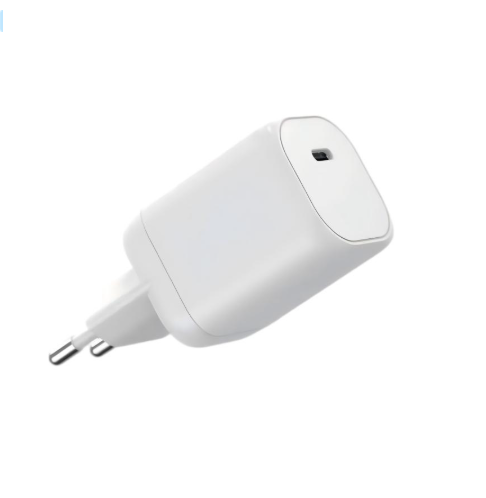
A universal travel adapter and a dedicated travel GaN charger are often sold under the same “travel” headline, and they are not the same product. This page is a catalog-choice article for OEM brands. It links existing wattage-limit and converter articles rather than repeating them. It will not declare a single winner, and it will not describe WECENT as a universal-adapter specialist. Live travel pages are used only as they read and as their photographs show, including hybrid USB-plus-AC-socket constructions.
Context is in travel chargers and plug adapters and in the travel charger category.
Two products that are often confused: a universal travel adapter and a travel GaN charger
A universal travel adapter and a dedicated travel GaN charger are two products. One passes a wall outlet to a device, within its stated limits. The other is a USB power supply, sometimes in a travel housing. Selling them under one “travel” headline, without that difference, is how a pack and a return go wrong.
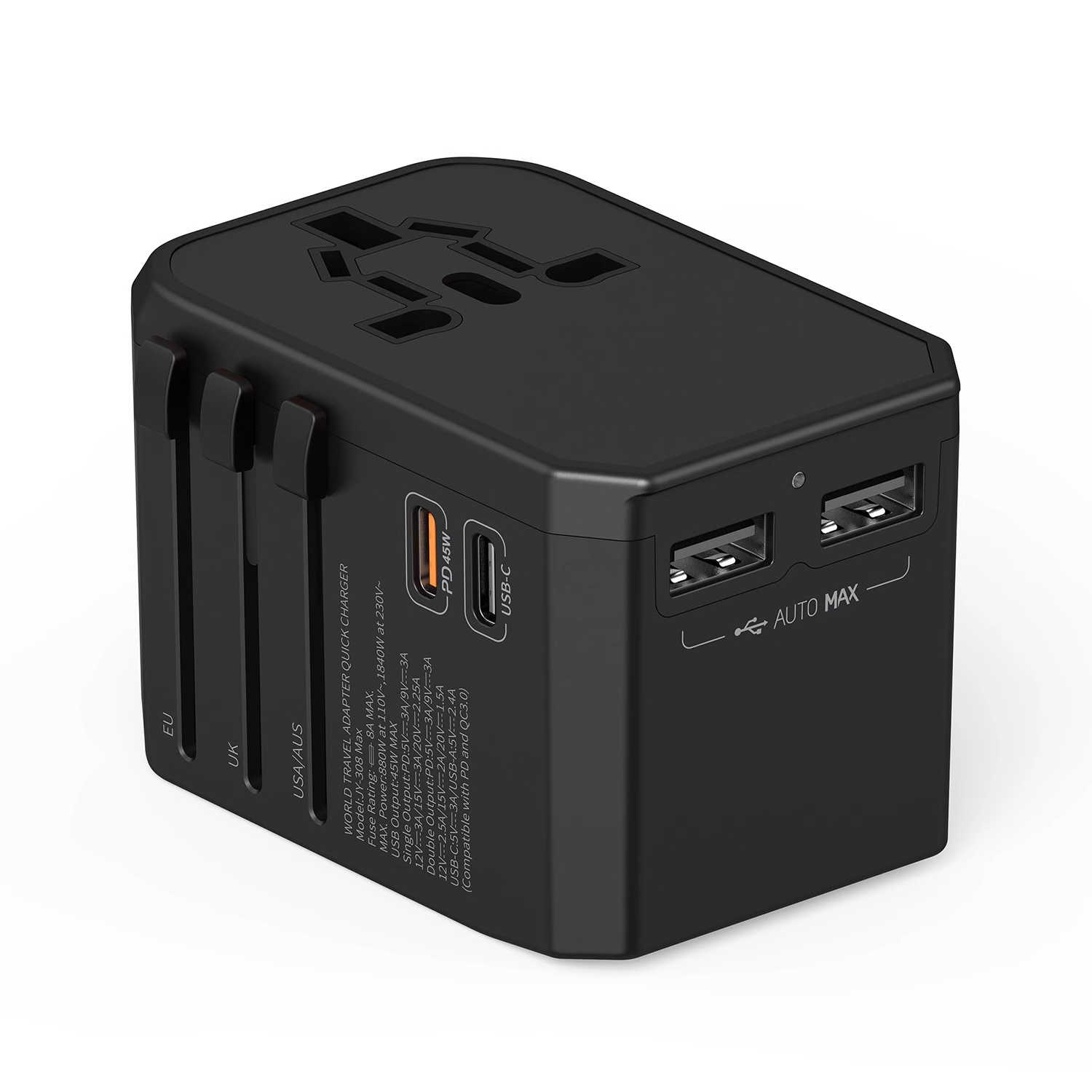
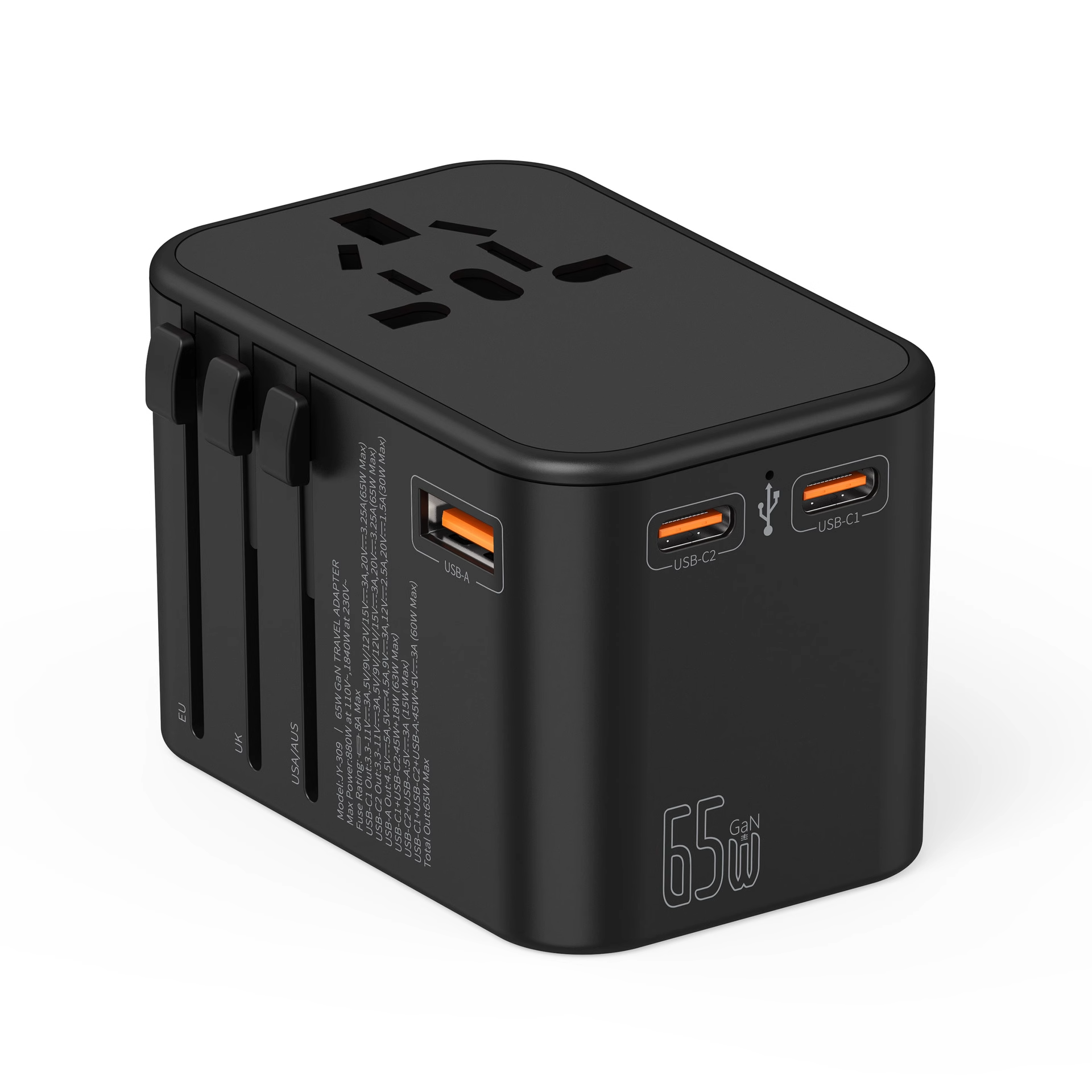
A hybrid product that combines sliding or interchangeable regional pins, a mains AC socket and USB ports is a third, mixed construction. Several live travel-catalog photographs show that hybrid, not a bare USB brick. A brand should name the construction on the carton, not hope a shopper will infer it from a wattage number.
What a universal adapter can and cannot do at 65W — linking the existing wattage-limit article
A universal adapter’s ability to pass a high-wattage load is a limit question, not a USB-PD question. This site already has a dedicated article on universal travel adapter wattage limits; this page does not repeat that file. If a traveler wants to run a 65 W USB laptop charger through a universal adapter’s AC socket, the socket and the adapter’s stated current, not the laptop’s USB headline, decide whether that is in limit. If the product is itself a 65 W USB travel charger, the USB rating is a different number from any AC-socket figure on the same housing. The live GaN 65W travel charger page, as opened here, publishes an AC power figure of 1840 W in a table that also needs a consistent 65 W USB map, as discussed below. Those two numbers must not be collapsed into one “65 W travel” claim.
When a brand should sell both, and how to explain the difference on a pack
Sell both when the channel has two jobs: passing a local plug to a traveler’s existing charger or a shaver, and supplying USB power without a second brick. Explain the difference on the front of the pack, in one sentence each, and on a diagram that shows an AC path and a USB path. If you only have one SKU, say which job it does. A hybrid SKU should say both jobs, and should not look like a dedicated USB brick in the artwork.
Catalog honesty: not positioning WECENT as a universal-adapter specialist unless the catalog says so
This article will not position WECENT as a universal-adapter specialist. The documented travel line, as opened on the live pages, includes GaN travel-charger products, several of which are photographed as hybrid housings with regional pins, an AC socket and USB ports. That is a catalog fact to describe accurately. It is not a company-level specialism, and it is not a reason to omit wattage-limit and safety work. OEM program context is on the OEM and ODM page.
Voltage converters are a third product — link existing converter articles, do not repeat them
A voltage converter is a third product. An adapter, a USB charger and a converter are often confused in travel retail. This site already explains how an adapter differs from a converter; this page does not repeat that explanation. If a brand sells a converter, it needs its own pack language and its own safety file. It should not be implied by a universal-adapter or a GaN travel SKU.
Safety and overheating returns typical of overloaded universal adapters
Overloaded universal adapters fail in predictable ways: a melted socket, a discoloured housing, a traveler who ran a high-wattage appliance through a device that was never rated for it. Those returns are a specification and a labeling miss. Write the current and the appliance class the socket will and will not accept, in language a traveler can read, and test the socket at that current. A USB-PD headline on the same housing does not protect the AC path. Safety-standard work belongs in the project file; a European low-voltage framework is in Directive 2014/35/EU, which is a legal framework, not a substitute for the product standard named in your report.
A CB-scheme path, where you use one, is described by IECEE. USB questions on a dedicated or a hybrid GaN SKU should be read against USB-IF compliance and the USB-IF document library. Efficiency rules for an external supply, where they apply, are summarised on the U.S. Department of Energy external power supplies page. Common-charger rules, where they apply, are in Directive 2022/2380.
A decision table for a travel-retail assortment
| If the channel’s main job is… | The more honest first SKU is usually… | What the pack must still say |
|---|---|---|
| Passing a local wall outlet to a traveler’s own charger or a small appliance, within a stated limit | A universal adapter, or a hybrid whose AC path is clearly rated and explained | Current and wattage limits of the AC path, and what not to plug in |
| Charging phones and a laptop from USB, without a second brick | A dedicated travel GaN charger, or a hybrid whose USB rating is clearly the USB figure | USB wattage and ports, and that this is a charger, not a converter |
| Both jobs in one housing | A hybrid, if the two paths are specified and photographed honestly | Two ratings, two warnings, and no collapsed “65 W travel” headline |
| Changing voltage for a non-USB appliance | A converter, as a separate product | That it is not an adapter and not a USB charger |
This table is a catalog decision aid. It is not a ranking, and it is not a product recommendation for a named traveler.
OEM implications if a buyer asks a charger factory to tool a universal adapter
If you ask a charger factory to tool a universal adapter, you are asking for a mains-interface product: pin mechanisms, creepage, a socket rating, and a safety report on that construction. USB-charger experience is relevant and is not sufficient on its own. Write the construction, the ratings and the report scope as a new project, not as a colour variant of a GaN brick. Sample the actual interface, including sliding pins or slices as designed.
Pack and website copy that keeps the two products from cannibalising each other
On a website and on a pack, use different product names, different first sentences and different diagrams. A shopper who needs an adapter should not land on a dedicated USB brick, and a shopper who needs a laptop USB charger should not buy an adapter with a low socket limit. If a SKU is a hybrid, say so in the title path and in the first line, as the photograph already shows. Live pages such as the 45 W and 65 W travel products should be copy-edited so the USB figure and the AC figure cannot be read as one number. The 65 W page, as opened here, also needs a USB table that matches its 65 W title rather than a 100 W map pasted from the 100 W page.
What this comparison will not do: declare a single “winner”
This comparison will not declare a single winner. The right SKU is the one that does the channel’s job, with a rating a traveler can understand and a safety file that matches the construction. A dedicated travel GaN, a universal adapter and a hybrid can each be the honest product in a different assortment. The wrong product is the one whose headline hides the path that will actually carry current.
Conclusion
Treat a universal travel adapter and a dedicated travel GaN charger as two products, and a hybrid as a mixed construction that must show two ratings. Link wattage-limit and converter questions to the articles that already cover them, describe live catalog photographs honestly, and do not declare a winner or a company specialism the catalog does not state.
If your team is choosing a travel assortment and wants to discuss adapter, hybrid and dedicated GaN constructions, you can send that scope through the OEM and ODM page. This is a request for a project discussion.
FAQ
Should a brand sell a universal travel adapter, a dedicated travel GaN, or both?
Sell the product that does the channel’s job, and sell both when the channel has two jobs: passing a local plug to a traveler’s existing charger or a small appliance, and supplying USB power without a second brick. Explain the difference on the pack, in one sentence each. A hybrid that combines regional pins, an AC socket and USB ports must show two ratings and must not look like a dedicated USB brick. This article will not declare a single winner, and it will not describe WECENT as a universal-adapter specialist.
Can a traveler run a 65 W laptop charger through a universal adapter?
Only if the adapter’s AC path is rated for that load. That is a wattage-limit question, covered by an existing article on this site, and this page does not repeat it. The laptop’s USB headline is not the adapter’s socket rating. If the product is itself a 65 W USB travel charger, the USB figure is a different number from any AC-socket figure on the same housing. The live 65 W travel page publishes an 1840 W AC figure in a table that also needs a consistent 65 W USB map. Do not collapse those numbers.
Is a voltage converter the same as a universal travel adapter?
No. A converter is a third product. This site already explains how an adapter differs from a converter; this page does not repeat that file. If a brand sells a converter, it needs its own pack language and its own safety file. It should not be implied by a universal-adapter or a GaN travel SKU. Pack and website copy should use different product names and different first sentences, so a shopper who needs a voltage change does not buy an adapter, and a shopper who needs USB power does not buy a converter.
What happens if a charger factory is asked to tool a universal adapter?
You are asking for a mains-interface product: pin mechanisms, creepage, a socket rating, and a safety report on that construction. USB-charger experience is relevant and is not sufficient on its own. Write the construction, the ratings and the report scope as a new project, not as a colour variant of a GaN brick. Sample the actual interface, including sliding pins or slices as designed. Live catalog photographs of hybrid housings are examples of mixed constructions, not a substitute for that project file.
{
“@context”: “https://schema.org”,
“@type”: “FAQPage”,
“mainEntity”: [
{
“@type”: “Question”,
“name”: “Should a brand sell a universal travel adapter, a dedicated travel GaN, or both?”,
“acceptedAnswer”: {
“@type”: “Answer”,
“text”: “Sell the product that does the channel’s job, and sell both when the channel has two jobs: passing a local plug to a traveler’s existing charger or a small appliance, and supplying USB power without a second brick. Explain the difference on the pack, in one sentence each. A hybrid that combines regional pins, an AC socket and USB ports must show two ratings and must not look like a dedicated USB brick. This article will not declare a single winner, and it will not describe WECENT as a universal-adapter specialist.”
}
},
{
“@type”: “Question”,
“name”: “Can a traveler run a 65 W laptop charger through a universal adapter?”,
“acceptedAnswer”: {
“@type”: “Answer”,
“text”: “Only if the adapter’s AC path is rated for that load. That is a wattage-limit question, covered by an existing article on this site, and this page does not repeat it. The laptop’s USB headline is not the adapter’s socket rating. If the product is itself a 65 W USB travel charger, the USB figure is a different number from any AC-socket figure on the same housing. The live 65 W travel page publishes an 1840 W AC figure in a table that also needs a consistent 65 W USB map. Do not collapse those numbers.”
}
},
{
“@type”: “Question”,
“name”: “Is a voltage converter the same as a universal travel adapter?”,
“acceptedAnswer”: {
“@type”: “Answer”,
“text”: “No. A converter is a third product. This site already explains how an adapter differs from a converter; this page does not repeat that file. If a brand sells a converter, it needs its own pack language and its own safety file. It should not be implied by a universal-adapter or a GaN travel SKU. Pack and website copy should use different product names and different first sentences, so a shopper who needs a voltage change does not buy an adapter, and a shopper who needs USB power does not buy a converter.”
}
},
{
“@type”: “Question”,
“name”: “What happens if a charger factory is asked to tool a universal adapter?”,
“acceptedAnswer”: {
“@type”: “Answer”,
“text”: “You are asking for a mains-interface product: pin mechanisms, creepage, a socket rating, and a safety report on that construction. USB-charger experience is relevant and is not sufficient on its own. Write the construction, the ratings and the report scope as a new project, not as a colour variant of a GaN brick. Sample the actual interface, including sliding pins or slices as designed. Live catalog photographs of hybrid housings are examples of mixed constructions, not a substitute for that project file.”
}
}
]
}