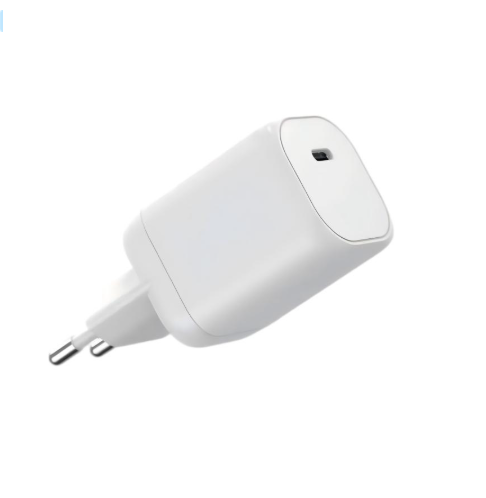
An interchangeable-plug travel charger is a mechanism and a safety-spacing product, not only a wattage headline. This page is for buyers who have to write contacts, a latch, creepage and a SKU count into an RFQ. It will not invent current ratings for plug slices. Those ratings are fields the factory must state, and that a sample must then confirm. Live travel-catalog pages are used only after a product-page check, and only as those pages actually read and as their photographs actually show.
Travel-program context is in travel chargers and plug adapters and in the travel charger category.
The interchangeable-plug mechanism: contacts, latch and what the user can do wrong
The interchangeable-plug mechanism is a set of contacts, a latch, and a user path that can go wrong. You should name those three in the RFQ before you count SKUs. A travel photograph that shows several regional pins is not a mechanism drawing, and it is not a creepage file.
A user can fit a slice only part way, force a latch, or travel with a loose slice in a pouch. The specification should state the intended fit, a lock that the user can feel, and a fail if the slice can be pulled under a stated force. A demonstration in a meeting room, with the engineer fitting the slice, is not that test.
Creepage, clearance and earth continuity at a removable-plug interface
A removable-plug interface is a safety surface. Creepage, clearance and, where the design uses a protective earth, earth continuity across the interface belong in the RFQ as fields, with a reference to the safety standard the destination market requires, and with a drawing that shows the distances. This page will not invent those distances. A factory should propose them against the intended standard, and a safety report should then measure them. A CB or a national safety file that never looked at the slice interface is an incomplete file for this construction. Official certification-body context is described by the IECEE CB Scheme; the applicable product standard is the one named in your project, not a slogan on a sell-sheet.
A European low-voltage framework, where it applies to a mains-interface product, is in Directive 2014/35/EU. USB port and cable questions on the same housing should be read against USB-IF compliance and the USB-IF document library, including the current USB Type-C cable and connector specification. External-power-supply efficiency, where it applies to the USB path, is summarised by the U.S. Department of Energy.
Current and temperature ratings of each plug slice, written as RFQ fields
Each plug slice needs a current rating and a temperature rise at that current, written as RFQ fields, not as a number this article invents. A UK slice, an EU slice, a US slice and an AU slice are not automatically the same part with a different pin. Ask for the rating of each slice, the conductor and contact design, and a temperature test with the slice fitted as a user will fit it. If a hybrid product also has an AC socket, that socket has its own current and a different misuse path; it is not a USB rating.
SKU count: one brick and four slices versus four dedicated housings
You are choosing a SKU model, not only a mould. One brick and four slices can reduce housing tools and warehouse cubes, and it creates a lost-slice and a mixed-slice problem. Four dedicated housings, or a foldable-pin housing, avoid a loose slice and multiply safety reports and carton SKUs. Write the count, the spare-slice plan, and the report family you expect, then choose. A “travel charger” headline hides that choice.
| SKU model | What you gain | What you must still specify |
|---|---|---|
| One brick and four slices | Shared housing and a smaller warehouse cube, if the mechanism is honest | Latch, creepage, each slice rating, spare-slice logistics |
| Four dedicated housings | No loose slice, a simpler user path | Four safety files and four carton SKUs, or a clear report-family plan |
| A sliding or foldable-pin housing | No separate slice to lose, if the mechanism matches the photograph | The actual pin mechanism, and any AC socket, as tested — not as a slogan |
Production tests: insertion cycles, contact resistance, and slice lock
Outgoing and qualification tests should include insertion and withdrawal cycles at a stated rate, a contact-resistance limit, a lock or pull test, and a visual inspection of contacts and the latch. This page does not invent the cycle count or the resistance limit. The factory proposes a method; you accept it on samples and on a production sample gate. A lot that has never had a slice fitted is an incomplete lot for this construction.
Lost-slice after-sales and spare-plug logistics
If you ship four slices, plan for the slice that is left in a hotel, and for a spare that still matches the brick’s contacts and safety file. Write a spare-slice SKU, a way to identify the revision, and a rule for mixing old and new slices. If you are not prepared to service a slice, a dedicated or a sliding housing may be the more honest SKU model.
Travel-kit packaging: pouch, cable and the slices that actually ship
The pouch, the cable and the slices that actually ship are part of the SKU. A carton that shows four slices and ships two is a claim problem. A pouch that lets a slice rattle against a USB port is a finish and a contact problem. Write the kit list, a photograph of the intended pack, and a drop or a vibration case for the travel pack. Program context for kits is also on the OEM and ODM page.
Using live travel-charger catalog models after a product-page check
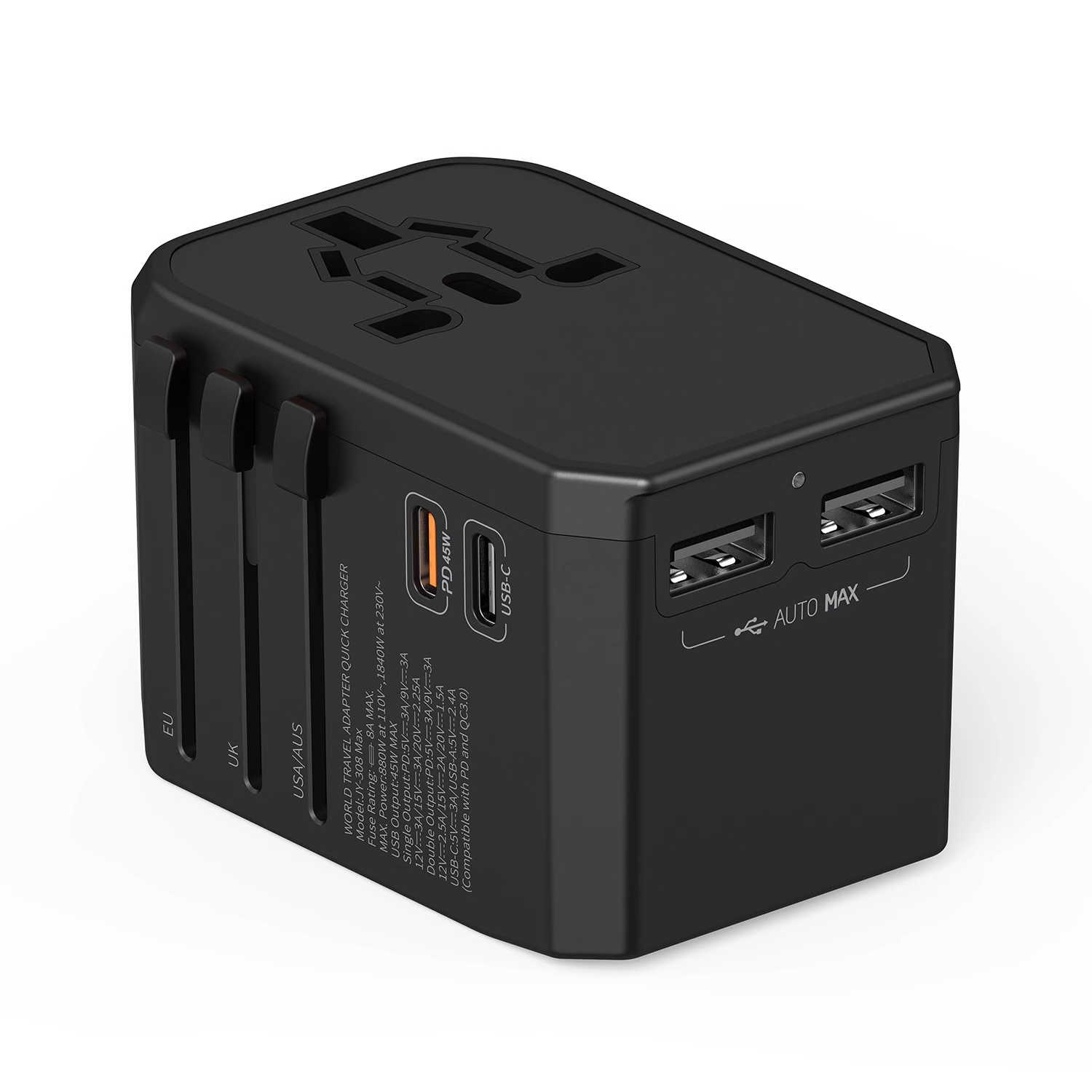
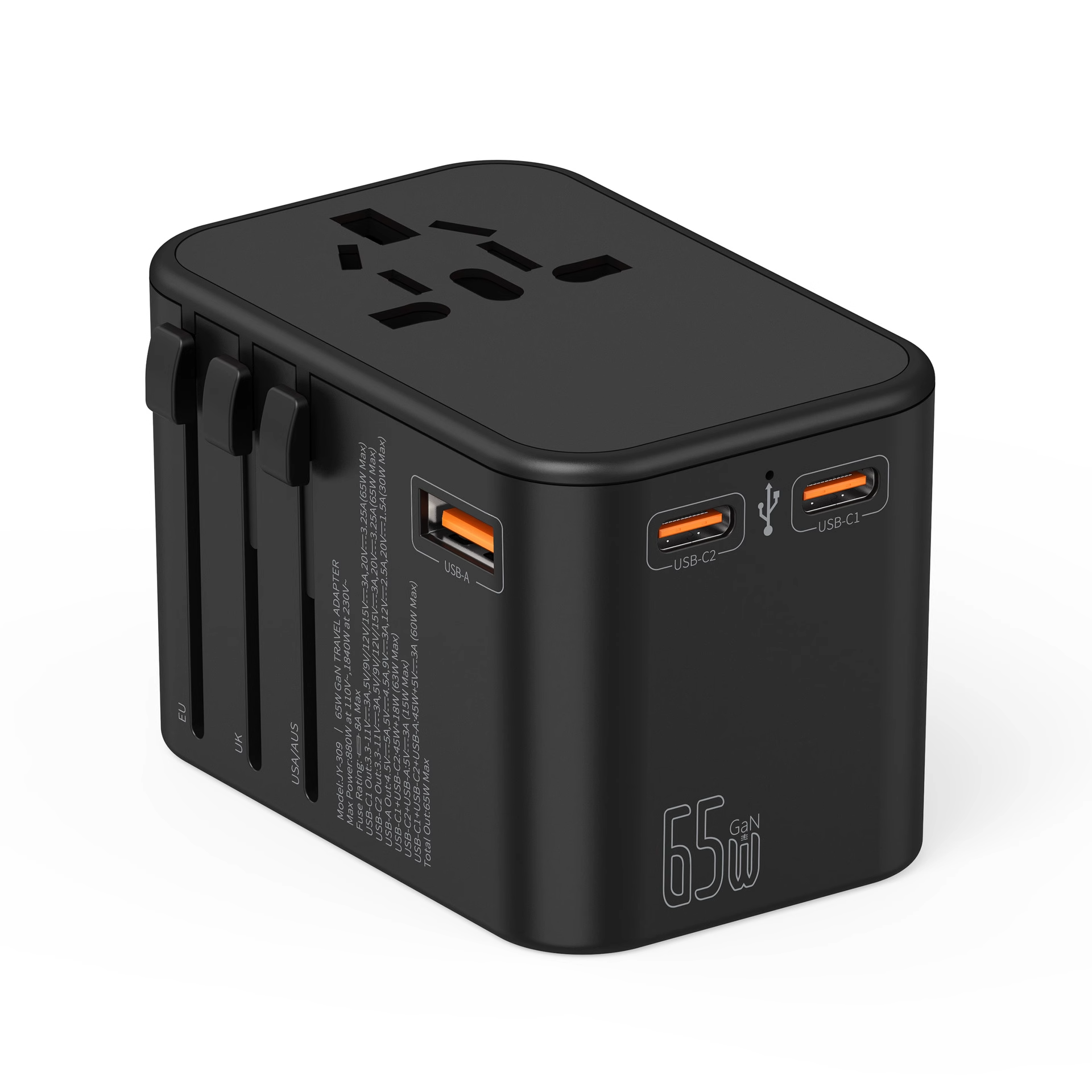
Live WECENT travel-charger pages should be used only as they actually read, and only after a product-page check. The GaN 45W travel charger page, as opened for this article, titles a 45 W product, states interchangeable US/UK/EU/AU plugs in its short text, publishes a USB total of 45 W max, an AC power figure of 1840 W, pins US UK AU EU, a size of 54.7 × 78.2 × 52.7 mm, and a ports line that lists more than one map. Photographs on that page show a hybrid housing with sliding regional pins and an AC socket, not a set of loose slices next to a bare brick. The GaN 65W travel charger page titles a 65 W dual USB-C and USB-A product; its specification table, as opened here, repeats a 100 W maximum and a three-USB-C map and a size that match the GaN 100W travel charger table, while a housing photograph shows a 65 W 2C1A marking. Those are catalog discrepancies a buyer should reconcile on a consistent table and on a sample. They are not evidence that these SKUs are interchangeable-slice products, and they are not a source for slice current ratings. Certificates such as UKCA, CE, FCC and CB are page claims, to be confirmed on documents for the actual construction.
How this mechanism article pairs with A020’s certification-family view without overlapping intent
A companion article in this plan addresses certification-family choices for travel products. This page does not repeat that file, and it does not depend on that draft being live. It only requires that a mechanism, a creepage drawing and a slice rating sit in the same qualification pack as the certification-family plan, so a safety report is written on the construction you will actually ship.
A sample-evaluation protocol for plug slices
On samples of the intended revision, fit and remove each slice, measure contact resistance, run the proposed insertion cycles, check the latch under a stated pull, inspect creepage and earth continuity if earth is used, and run a temperature rise at the stated current. Repeat after a drop of the kit pouch. Record the slice revision against the brick revision. Refuse a tool-go that cannot survive its own proposed test. The 65 W and 100 W catalog pages are starting points for a sample request, not substitutes for that protocol.
Conclusion
Specify an interchangeable-plug travel charger as contacts, a latch, creepage and a SKU model, with current and temperature ratings written as RFQ fields and confirmed on samples. Use live travel-catalog pages only as they read and as their photographs show, and do not invent slice ratings from a wattage headline.
If your team is specifying a travel charger with regional plugs and wants to discuss a mechanism and a sample protocol, you can send that scope through the OEM and ODM page. This is a request for a project discussion.
FAQ
What belongs in an RFQ for an interchangeable-plug travel charger?
Name the contacts, the latch, and the user path that can go wrong; creepage, clearance and earth continuity across the interface, with a drawing; a current and a temperature rating for each plug slice, as fields the factory must state; a SKU model (one brick and four slices, dedicated housings, or a sliding-pin housing); and production tests for insertion cycles, contact resistance and the slice lock. This article will not invent those ratings or cycle counts. Confirm them on samples of the intended revision.
Are live WECENT travel-charger pages interchangeable-slice products?
Not automatically. The GaN 45W travel charger page, as opened for this article, uses “interchangeable” in its short text, but photographs show a hybrid housing with sliding regional pins and an AC socket, and it publishes a 45 W USB maximum and an 1840 W AC figure. The 65 W page titles a 65 W product while its table repeats a 100 W map that matches the 100 W page. Use those pages only as they read and as their photographs show, and confirm the actual mechanism on a sample. They are not a source for slice current ratings.
How should a buyer choose between one brick with four slices and four housings?
Write the SKU count, the spare-slice plan, and the report family you expect, then choose. One brick and four slices can reduce housing tools and warehouse cubes, and it creates a lost-slice and a mixed-slice problem. Four dedicated housings, or a sliding-pin housing, avoid a loose slice and multiply safety reports or require a clear report-family plan. A “travel charger” headline hides that choice. If you are not prepared to service a slice, a dedicated or a sliding housing may be the more honest model.
What should a sample evaluation of plug slices include?
On samples of the intended revision, fit and remove each slice, measure contact resistance, run the proposed insertion cycles, check the latch under a stated pull, inspect creepage and earth continuity if earth is used, and run a temperature rise at the stated current. Repeat after a drop of the kit pouch. Record the slice revision against the brick revision. Refuse a tool-go that cannot survive its own proposed test. A meeting-room demonstration, with the engineer fitting the slice, is not that evaluation.
{
“@context”: “https://schema.org”,
“@type”: “FAQPage”,
“mainEntity”: [
{
“@type”: “Question”,
“name”: “What belongs in an RFQ for an interchangeable-plug travel charger?”,
“acceptedAnswer”: {
“@type”: “Answer”,
“text”: “Name the contacts, the latch, and the user path that can go wrong; creepage, clearance and earth continuity across the interface, with a drawing; a current and a temperature rating for each plug slice, as fields the factory must state; a SKU model (one brick and four slices, dedicated housings, or a sliding-pin housing); and production tests for insertion cycles, contact resistance and the slice lock. This article will not invent those ratings or cycle counts. Confirm them on samples of the intended revision.”
}
},
{
“@type”: “Question”,
“name”: “Are live WECENT travel-charger pages interchangeable-slice products?”,
“acceptedAnswer”: {
“@type”: “Answer”,
“text”: “Not automatically. The GaN 45W travel charger page, as opened for this article, uses “interchangeable” in its short text, but photographs show a hybrid housing with sliding regional pins and an AC socket, and it publishes a 45 W USB maximum and an 1840 W AC figure. The 65 W page titles a 65 W product while its table repeats a 100 W map that matches the 100 W page. Use those pages only as they read and as their photographs show, and confirm the actual mechanism on a sample. They are not a source for slice current ratings.”
}
},
{
“@type”: “Question”,
“name”: “How should a buyer choose between one brick with four slices and four housings?”,
“acceptedAnswer”: {
“@type”: “Answer”,
“text”: “Write the SKU count, the spare-slice plan, and the report family you expect, then choose. One brick and four slices can reduce housing tools and warehouse cubes, and it creates a lost-slice and a mixed-slice problem. Four dedicated housings, or a sliding-pin housing, avoid a loose slice and multiply safety reports or require a clear report-family plan. A “travel charger” headline hides that choice. If you are not prepared to service a slice, a dedicated or a sliding housing may be the more honest model.”
}
},
{
“@type”: “Question”,
“name”: “What should a sample evaluation of plug slices include?”,
“acceptedAnswer”: {
“@type”: “Answer”,
“text”: “On samples of the intended revision, fit and remove each slice, measure contact resistance, run the proposed insertion cycles, check the latch under a stated pull, inspect creepage and earth continuity if earth is used, and run a temperature rise at the stated current. Repeat after a drop of the kit pouch. Record the slice revision against the brick revision. Refuse a tool-go that cannot survive its own proposed test. A meeting-room demonstration, with the engineer fitting the slice, is not that evaluation.”
}
}
]
}