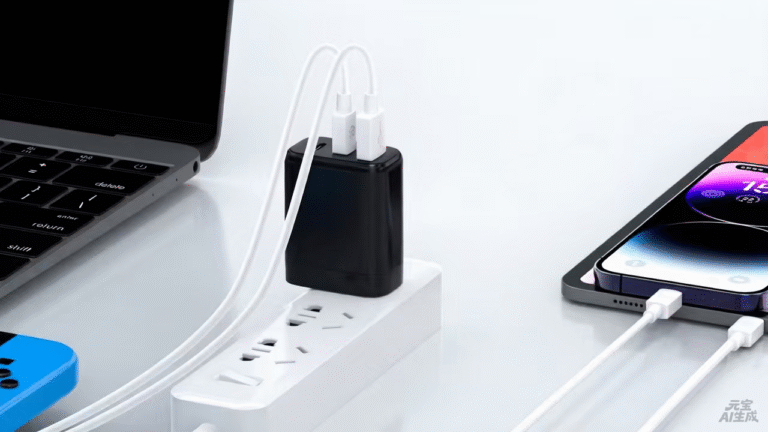
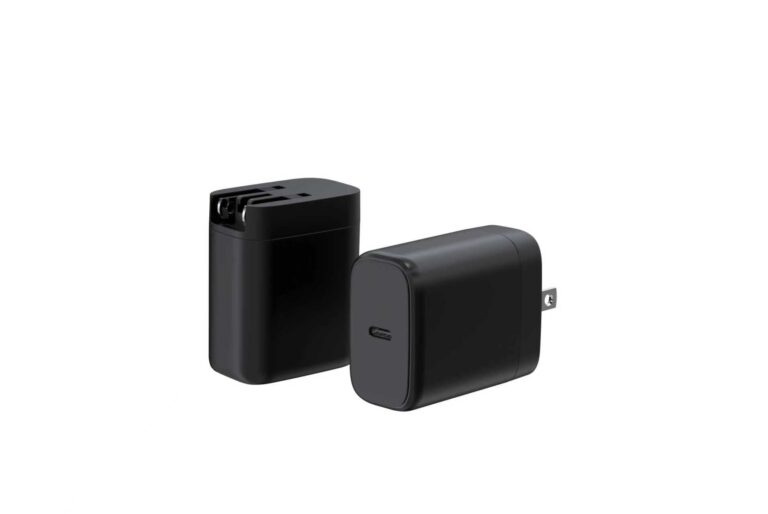
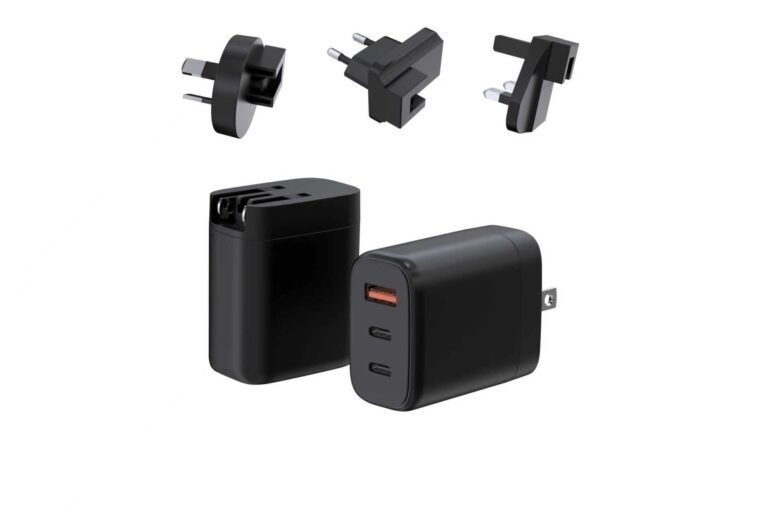
The 65W GaN charger is the workhorse of modern USB-C fast charging because it sits exactly where most charging happens: it covers the ultrabook majority (13- and 14-inch laptops that charge at 45–65W), charges phones at full speed through their negotiated fast profiles, and fits in a bag or on a desk without a second thought. It is the volume engine of a charger line — the tier that carries the mainstream price, size, and coverage expectations.
(Last modified date: August 31, 2026)
Key Takeaways
- 65W matches the ultrabook majority (45–65W USB-C laptops) with headroom for a phone.
- Port mixes serve three segments: single-port (laptop-only), two-port with strong primary (laptop + phone), and USB-A secondary (legacy devices).
- The split map must keep the primary port at 45W or more when a secondary device is connected.
- Use a 5A-rated cable for full 65W output; a 3A cable caps current and power.
- 65W is the entry point of the line: customers upgrade to 100W when their laptop grows.
Why 65W Is the Workhorse
The 65W rating matches the ultrabook majority: 13- and 14-inch laptops that most fleets issue charge at 45–65W over USB-C, and a 65W charger covers them at full speed with headroom for the phone. The tier also matches the size and price expectations of the volume market — small enough for the bag, affordable enough for the mainstream. In a line architecture, the 65W tier carries the volume, the 100W tier carries the premium laptop customer, and the 45W tier covers the entry.
The Port Mix for the 65W Tier
- Single-port model: for the laptop-only buyer.
- Two-port model with a strong primary: for the laptop-plus-phone buyer — the workhorse configuration.
- Two-port with USB-A secondary: for the legacy-device buyer.
The split map is the spec: the primary port’s output when the phone joins, and the all-ports behavior. The 65W tier’s most common failure is the split that drops the laptop below its minimum, so the map should keep the primary port at 45W or more when the secondary device is connected.
The Compatibility Framework
The 65W tier’s compatibility framework covers the ultrabook majority: laptops charging at 45–65W over USB-C, phones negotiating fast profiles through the secondary port, and tablets charging at USB-C profiles. Publish the tested-device matrix and name the exceptions — proprietary-charging laptops, phones without the charger’s protocol support, and machines that throttle third-party charging — because exceptions are where returns come from. Wecent’s 65W configurations publish profiles per model.
The Split and the Cable
Two details decide the field experience. First, the split at the laptop-plus-phone combination must keep the laptop port above its minimum, and the disconnect behavior must recover the full profile without a port reset. Second, the cable must be 5A-rated for full 65W output — a 3A cable caps current and power, and the complaint lands on the charger. Verify both with actual devices; see the 65W fast charger speed and safety guide for the specs that matter.
The Thermal Reality at 65W
The sustained-load temperature, derating, and housing design decide whether the charger holds its rating. Request soak data at rated output, surface temperature, and derating behavior tested at the input voltage of your target markets. The charger that holds 65W with a stable temperature is the workhorse the line can rely on.
The Line Position and the Program
The 65W tier is the volume engine: pricing anchors the range, packaging carries the mainstream story, and reorder volume feeds the program. Plan it as a program product with volume pricing tiers, batch QC records, per-market certificate files, and a spares pool. The volume engine’s margin is protected by program structure, not per-unit price alone.
The Retail and Channel Fit
The 65W tier sells across every shelf: marketplaces list it with the compatibility matrix, retail shelves carry the size-and-price story, corporate buyers use it as the fleet workhorse, and gift channels pack it as a practical present. Name the story per channel and align pricing with the channel structure.
Bottom Line
The 65W GaN charger is the workhorse because it covers the ultrabook majority at the mainstream price: select the port mix by customer segments, verify the split and cable at the combinations customers use, and position the tier as the volume engine. It is also the entry point of the upgrade path — the customer who buys the 65W workhorse today moves to the 100W tier when the laptop grows. For a 65W line recommendation with split and compatibility data, contact Wecent through the contact page or browse the GaN charger category and the product collection.
FAQs
Is 65W enough for a full-size laptop?
For the ultrabook majority, yes; for full-size and high-performance laptops, the 100W tier is the honest recommendation. The compatibility matrix names the classes the 65W tier serves.
Why does my 65W charger charge my laptop slowly when the phone is connected?
The split map reassigns part of the output to the phone. Whether the laptop keeps its minimum depends on the both-ports row; read the laptop-plus-phone combination.
Can a 65W charger fast-charge a phone?
At the phone’s negotiated profile, if the charger supports the phone’s protocol (typically PPS for modern phones) and the cable is rated for it; check the phone row of the compatibility matrix.
Should the 65W tier be single-port or multi-port?
The port mix follows customer segments: the two-port model with a strong primary is the workhorse configuration for laptop-plus-phone users, while single-port serves the laptop-only buyer.
What is the difference between the 65W and 100W tiers?
65W covers the ultrabook majority at the mainstream price; 100W adds full-size laptop coverage and multi-device headroom. Keep the two stories distinct so each tier sells its own job.
Related Articles
- 65W Fast Charger: Speed, Safety and the Specs That Matter
- USB-C GaN Charger: The Foundation of a Modern Charging Line