
A desk lamp with a charging base is a natural product, and it concentrates two heat sources in one enclosure: the light driver and the charging coil. That is the design problem the category tends to underestimate.
This article covers the integration decisions, the thermal question and the certification duties that follow from combining the two functions.
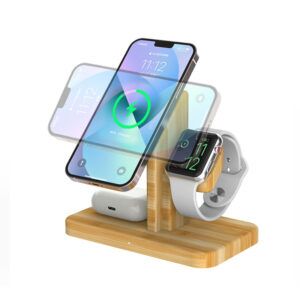
What are the integration choices in a charging lamp?
Three decisions set the product: where the coil sits in the base, whether the phone is held in place or simply placed, and whether one adapter powers both functions. Each choice affects usability and heat.
A base-mounted coil with a marked placement area and a slightly recessed surface is the arrangement that produces the fewest complaints, because it guides the user to the right position.
Coil placement and alignment cues
Alignment is the largest single factor in wireless charging efficiency, and in a lamp it depends on the base design. A marked pad, a shallow recess or a magnetic array all improve the result; a flat unmarked surface produces off-centre placements.
For a product team, the alignment method belongs in the specification alongside the coil size, because it determines the mechanism, the tooling and the user instructions.
Heat: light driver and coil in one enclosure
The light driver and the coil both generate heat, and a lamp housing has limited airflow. The practical responses are to separate the two thermally, to provide a conductive path to the base, and to derate charging when temperature rises.
A lamp that charges slowly when the light has been on for an hour is not necessarily faulty; it is managing a thermal budget, and the specification should describe that behaviour.
Power architecture: one adapter or two
Powering both functions from one adapter simplifies the product and the packaging, but it requires the adapter to cover the light’s demand and the charging load together. Two adapters add clutter and cost, and they are usually the wrong answer for this category.
The specification should state the total load, the split behaviour when charging and lighting run together, and the adapter rating that supports both.
Certification when a lamp contains a wireless charger
Two regulatory worlds meet: the luminaire and the inductive charging function. The inductive side follows the Qi framework, while the electronics follow the applicable EMC rules, and the adapter has its own efficiency documentation.
The practical consequence is that the certification plan has to cover both functions, and the test samples have to represent the production configuration.
Materials and finish constraints
The surface between the coil and the phone is part of the magnetic circuit. Non-metallic materials work within a thickness budget, while metallic foils, paints and plated trims over the coil area block the field.
That constraint belongs in the industrial design brief rather than in the tooling review, because a cosmetic decision can remove the charging function.
Cost and MOQ implications
Combining two products means two sets of tooling, two certification paths and a more complex assembly, which is why the category is usually produced on an existing platform rather than from a blank sheet.
WECENT builds wireless charging platforms within its wireless charger range range and supports product customisation through its OEM/ODM programme, with sampling, certification planning and per-batch inspection records from the quality control gates.
Specifying before tooling
A specification that settles coil placement, alignment method, thermal behaviour, adapter rating and material stack before tooling removes the risks that would otherwise appear at sampling.
It also shortens the certification work, because the test configuration is defined rather than discovered.
Desk lamp with wireless charging: the integration checklist
A desk lamp with wireless charging is specified by five items: coil position and alignment method, the thermal path shared with the light driver, the adapter rating for the combined load, the material stack above the coil and the certification scope for both functions.
Reference standards for this topic
Where a programme needs the primary documents, the relevant references for this topic are published by the standards bodies and regulators: USB-IF: USB Power Delivery, ISTA: transit test protocols, Regulation (EU) 2019/1782, 10 CFR Part 430, 47 CFR Part 15.
FAQ
Can a desk lamp charge a phone wirelessly?
Yes, where the base contains an inductive charging module and the surface above it is non-metallic and thin enough. The alignment method and the coil size determine how reliable the function is in daily use.
Why does the charging slow down when the lamp is on?
The light driver and the coil share one thermal budget, so charging may derate when the lamp has been operating. That behaviour is protective and should be described in the specification rather than treated as a fault.
Do I need two adapters for a charging lamp?
Usually not. One adapter can cover both functions, provided its rating supports the combined load, and the specification should state the split behaviour when lighting and charging run together.
What certification does a charging lamp need?
The inductive function follows the Qi framework and the electronics follow the applicable EMC rules, with the adapter carrying its own efficiency documentation. The certification plan should cover both functions and use production-representative samples.
Can a metal base be used?
Metal over or immediately around the coil area blocks the magnetic field, so the material stack above the coil has to be non-metallic and within the thickness budget. This constraint belongs in the industrial design brief.
Developing a lamp with charging?
Share the lamp format, charging targets and target markets, and WECENT will confirm the coil and thermal design, certification scope and MOQ from a written brief.
{“@context”:”https://schema.org”,”@type”:”FAQPage”,”mainEntity”:[{“@type”:”Question”,”name”:”Can a desk lamp charge a phone wirelessly?”,”acceptedAnswer”:{“@type”:”Answer”,”text”:”Yes, where the base contains an inductive charging module and the surface above it is non-metallic and thin enough. The alignment method and the coil size determine how reliable the function is in daily use.”}},{“@type”:”Question”,”name”:”Why does the charging slow down when the lamp is on?”,”acceptedAnswer”:{“@type”:”Answer”,”text”:”The light driver and the coil share one thermal budget, so charging may derate when the lamp has been operating. That behaviour is protective and should be described in the specification rather than treated as a fault.”}},{“@type”:”Question”,”name”:”Do I need two adapters for a charging lamp?”,”acceptedAnswer”:{“@type”:”Answer”,”text”:”Usually not. One adapter can cover both functions, provided its rating supports the combined load, and the specification should state the split behaviour when lighting and charging run together.”}},{“@type”:”Question”,”name”:”What certification does a charging lamp need?”,”acceptedAnswer”:{“@type”:”Answer”,”text”:”The inductive function follows the Qi framework and the electronics follow the applicable EMC rules, with the adapter carrying its own efficiency documentation. The certification plan should cover both functions and use production-representative samples.”}},{“@type”:”Question”,”name”:”Can a metal base be used?”,”acceptedAnswer”:{“@type”:”Answer”,”text”:”Metal over or immediately around the coil area blocks the magnetic field, so the material stack above the coil has to be non-metallic and within the thickness budget. This constraint belongs in the industrial design brief.”}}]}