
The fastest iPhone charger is not the one with the biggest wattage number on the box—it is the charger that matches your iPhone’s hardware limit through USB-C Power Delivery. For iPhone 13, iPhone 14, and iPhone 15 users, a 20W USB-C PD adapter unlocks the phone’s full fast-charging capability, while a 30W adapter adds only a few minutes on most models. The real leap is from the old 5W brick to 20W; moving from 20W to 30W is incremental unless you also charge tablets or laptops.
(Last modified date: September 2, 2026)
Which iPhone charger is truly the fastest: 5W, 20W, or 30W? A 20W USB-C PD charger is the practical fastest choice for most iPhone 13/14/15 users because modern iPhones cap wired fast charging in the mid-20W range. The 5W brick is obsolete for daily use; 30W adds only a few minutes on phones but helps when you also charge tablets or laptops.
Key Takeaways
- Modern iPhones negotiate power through USB-C Power Delivery; the phone, not the charger, decides how much it draws.
- iPhone 13/14/15 models typically cap wired fast charging in the mid-20W range, so 20W is enough for most users.
- A 30W PD or GaN charger is a better buy when you also charge tablets, laptops, or multiple devices.
- The 5W adapter is slow, not harmful; it is obsolete as a primary charger but fine for gentle overnight use.
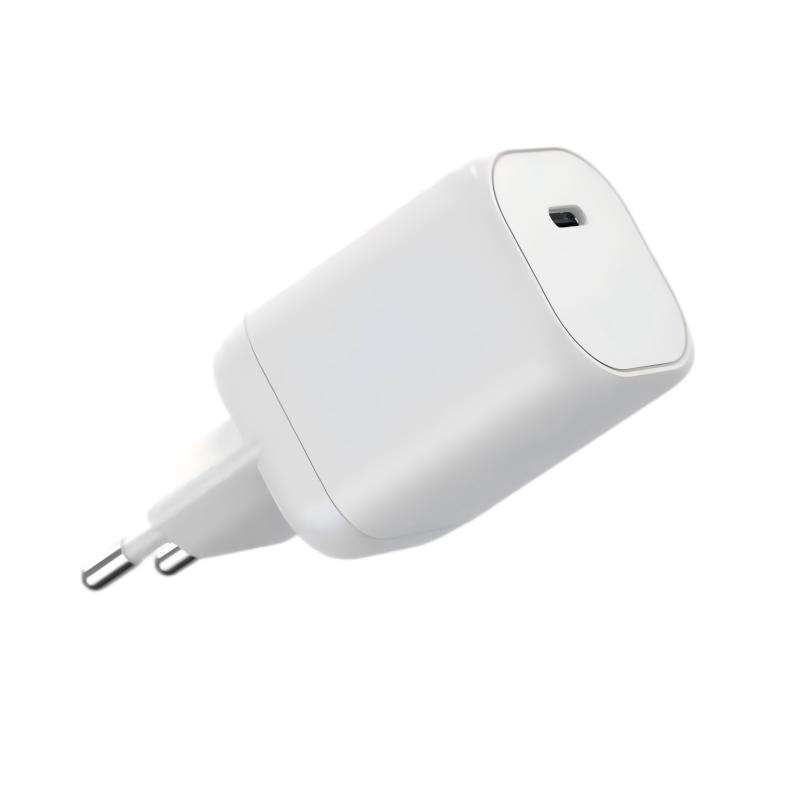
How iPhone Fast Charging Works in the Real World
Modern iPhones use optimized battery charging curves rather than a flat speed from 0 to 100 percent. The phone pulls higher power at lower battery percentages, then gradually slows down to protect battery health as it approaches full. The fastest charger for you is the one that can hit your model’s peak power window early and stay close to that sweet spot without excessive heat. For iPhone 15 and iPhone 14 series, maximum wired fast-charging power typically sits in the mid-20W range; a 5W brick dramatically under-utilizes what your phone can accept, while a 20W or 30W USB-C PD adapter lets the iPhone use its full fast-charge window.
5W vs 20W vs 30W: Head-to-Head iPhone Charging Times
Real-world testing shows the gap between 5W and 20W is transformative, while 20W versus 30W is a matter of minutes. After 30 minutes from a low battery, a 5W charger might raise a modern iPhone to the mid-teens, while a 20W or 30W PD charger can push past 50%. Over a full cycle, a 5W brick takes around 3.5 hours on a large-battery iPhone; a 20W adapter finishes in about 1 hour 30–35 minutes; a 30W adapter edges it out by only a few minutes.
| Charger | Nominal Power | Time to ~50% on Recent iPhone | Full Charge Time | Best For |
|---|---|---|---|---|
| 5W small square charger | 5W | Often 60–90 minutes or more | Around 3.5 hours | Light users, legacy backup, overnight charging |
| Standard 20W USB-C PD | 20W | Roughly 25–35 minutes | Around 1.5 hours | Most iPhone 13/14/15 owners wanting fast daily charging |
| 30W USB-C PD or GaN | 30W | Slightly faster than 20W on larger batteries | About 1.5 hours or a bit less | Power users, Pro Max models, mixed phone and tablet charging |
Why the 5W iPhone Charger Is Now Obsolete
The original 5W charger was fine when batteries were smaller and overnight charging was the main pattern. On today’s iPhones, the phone can draw over 20W during the initial fast-charge window, but the 5W brick can only supply a fraction, so fast charging never activates. For users who rely on navigation, gaming, camera use, and streaming, waiting over three hours is no longer acceptable—which is why Apple shifted to USB-C PD chargers around 20W and stopped bundling 5W adapters. The 5W adapter still has a niche role, such as gentle overnight charging at a bedside.
Apple 20W USB-C Power Adapter vs 5W
With a 20W PD charger and a proper USB-C cable, you can usually go from nearly empty to about 50% in roughly half an hour. Using a 5W charger in the same 30-minute window may only add 10–20%, depending on model and background usage. A quick coffee break with a 20W adapter can give you enough battery for the rest of the afternoon.
20W vs 30W iPhone Charger: Is More Always Better?
For many iPhone 13/14/15 models, maximum supported charging power is around 20–27W, so the phone is the gatekeeper. When you plug in a 30W USB-C PD charger, the iPhone negotiates the power it wants and typically draws below its hardware ceiling. Tests on large Pro Max models show the 30W adapter may reach 100% a few minutes earlier, but the difference is often under 10 minutes on a full cycle. The takeaway: 20W unlocks full fast charging for most recent iPhones, and 30W becomes genuinely useful when you also charge tablets, MacBooks, or multiple devices.
Understanding USB-C PD: The Core of iPhone Fast Charging
USB-C Power Delivery (PD) lets the charger and device communicate digitally and agree on an appropriate power level. The iPhone identifies itself, requests a profile such as 9V at a few amps, and the charger adjusts to supply that safely. Negotiation happens continuously: when the battery is low and cool, the phone may ask for higher power; as it warms up or reaches higher percentages, the phone scales down its request. This is why a 30W PD charger will not force your iPhone to charge at unsafe speeds—the device always has the final say.
Hardware Limits: Why Your iPhone Caps Charging Speed
Every iPhone has a built-in maximum charging rate defined by battery chemistry, thermal design, and power-management hardware. Even with a 100W PD charger, the device will never draw more than its internal limit—typically topping out in the mid-20W range on current models. Peak wattage is usually available only between 0 and 50%, after which the phone deliberately reduces power, which is why speed tests focusing only on the first 10–20 minutes can exaggerate charger differences.
Market Trends: Fast Charging iPhone Accessories in 2026
The accessory market has shifted toward higher-watt USB-C PD chargers, GaN chargers, and multi-port solutions that power phones, tablets, and laptops from one compact brick. Awareness of safety certifications, reliable Chinese manufacturing ecosystems, and OEM/ODM capabilities has grown among wholesalers and brand owners, who now source private-label 20W, 30W, 65W, and higher GaN PD chargers for e-commerce, retail chains, and corporate bundles.
Wecent: Specialist GaN and PD Charger Manufacturer
Wecent is a Shenzhen-based GaN and wireless charger maker with over 15 years of experience and more than 200 global clients, supporting brands with certified PD chargers, data cables, and one-stop OEM/ODM services—including 20W, 30W, and higher GaN adapters.
GaN vs Traditional Chargers for iPhone Fast Charging
Gallium nitride (GaN) allows chargers to handle higher power in smaller, cooler packages than silicon. A 30W GaN charger can be significantly more compact than an older 30W silicon adapter while delivering stable PD power—ideal for one GaN PD charger that powers an iPhone at full speed and also charges a MacBook Air or USB-C laptop.
Top iPhone Fast Charger Types and Use Cases
| Type | Key Advantages | Ratings | Use Cases |
|---|---|---|---|
| 5W legacy iPhone charger | Low heat, gentle overnight charging | Basic backup usage | Nightstand slow charge for older or secondary iPhone |
| 20W USB-C PD iPhone charger | Optimal fast charging for iPhone 13/14/15, compact | Ideal daily fast charger | Quick top-ups at home, office, or commute |
| 30W USB-C PD GaN charger | Slightly faster for Pro Max, supports tablets and small laptops | Best value multi-device charger | One-brick solution for phone, tablet, and accessories |
| Multi-port 30W–65W PD charger | Charge several devices at once, smart allocation | Great for families and travelers | Simultaneous iPhone, AirPods, and iPad charging |
| MagSafe or wireless fast charger | Convenient docking, fewer cable issues | Desk and bedside convenience | Drop-and-go charging with moderate speed |
Safety, Certification, and Sourcing Considerations
High-quality PD adapters include over-current, over-voltage, short-circuit, and over-temperature protection, and carry certifications such as CE, FCC, RoHS, and region-specific marks. For buyers working with Chinese manufacturers, demand verifiable test reports and certificates rather than marketing claims.
Practical Buying Guide: Choosing 5W, 20W, or 30W
- Mainly overnight, rarely below 50%, older or secondary iPhone: a 5W charger as a gentle bedside option is acceptable, but not as a primary adapter.
- Most users of iPhone 13/14/15: a 20W USB-C PD charger is the best balance of price, speed, and compatibility.
- Pro Max, iPad, or USB-C laptop owners: a 30W GaN charger gives near-identical iPhone times plus headroom for higher-power devices.
FAQs on iPhone Fast Charging and Charger Wattage
Is a 30W charger faster than a 20W charger on an iPhone?
Only slightly. Most iPhone 13/14/15 models cap wired fast charging in the mid-20W range, so the phone limits the draw; a 30W adapter may finish a few minutes earlier on Pro Max models and adds headroom for tablets and laptops.
Why is my iPhone slow on a 5W charger?
The 5W brick cannot supply the power your iPhone needs during its fast-charge window, so fast charging never activates—full charges can take around 3.5 hours.
Can a 30W GaN charger damage my iPhone?
No. The iPhone negotiates power through USB-C PD and only draws what it can handle; a certified 30W charger is safe.
Which charger should I buy for an iPhone 15 Pro Max?
A 20W charger unlocks fast charging; a 30W GaN charger adds a little more headroom and supports tablets or small laptops from the same brick.
Is wireless MagSafe charging as fast as a 20W wired charger?
No. MagSafe wireless tops out around 15–25W (depending on model) and is roughly half the speed of wired charging.
Related Articles
- How Fast Can Your iPhone Charge?
- Can I Use an iPad Charger for iPhone?
- What Are the Best 100W GaN USB-C Chargers?
Official Resources
References
- Charge-time figures follow the original article; verify with Apple’s support documentation [VERIFY].