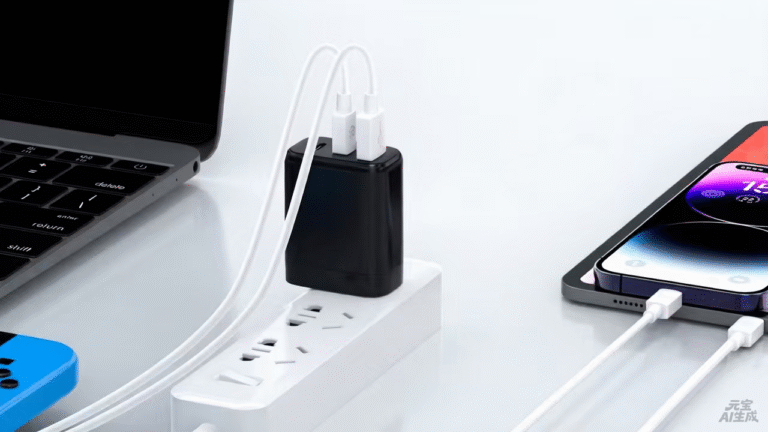
GaN2, GaN3 and GaN5 are shorthand for generations of gallium nitride power devices, and the differences are real but smaller than the marketing suggests: higher switching frequencies, better efficiency and tighter packaging. For an OEM buyer, the practical question is not which generation number to print on the box, but how the design performs — and how you verify it. Here is what each generation changed and how to check the claim.
GaN Generations Explained: GaN2, GaN3, GaN5
Generation labels loosely track the evolution of GaN power transistors: early devices improved on silicon’s efficiency, later generations pushed switching frequency up so transformers and chargers shrank further, and the newest devices add better thermal performance and integration. The labels are vendor shorthand, not an official standard — two “GaN3” chargers from different factories can perform very differently.
What Actually Changed Between Generations (Real Specs)
The measurable changes are switching frequency, gate drive and thermal resistance. Higher frequency lets the charger use a smaller transformer, which is why each generation is physically smaller at the same wattage. Efficiency gains are typically a few percentage points at best point — real but not dramatic. What did not change: the protocols. A GaN2 and a GaN5 charger both speak the same PD and PPS protocols; the generation only affects how efficiently they convert power.
Efficiency Curves: Why 3rd-Gen GaN Wins in Small Power Supplies
In compact 65W bricks, the efficiency curve matters more than the peak number. A well-designed third-generation GaN charger holds high efficiency across the 20–80% load range, which keeps surface temperature down in a small enclosure. That is the spec to compare — efficiency at 25/50/75/100% load, plus surface temperature — rather than the generation label alone.
GaN Transistors: How the Chip Inside the Charger Works
Inside the charger, GaN transistors switch the power stage on and off at high frequency. The material’s wide bandgap (about 3.4 eV versus silicon’s 1.1 eV) allows a smaller die that blocks higher voltage and switches faster, which directly shrinks the magnetic components. For the device-level explanation, Infineon’s GaN technology pages and Navitas are the primary references.
How to Verify a “GaN3” Claim (Test Data Over Labels)
Treat the generation number as a claim, not a certification. Four checks settle it:
- Ask for the device. Which GaN part (manufacturer and part number) is used in the power stage?
- Ask for the efficiency curve. Measured efficiency at 25/50/75/100% load for your target model.
- Ask for thermals. Surface temperature at rated output in a typical enclosure.
- Match certificates to the model. CE, FCC, RoHS and regional marks are model-dependent, as our CE/FCC/RoHS guide for GaN OEM explains.
What This Means for Your OEM Charger Project
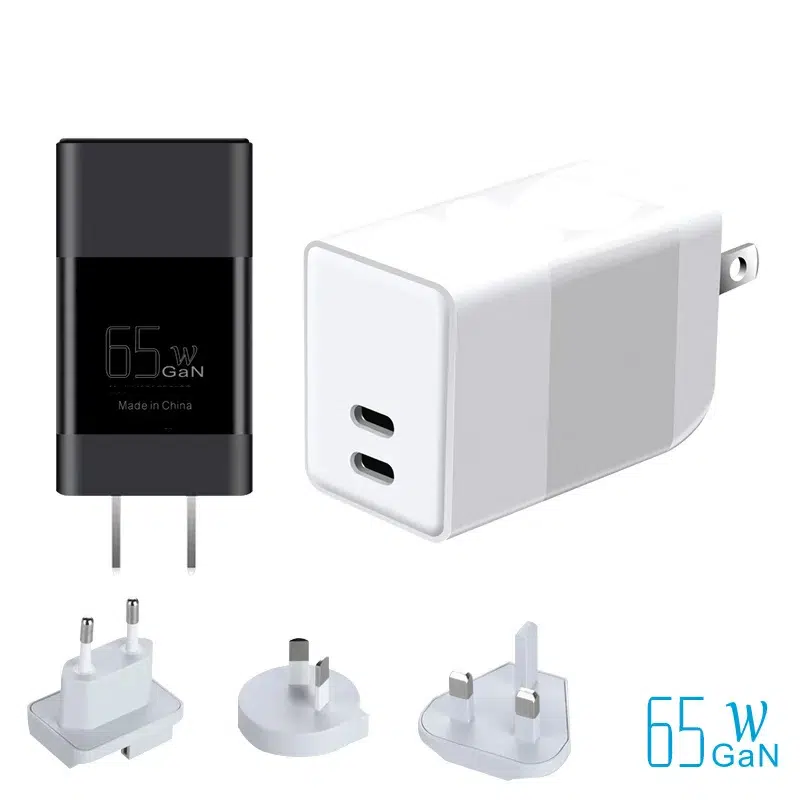
For a brand, the generation label matters less than the platform’s measured performance and certifications. Our lines cover 20W–240W across the WEG, WEP and WET series (power range and certifications are model-dependent), and the same ISO9001-based QC gates — 100% electrical and functional testing, load aging, batch traceability — apply to every generation. A good starting point is the 65W GaN charger with EU/US/AUS plug; the deeper read is our 65W GaN charger deep-dive.
GaN3 Charger Buying Guide: What the Generation Means for You
When you shop for a charger, the generation number tells you less than the spec sheet. Here is what to compare instead of the marketing label.
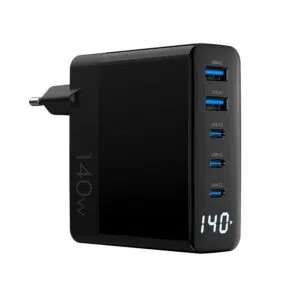
- Efficiency at typical load — compare measured efficiency at 25/50/75/100% load, not the peak number.
- Surface temperature — a cooler charger at the same wattage is usually a better design, whatever the generation.
- Size per watt — generation improvements show up as smaller bricks at the same power.
- Protocol support — PD, PPS and the port map matter more than GaN2/3/5 for day-to-day charging.
The practical rule: pick the charger whose measured data matches your device and usage, then treat “GaN3” as a bonus signal, not the decision.
GaN vs Silicon Carbide (SiC) for Power
Gallium nitride is not the only wide-bandgap semiconductor — silicon carbide (SiC) is its big sibling, and the two are often confused. They serve different power ranges.
GaN excels at high-frequency, low-to-medium power conversion, which is exactly what phone and laptop chargers need: small transformers, high switching frequency, compact bricks. SiC handles much higher voltages and power — electric vehicles, solar inverters and industrial drives — where its thermal performance pays off but its switching speed and cost suit larger systems. For consumer chargers, GaN is the right material; SiC belongs to high-power infrastructure.
GaN in Wireless Chargers: Does It Matter?
Wireless chargers contain their own power electronics, and GaN appears in the mains-to-DC stage of premium pads and docks. The benefit is the same as in wall chargers: smaller size and better efficiency in the power supply inside the base.
What GaN does not change is the wireless link itself — the coil-to-coil efficiency is set by the Qi/Qi2 design, alignment and the receiving coil in the device. So a GaN wireless charger is typically a more compact, cooler-running base, but it will not make wireless charging faster than the standard allows. Choose the base for its output, alignment and certification; treat GaN as a build-quality signal.
FAQ
Is GaN5 worth more than GaN3? Only if the measured efficiency and thermal data justify it — compare the curves, not the labels.
Are all GaN chargers the same size at the same wattage? No — size depends on the full design, and generation alone does not guarantee a smaller brick.
Do I need a GaN5 charger for my phone? No. Phones negotiate the same protocols regardless of the GaN generation inside.
How do I know the generation claim is true? Ask for the GaN device part number and the measured efficiency curve for the model.
Can I OEM a GaN charger with my own branding? Yes. MOQ from 200 pcs; logo, color, plugs and packaging customization across three OEM/ODM levels — start from the OEM/ODM page, the GaN charger product line, or the contact page.
Further reading: ChargerLAB, EE Times, Power Electronics News, Wikipedia gallium nitride.
This article is part of GaN Charger Manufacturing & Sourcing, the guide that covers this topic in decision order.