
Canton Fair and Hong Kong Electronics Fair: A Charger Buyer Prep Plan
A charger buyer's trade-show prep plan: what to prepare before Canton Fair, the questions that separate factories from traders, and how to compare quotes after.
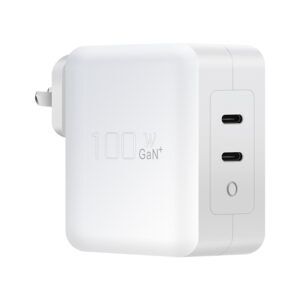
A trade show concentrates hundreds of suppliers into a few days, and it also concentrates the opportunities for a buyer to leave with a bag of catalogues and no decision. The difference is preparation: what questions you bring and what you record while the answers are fresh.
This article sets out a preparation plan for a charger sourcing trip and a method for comparing what you collect.
Canton Fair and Hong Kong: what should a charger buyer prepare?
A written specification and a target list.
Prepare the specification you want quoted, a target list of platforms and certifications, and a question set that distinguishes factories from trading companies.
The specification should state the wattage tiers, port layout, plug variants, packaging format, certification markets and target volumes. Without it, discussions stay at the level of catalogue pages and cannot be compared afterwards.
The target list follows from the specification: which platforms the buyer wants to see, which certifications matter, and which categories – GaN wall chargers, wireless charging, travel kits – are in scope for the trip.
Questions that separate factories from traders
The reliable questions are operational rather than commercial: which production site builds the product, which test stations it passes through, how batch records are kept, and who is responsible for certification samples. A factory can answer those specifically; a trading company usually redirects.
| Question | What a factory answers | What to record |
|---|---|---|
| Which site builds this? | A named facility and its location | Site name and whether it is owned or contracted |
| Which tests does each unit pass? | Functional, hi-pot, ageing, appearance | Test list and whether it is 100% or sampled |
| How are batch records kept? | Per-batch reports tied to a batch code | Whether records can be shared under NDA |
| Who produces certification samples? | The factory, with named labs | Which markets are covered and by whom |
Sample requests and follow-up discipline
Samples are the currency of a show, and the discipline is to request them against the written specification, with the model and the price tier noted at the booth. A sample without its context becomes an anonymous object a month later.
Record for each sample: the booth, the contact, the model, the quoted tier, the MOQ and the lead time. A photograph of the business card and the sample label together is faster than writing the details by hand.
Comparing quotes after the show
Comparisons fail when the offers differ in scope. Convert every offer to the same basis: same wattage tier, same plug variants, same packaging, same trade term, same certification scope and same volume. Anything else is a comparison of two different products.
Where a supplier quotes a lower price for a lower wattage tier or a simpler package, that is a legitimate offer – it simply has to be normalised before it is ranked.
Red flags in booth presentations
Three patterns are worth noting. The first is a claim of a certification without the ability to name the model and the market. The second is a price that changes when the specification is mentioned. The third is a reluctance to discuss batch records or test coverage.
None of these is conclusive on its own, but together they predict the questions that will arise during qualification, and they are cheaper to resolve at the booth than in a purchase order.
Turning a show contact into a validated supplier
The post-show sequence is the same as any supplier qualification: documentation review, sample against the specification, pilot batch, and a batch-record check. The show shortens the search; it does not replace the qualification.
Where the supplier is also a manufacturer of the platform, the qualification is quicker, because the specification, the test regime and the certification history already exist for the product being discussed.
What to bring back from the trip
Four outputs make the trip worthwhile: a shortlist of suppliers with named contacts, samples against the written specification, an offer comparison on a normalised basis, and a qualification plan with dates.
WECENT exhibits and quotes from a written specification through its OEM/ODM programme, manufactures in its own Dongguan facility with ISO9001 certification and per-batch inspection reports from the quality control gates, and lists its platform range in the product catalogue. Programme documentation is available under NDA (ISTA covers transit performance for packaging, and 10 CFR Part 430 sets the adapter efficiency framework in the US market).
Programmes in this area are decided by documentation as much as by hardware. The practical discipline is to keep one file per model containing the specification, the test and inspection records and the market documents, and to review it whenever the bill of materials or the production site changes. WECENT produces per-batch inspection records at its quality control gates and provides model-level specifications and certification planning through its OEM/ODM programme, with the platform range listed in the product catalogue.
For sourcing trips and supplier shortlisting, the same file answers most questions that arise during qualification: which standard applies, which model was tested, and which batch the shipped units came from. Reference documents for the relevant requirements are published by the standards bodies and regulators, including ISTA for transit performance and Regulation (EU) 2019/1782 for adapter efficiency, with the equivalent 10 CFR Part 430 framework applying in the United States and EMC evidence following the FCC Part 15 rules.
A final preparation item is the follow-up plan: who will write to each contact, within how many days, and with what attached. Shows where follow-up happens in the first week produce shortlists; shows where it happens after the catalogues are filed produce a shelf of paperwork.
FAQ
How should I prepare for Canton Fair as a charger buyer?
Bring a written specification covering wattage tiers, ports, plug variants, packaging, certification markets and volumes, plus a target list of platforms to see and a question set about production site, test regime and batch records.
How do I tell a factory from a trading company at a show?
Ask operational questions: which site builds the product, which test stations each unit passes, how batch records are kept and who produces certification samples. Factories answer specifically; trading companies usually redirect the question.
What should I record for each sample I collect?
Booth, contact, model, quoted tier, MOQ, lead time and the specification it was quoted against. Photographing the business card next to the sample label captures most of it in one step.
How do I compare quotes from different suppliers?
Normalise every offer to the same wattage tier, plug variants, packaging, trade term, certification scope and volume. Comparing offers of different scope produces a ranking of documents rather than of products.
Do trade shows replace supplier qualification?
No. The show shortens the search; qualification still requires a documentation review, a sample against the specification, a pilot batch and a batch-record check before volume is committed.
Preparing a sourcing trip?
Share the specification and target markets, and WECENT will prepare a quotation, sample plan and documentation pack so the comparison is like for like.
Related articles
 EU Battery Regulation and Power Banks: Design Duties You Cannot OutsourceKnowledge
 GPSR for Chargers: What the EU General Product Safety Regulation RequiresKnowledge
 Defective Charger Batch: How to Build a Claim That Gets ResolvedKnowledge
 Supplier NDA and Design Protection: Keeping a Custom Charger YoursKnowledge