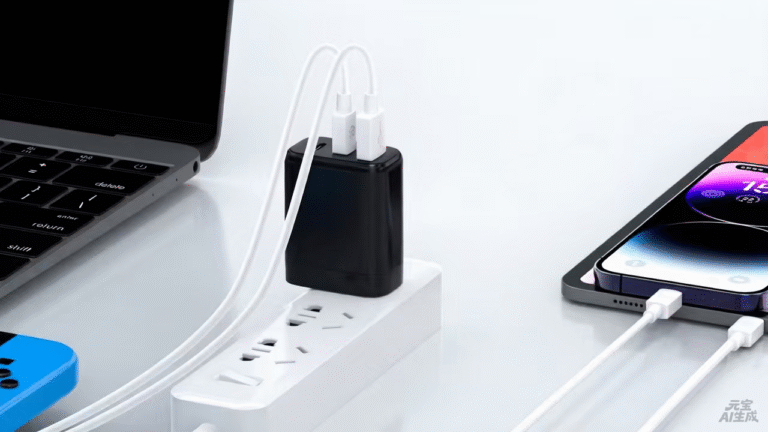
The split map is the specification of a multi-port PD charger: it shows what each combination of ports delivers together, and it is the difference between a charger that works and one that surprises. The total wattage on the box is not delivered to every port at once; the split map describes the reality. This guide covers why split maps matter, how to read one row by row, port priority in practice, matching the map to your device set, and common split-map misconceptions.
Key takeaways
- The split map, not the total wattage, describes what a multi-port charger delivers.
- Read the row for your real combination, not the single-port maximum.
- Port priority decides which device holds its share when another joins.
Content updated: August 2026 — split data is confirmed per product spec; read the specific product's map before ordering.
Scope note: This guide is general industry information; allocation data is confirmed against the specific product page.
Why Split Maps Matter
A multi-port charger has one power budget and several ports. The budget is divided according to the configuration of connected devices, and the split map records the division for each combination. Without the map, "100W multi-port" is a number without a behavior.
The map matters because the total is not the delivery. A 100W dual-port charger can deliver 65W and 30W, or 85W and 15W, depending on the design — and the difference decides whether the laptop charges at speed while the phone tops up. The buyer's combination is the question, and the map is the answer.
The split behavior also explains the renegotiation moment. When a device joins or leaves, the charger re-advertises its profiles and the connected devices renegotiate. The phone may slow down when the laptop plugs in, and the map shows that the behavior is by design.
The split map is also the support document. When a customer reports a slow second port, the support team reads the map and confirms whether the behavior matches the design. The map turns the complaint into a check rather than a mystery.
The map's absence is itself information. A charger sold as multi-port without a published split map is a product whose behavior the buyer cannot verify. The map is part of the specification, and its absence is a gap in the spec.
Reading a Split Map Row by Row
A split map is read one row at a time:
| Combination | Port A | Port B |
|---|---|---|
| One device | Up to 100W | — |
| Two devices | 65W | 30W |
| Two devices, different layout | 85W | 15W |
Each row describes a combination, and the buyer finds the row that matches the real use. The row for "laptop plus phone" is the number that matters, not the single-port maximum.
The map also shows the fallback behavior. When a third device joins, the map describes how the existing devices renegotiate, and the priority order decides who holds and who drops. The row is the contract for that combination.
The map is also compared across products. Two chargers with the same total can have very different rows, and the buyer who reads the rows chooses the one that matches the real use. The comparison is per row, not per wattage.
The map format matters for readability. A clear table with named combinations is usable at the point of sale; a dense matrix without context is not. The published map is a retail asset as much as a spec.
Port Priority in Practice
Port priority is the design's answer to the renegotiation question. The priority port holds its share when another device joins; the lower-priority ports absorb the reduction. The priority order is part of the product's behavior and is stated in the specification.
For a laptop-plus-phone combination, the laptop port is usually the priority, and the phone absorbs the drop. The behavior is validated with the real devices, because the split map describes the design and the test confirms it.
The priority also affects the daily experience. A charger that throttles the laptop to charge the phone has the wrong priority for most users; one that holds the laptop and tops up the phone has the right one. The priority is a usability decision, published and validated.
The priority is also a reorder check. When a new charger model is evaluated, the priority order is tested with the same devices, and the behavior is compared with the previous model. The priority is part of the product's identity, and it is held across the line.
The priority conversation is also a supplier conversation. A buyer who names the priority order gets a charger designed around it; one who does not gets a default the supplier chose. The priority is specified, not assumed.
Matching the Map to Your Device Set
The matching process:
- List the devices and their simultaneous use.
- Find the split row for the real combination.
- Check the cable for the top profile.
- Validate with the real devices.
The map is matched against the actual combination, not the ideal one. A desk user who charges a laptop and a phone together reads the two-device row; a traveler who charges one device reads the single-device row.
The matching is also a reorder check. When the device set changes, the map is re-read against the new combination, and the charger is re-evaluated. The map is the living specification of the multi-port purchase.
The matching also includes the cable for each port. The top-profile port needs the rated cable, and the second port may accept a lighter one. The cable plan follows the map, and the kit is specified with the charger.
The matching is validated with a real session, not a spec read. Charge the combination for the period the user actually runs, record the delivered power on each port and compare with the map. The session is the evidence.
Common Split-Map Misconceptions
- "Total wattage reaches every port." No — the split map divides the budget.
- "Adding a device never slows the first one." It does — renegotiation is by design.
- "The bigger number is always the priority." Not necessarily — priority is a design choice.
- "All multi-port chargers split the same way." No — the map is per product.
The misconceptions drive most multi-port returns. Reading the map before the purchase answers the questions that the box cannot.
The misconceptions also shape the packaging. A package that shows the split rows for the common combinations pre-empts the return; one that shows only the total invites it. The packaging and the map are one story.
The multi-port decision closes with the same discipline as the rest of the cluster: the devices are listed, the row is read, the cable is checked and the combination is validated. The split map is the multi-port charger's specification, and a buyer who reads it gets the charger the devices actually need.
Whether the purchase is for a desk, a family or a product line, the split-map habit is the same: find the row for the real combination, check the cable and validate with the real devices. The habit takes minutes and prevents the returns that take weeks, which is why the map — not the wattage — is the first thing a multi-port buyer should read.
A verification note for buyers: The first document is the split map with its combinations, and the first hardware check is the real-device combination. The map says what the charger intends; the test says what it delivers.
Published split maps are the reason to start with the WEG Series GaN Chargers at WECENT, the high-power multi-port platform, and the Quality Control page describes the production test flow and records. To confirm the split for your device set, submit the device list to WECENT's project engineering team — the review returns the split row and configuration data for the combination.
Frequently Asked Questions
What is a split map?
The document that shows what each combination of ports delivers together. It is the specification of a multi-port charger, and the total wattage alone does not describe the behavior.
Why does my phone slow down when I plug in the laptop?
The charger renegotiates when a new device joins, and the phone's share drops per the split map. That is normal behavior; the map shows the designed division.
How do I choose a multi-port charger?
List the devices, find the split row for the real combination and validate with the real devices. The row, not the total, is the decision.
What is port priority?
The design's order of protection: the priority port holds its share when another device joins, and the others absorb the reduction. It is published and validated.
Can I trust the total wattage on the box?
As a ceiling, yes; as a delivery promise, no. The split map describes what each combination actually delivers.
This article is part of Desktop & Multi-Port Charging, the guide that covers this topic in decision order.