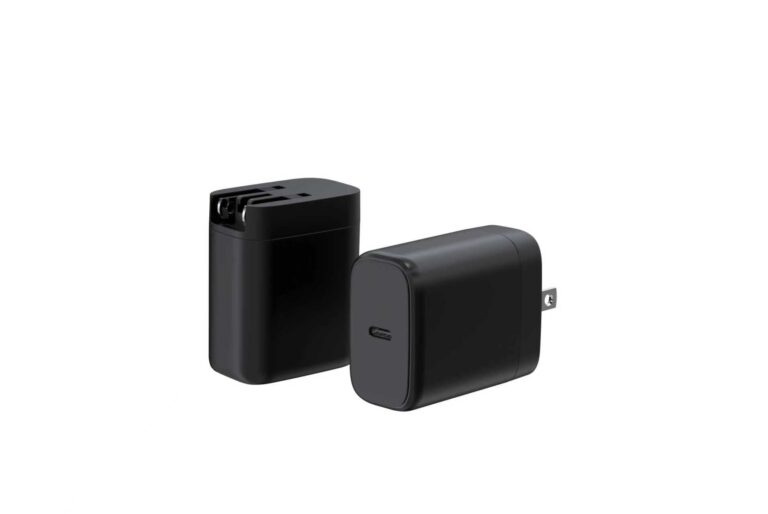
The best travel power kit is the one matched to the flight, not the one with the biggest capacity number. A short-haul trip rewards a slim magnetic bank that slides into a pocket; a long-haul flight rewards capacity with compliance; a work trip rewards a kit that can keep a laptop alive between outlets. This ranking is organized by trip type — short-haul, long-haul and work travel — and every entry is presented as "best for that trip," because the power bank that wins one itinerary can be the wrong kit for another.
Key takeaways
- Rank the travel power kit by trip type: short-haul, long-haul and work trips need different combinations.
- The 100Wh rule and carry-on basics apply to every lithium battery that flies; confirm the current guidance per airline.
- The power bank covers the gaps between outlets; the charger covers the wall — most trips carry both with defined roles.
Content updated: August 2026 — confirm airline guidance and current product specifications before traveling.
Flight time changes the power kit more than any spec sheet number
The itinerary decides the kit. A short-haul flight with a phone-heavy day needs a slim bank and a small wall charger; a long-haul flight needs capacity with compliance; a work trip needs laptop-ready power and the charger that matches the machine. The same power bank that wins the short-haul ranking can be the wrong pick for a work trip, because the ranking criteria — capacity, weight, compliance and laptop support — shift with the trip.
The ranking below is therefore three rankings, one per trip type. Each one states its criteria and its winner, and each one assumes the airline rule that every lithium battery travels in hand luggage within the airline's capacity limit.
| Trip type | What the kit must do | Ranking criteria |
|---|---|---|
| Short-haul | Top up the phone between flights and in the airport | Slim, light, magnetic, enough for one full phone charge |
| Long-haul | Keep the phone, earbuds and tablet alive across a long day | Capacity under 100Wh, compliance, multi-device |
| Work trip | Keep a laptop alive between outlets | Laptop-rated output, plus the wall charger match |
Short-haul trips reward a slim magnetic bank that fits a pocket
The short-haul ranking favors the kit that disappears into a pocket. The power bank should be slim, magnetic for one-handed use, and sized for one full phone charge rather than a multi-day reserve. The wall side should be a compact USB-C charger that covers the phone and tops up the bank overnight in the hotel.
| Rank | Short-haul pick | Why it ranks there |
|---|---|---|
| 1 | Slim magnetic bank with USB-C | One-hand use, pocket fit, one full phone charge |
| 2 | Slim bank with a fold-out cable | Fewer parts to lose, slightly larger footprint |
| 3 | Pocket-sized bank plus a 20W wall charger | The reliable two-piece kit, heavier than the single-piece |
The short-haul winner is the magnetic slim bank, because the airport pattern — phone in hand, bag on wheels, power at the gate — rewards one-handed docking over cable fumbling. The wall charger that tops it up overnight is part of the kit, not an extra.
Long-haul trips reward capacity that stays inside the airline's rules
The long-haul ranking favors capacity that stays inside the rules. A long flight and a long layover reward a bank that can recharge the phone, the earbuds and the tablet across a full day — but the capacity is capped by the airline's limit, and the bank that respects the limit is the one that actually flies. The ranking puts compliance first, capacity second and multi-device output third.
| Rank | Long-haul pick | Why it ranks there |
|---|---|---|
| 1 | Sub-100Wh bank with USB-C and a high output port | Max legal capacity, multi-device, charges fast |
| 2 | 10000–20000mAh bank with dual output | The mainstream long-haul capacity band |
| 3 | Bank with integrated cable set | Fewer loose parts, slightly less flexibility |
The long-haul winner is the sub-100Wh bank with a fast USB-C output, because it carries the most capacity that flies without paperwork drama and can recharge a phone several times or a tablet once. The capacity label and the Wh rating are part of the spec to verify before the ticket is booked.
Work trips reward a laptop-rated bank paired with the machine-matched charger
The work-trip ranking is about the laptop. A bank that cannot deliver the machine's requested output is decorative for the person who works between meetings; the kit needs a laptop-rated power bank and the wall charger that matches the machine's tier. The ranking puts laptop output first, capacity second and the wall-side match third.
| Rank | Work-trip pick | Why it ranks there |
|---|---|---|
| 1 | Laptop-rated bank plus the machine-matched charger | Both sides of the kit do their job |
| 2 | High-output bank with a 65W wall charger | Covers the laptop and tops up the bank |
| 3 | Bank plus a multi-port desk charger | One charger for the laptop and the phone |
The work-trip winner is the pair: a laptop-rated bank for the gaps between outlets and a charger matched to the machine's request for the wall stops. The bank's output profile is checked against the laptop's request, because a bank that delivers 20W cannot carry a 65W laptop workload.
The 100Wh rule and carry-on basics apply to every lithium battery that flies
The airline rule is the same across the rankings: lithium batteries travel in hand luggage, and capacity limits vary by airline and regulator. The 100Wh figure is the common reference point — banks above it typically need airline approval, and many airlines do not allow them at all — so the sub-100Wh band is the safe planning zone for most trips.
The practical checks are simple. Confirm the Wh rating on the bank's label, confirm the current guidance for the specific airline and route, and keep the bank in the carry-on rather than the checked bag. The rule is confirmed before departure, because the gate is the wrong place to learn the policy.
The same discipline applies to the chargers in the bag. A wall charger holds no lithium cell and faces no capacity limit, but it still needs the right plug set for the destinations and the right profile for the devices. The traveler who separates the two rules — the bank follows the airline rule, the charger follows the plug and profile map — packs with confidence instead of hoping.
The power bank and the wall charger pack as a pair with defined roles, not as competitors
The power bank and the wall charger are not competitors; they are a pair with assigned jobs. The charger serves the wall — the hotel, the airport lounge, the meeting room — and the bank covers the gaps between outlets. Most trips carry both, with the roles defined against the itinerary.
The packing rule is to size the pair from the trip, not from the maximum capacity available. A short-haul kit carries the slim bank and a compact charger; a work kit carries the laptop-rated bank and the machine-matched charger. The itinerary is the specification, and the pair is packed against it.
The pair is also reviewed when the itinerary changes. A trip that adds a layover or a second country changes the capacity math and the plug set, and the kit is re-sized against the new pattern rather than carried over unchanged. The travel power plan is a living document, refreshed the same way the flight plan is.
For the wall side of the kit, the Travel Charger Category at WECENT shows which charger-and-plug combinations cover the itinerary, and the GaN Charger Category maps the wattage tiers for the machine. To plan the power set for a specific trip, submit the trip pattern and the device list to WECENT's project engineering team — the review returns the charger configuration and the sizing notes for the bank, matched to the segments you actually travel.
Frequently Asked Questions
What size power bank is allowed on a plane?
Lithium batteries travel in hand luggage, and capacity limits vary by airline and regulator. The 100Wh figure is the common reference point; confirm the current guidance for the specific route before departure.
Can a power bank charge a laptop?
Only if its output profile covers the laptop's request. Check the bank's rated output against the machine's original adapter rating before relying on it for work.
What is the best power bank for a short flight?
A slim magnetic bank sized for one full phone charge, with USB-C output. The airport pattern rewards one-handed docking and a pocket fit.
Should I carry a charger and a power bank together?
For most trips, yes: the charger serves the wall and the bank covers the gaps between outlets. The pair is sized from the itinerary, not from the maximum capacity.
How do I know if my power bank is under 100Wh?
Read the Wh rating on the label. If the label shows only mAh, convert using the nominal voltage — the Wh figure is the one the airline rule references.
What should I check about the wall charger for a work trip?
The machine's original adapter request and the plug set for the destinations. The charger tier must match the laptop's request, and the interchangeable plug set covers the itinerary.
This article is part of Travel Chargers & Plug Adapters, the guide that covers this topic in decision order.