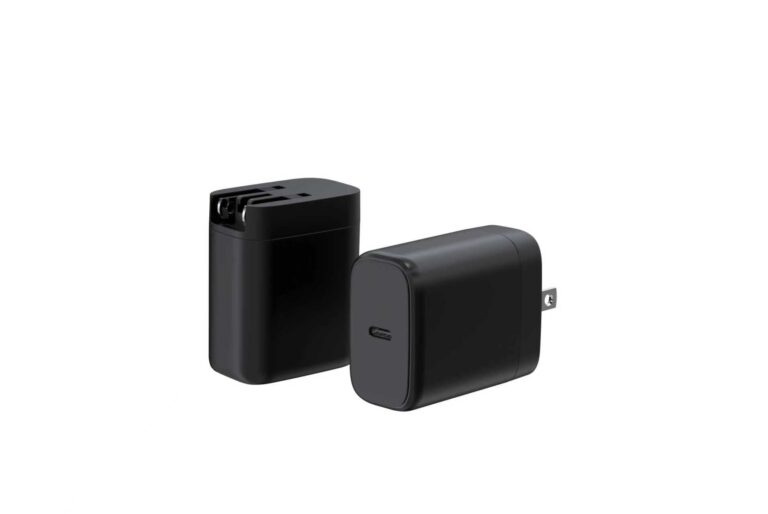
The 140W PD 3.1 EPR charger is only as good as its verification, and this ranking is built around the five requirements that turn a 140W label into a verifiable configuration: the EPR profile table, the e-marked cable, sustained output, thermal behavior and the document set. Each requirement ranks because it closes a specific gap — what the charger offers, whether the power arrives, whether the output holds, whether the heat is managed and whether the evidence names the configuration. The ranking is a verification order, and running the five checks before ordering prevents the expensive surprise.
Key takeaways
- Five requirements turn a 140W label into a verifiable configuration: profile, cable, sustained output, thermal and documents.
- The e-marked cable is the most common miss — an under-rated cable stops the EPR profile from negotiating.
- Run the five checks before ordering; the verification is the purchase decision.
Content updated: August 2026 — confirm current profile tables and product specifications before ordering.
The five requirements turn a 140W label into a verifiable configuration
The 140W tier runs on PD 3.1 EPR, and a label that says 140W is only the beginning. The five requirements below are the verification order: each one closes a gap the label cannot. The profile table answers what the charger offers, the cable answers whether the power arrives, the sustained output answers whether the hold is real, the thermal data answers whether the heat is managed and the document set answers whether the evidence names the configuration.
| Rank | Requirement | The gap it closes |
|---|---|---|
| 1 | EPR profile table | What the charger actually offers |
| 2 | E-marked cable | Whether the power arrives |
| 3 | Sustained output | Whether the hold is real |
| 4 | Thermal behavior | Whether the heat is managed |
| 5 | Document set | Whether the evidence is specific |
The EPR profile table is the first requirement to confirm
The profile table is the charger's offer: the voltage and current steps it can deliver, including the EPR steps above 100W. The first verification is reading the table and confirming it includes the profile the machine requests. A charger whose table stops at the SPR ceiling cannot deliver 140W no matter what the label says — the table, not the headline, is the specification.
| Rank | What to check in the profile table | Why it ranks first |
|---|---|---|
| 1 | The EPR steps the charger offers | The 140W capability is explicit |
| 2 | The machine's requested profile in the table | The negotiation can deliver it |
| 3 | The PD version the table represents | The evidence is current |
The e-marked cable is the second requirement and the most common miss
The cable is the second requirement because the EPR profile negotiates through it. An e-marked cable rated for the higher voltage and current is required, and an under-rated or non-e-marked cable prevents the top profile from negotiating at all — the "why is it slow" question is answered by the cable before anything else. The cable is part of the configuration, specified with the charger rather than added later.
| Rank | What to check in the cable | Why it ranks there |
|---|---|---|
| 1 | E-marker present and rated for the profile | The EPR step can negotiate |
| 2 | Current rating for the top profile | The power arrives |
| 3 | Length and quality for the setup | The path stays clean |
Sustained output is the third requirement that peak numbers hide
Sustained output is the requirement that separates a 140W charger from a 140W label. The charger must hold its rated output through a long session at the machine's real load, and the peak number hides the story. The verification is a session test: run the real load, record the delivered output and compare it with the profile. A charger that holds the session outranks one that peaks and throttles.
| Rank | What to check in the sustained-output test | Why it ranks there |
|---|---|---|
| 1 | The session length and the load pattern | The test matches the real use |
| 2 | Delivered output across the session | The hold is real, not momentary |
| 3 | The conditions recorded with the result | The number has context |
Thermal behavior and the document set close the verification
The thermal requirement answers whether the heat is managed: a 140W charger running near its limit generates real heat, and the airflow, components and enclosure decide whether it holds output or throttles. The document requirement closes the evidence chain: the certificate names the tested configuration and the standard edition, the test report carries the details and the batch records keep reorders aligned. Both rank because the verification is not complete until the behavior and the evidence line up.
| Rank | What to check in the thermal and document layer | Why it ranks there |
|---|---|---|
| 1 | Thermal data with conditions | The heat story is proven |
| 2 | Certificate naming the exact configuration | The model-match rule holds |
| 3 | Batch records for the reorder thread | The evidence stays current |
The test method matters as much as the checklist. The session test is run at the machine's real workload, in the environment where the charger will live, with the cable that will actually be used — a charger that holds 140W in a cool room may throttle in a warm one, and the buyer needs to know which behavior the real environment will see. The conditions are recorded with the results: the ambient, the session length and the case-temperature measurement points. A thermal claim without conditions is a number; with conditions, it is data. The same record is re-run at the reorder, because the configuration and the documents can drift, and the verification habit is what keeps the 140W story current.
The five checks also work as the purchase order. A buyer who names the profile table, the cable, the session test, the thermal data and the documents in the RFQ gets quotes that answer the verification in order, and a supplier that answers all five with evidence has completed the configuration. The checks are not a review after the purchase; they are the specification before it, and the order is placed against the verified answers rather than against a headline.
The common misses make the ranking practical. The most frequent error is trusting the headline wattage without reading the profile table; the second is assuming any USB-C cable works at 140W; the third is testing only the peak instead of the session; and the fourth is accepting a certificate for a similar model. Each miss maps to one of the five requirements, and each requirement is checked the same way at every purchase. The buyer who runs the five in order turns the 140W purchase from a gamble into a verified configuration.
The five checks also fit a budget. Most of them cost nothing beyond reading — the profile table, the cable rating and the certificate are checked on paper — and the one that costs time is the session test, which pays for itself by catching the throttle before the order. The verification is the cheapest insurance a high-power purchase can buy.
The five requirements in this ranking are the full verification set for a 140W purchase. A buyer who runs them in order has confirmed the offer, the path, the hold, the heat and the evidence before the order is placed.
Running the five checks before ordering prevents the expensive surprise
The five checks are fast because they are ordered: the profile table filters the candidates, the cable check confirms the path, the session test proves the hold, the thermal data confirms the environment and the documents close the evidence. A buyer who runs the five before ordering gets a configuration that works the first time; one who skips them discovers the gap after the order, when it is expensive.
For the 140W configuration side, the WEG Series GaN Chargers at WECENT are the high-power multi-port platform, and the Quality Control page documents the production test flow and records behind the configurations. To run the five checks against a candidate, submit the machine list and power requests to WECENT's project engineering team — the review returns the profile table, the cable proposal, the thermal data and the document set for the configuration.
Frequently Asked Questions
How do I know if a charger really delivers 140W?
Read the EPR profile table first, then test the sustained output in the real environment. The table says what it offers; the session test says what it delivers.
Why does the cable matter so much at 140W?
Because the EPR profile negotiates through the cable. An under-rated or non-e-marked cable stops the top profile from negotiating at all.
Is a 140W charger safe for a lower-power laptop?
Yes, when the voltage matches and the laptop negotiates the profile it needs. The extra capacity simply goes unused.
What does EPR stand for?
Extended Power Range, the PD 3.1 addition that provides profiles above 100W with higher voltage steps. The 140W tier is the first common EPR landing point.
How do I test sustained output?
Run the real load for a defined session, record the delivered output and the case temperature, and compare the results with the profile table. The conditions are recorded with the results.
What documents should the 140W configuration carry?
Model-specific certificates and test reports naming the exact configuration, plus batch records for every shipment. The document set follows the market list.
This article is part of USB-C PD and PPS, the guide that covers this topic in decision order.