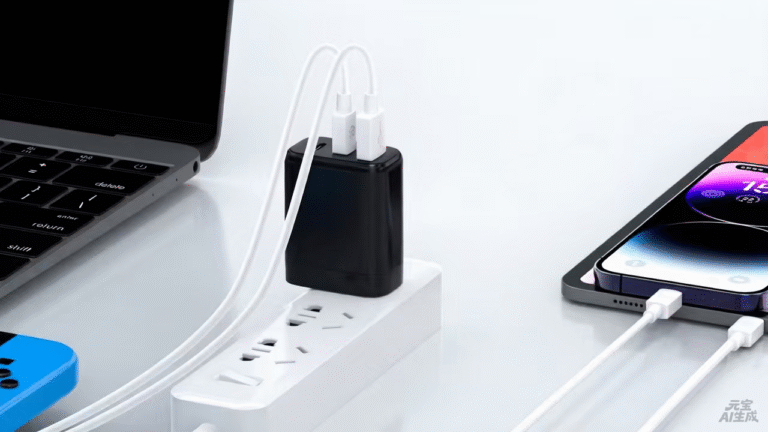
Office charging standardization is a deployment problem before it is a product problem: the desks, the meeting rooms and the front desk each need a defined solution, and the standard survives only when the rollout, the labeling and the support are managed with it. This guide covers mapping charging needs by workstation type, the desk, meeting room and front desk solutions, choosing tiers and port layouts, and measuring the rollout's success.
Key takeaways
- The office standard is built by workstation type, not by a single charger.
- Each deployment — desk, room, front desk — has its own solution.
- The rollout is measured, so the standard can be improved.
Content updated: August 2026 — power tiers and layouts are confirmed per deployment; confirm device policies before ordering.
Scope note: This guide is general deployment guidance; device and workplace policies are confirmed by the organization.
Mapping Charging Needs by Workstation Type
The office has three charging contexts, and each has different needs:
| Workstation type | Typical devices | Charging pattern |
|---|---|---|
| Desk | Laptop, monitor, phone | Simultaneous, continuous |
| Meeting room | Laptop, phone, guests | On-demand, shared |
| Front desk | Phones, tablets, guest devices | Visible, varied |
The map is the standard's input. Each context is specified separately, and the solutions are chosen against the pattern rather than a single average.
The map also records the exceptions. A desk with a high-power machine, a meeting room with a video bar, a front desk with a charging lockbox — each exception is named and handled explicitly. The map keeps the standard honest.
The map is built with the IT and facilities teams together, because the devices and the furniture are both inputs. The IT team brings the device policy; the facilities team brings the desks and the power points. The map is the intersection.
The map is also the procurement input. The tier and layout per workstation type translate directly into the SKU list, and the quantities are sized against the map. The map is the standard's purchase order in disguise.
Desk, Meeting Room and Front Desk Solutions
The desk solution is the laptop-class charger with a multi-port layout: the laptop holds its share, and the phone and accessories top up. The tier follows the desk's devices, and the split map is published.
The meeting room solution is shared and on-demand: a fixed charger at the table or the display, sized for the laptops that visit, with a visible cable. The room solution is specified for the guests, not the host.
The front desk solution is visible and varied: phones, tablets and guest devices charging in a managed way. The front desk standard is chosen for clarity and security, with the devices identified and the cables managed.
The three solutions share one discipline: each is specified, labeled and supported on its own terms. A desk charger is not borrowed for the meeting room, and a guest charger does not become a desk standard. The separation is what keeps the deployments predictable.
The solutions are also reviewed together. A support pattern at the front desk, a thermal complaint at a desk or a missing cable in a room feeds back into the standard, and the three deployments evolve as one system.
Choosing Tiers and Port Layouts
The tier and layout choices follow the workstation map:
- Desk tier. The laptop class the desks serve, plus headroom.
- Room tier. The laptops that visit, at a shared level.
- Front desk tier. The phones and tablets that arrive.
- Port layout. The simultaneous pattern at each location.
The choices are recorded per workstation type, and the split maps are published with the deployments. The tier and layout are the standard's hardware, and the map is its logic.
The port layout also includes the cable story. Each deployment's cables are rated for the profiles they serve, and the cable plan is part of the rollout.
The tier choice is also a future-proofing decision. An office that plans a laptop refresh can choose tiers with headroom, so the standard survives the next generation of machines. The refresh roadmap feeds the tier decision.
The layout choice is reviewed with the map. When a workstation type changes its pattern, the layout for that location is re-read and updated, and the standard stays aligned with the office. The review is the discipline behind the hardware.
Rollout, Labeling and Support
The rollout is managed, not announced:
- Labeling. Each deployment is labeled with its configuration and the support contact.
- Spare pool. Spares match the standard, so a swap does not introduce a new variable.
- Support. The help desk knows the standard and can answer the "why is it slow" questions.
- Change management. A change to the standard is reviewed and rolled out deliberately.
The rollout is the difference between a standard and a pile of adapters. A standard that is labeled, spooled and supported survives; one that is announced disappears into the desks.
The rollout also includes the communication story. The office knows what the standard is, why it exists and how to get a spare or report a problem. The communication is part of the deployment, because a standard the office does not understand is a standard the office does not follow.
The rollout timeline is planned with the facilities calendar. The desks are fitted, the rooms are equipped and the front desk is deployed in a sequence that matches the office's rhythm, and the plan is recorded with the standard.
Measuring the Rollout's Success
The success measures are concrete:
- Adoption — how many desks use the standard configuration.
- Support load — charging-related tickets per month.
- Exceptions — how many devices fall outside the standard.
- Replacement rate — how often units fail and are swapped.
The measures are reviewed on a schedule, and the findings feed the next rollout. The standard is a living deployment, and the review is what keeps it aligned with the office.
The review also feeds the supplier conversation. The adoption, the support load and the exceptions are the data the next quote is based on, and the supplier works from the measured reality rather than the plan. The measurement is the bridge between the rollout and the reorder.
The office standard closes with the same discipline as the rest of the cluster: the map is built, the tiers and layouts are chosen per workstation type, the rollout is managed and the success is measured. The standard is a deployment, and the discipline is what makes it last — a labeled, supported, measured office charging story.
For the team starting the standardization, the practical first step is the workstation map written down: the desks, the rooms and the front desk, with their devices and patterns. The map is the input to the tiers, the rollout and the measurement, and a standard built from the map is a standard that can be deployed and defended. The office standard is a system, and every system starts with the page of paper that names its parts.
The map also keeps the standard honest as the office changes. A new desk layout, a laptop refresh or a new meeting room shifts the map, and the standard is updated against it rather than frozen against reality. The office standard is a living system, maintained by the same review calendar that measures its success — and that is what makes standardization a program rather than a one-time event.
A verification note for the rollout team: The first document is the workstation map with the tier and layout per location, and the first check is the adoption and support data after the rollout. The map says what the standard is; the data says whether it works.
The WEP Series GaN Chargers at WECENT are the fixed-plug platform for regional deployments, and the Quality Control page describes the production test flow and records. To build the office standard, submit the workstation map and device policies to WECENT's project engineering team — the review returns the tier, layout and documentation proposal for the deployment.
Frequently Asked Questions
How do I map office charging needs?
List the workstation types — desk, meeting room, front desk — and their devices and charging patterns. Each context is specified separately, and the exceptions are named.
What should the desk solution be?
A laptop-class multi-port charger with a published split map: the laptop holds its share, and the phone and accessories top up. The tier follows the desk's devices.
How do I choose the meeting room solution?
Shared and on-demand: a fixed charger at the table or display, sized for the laptops that visit, with a visible cable. The room is specified for the guests.
Why does labeling matter?
Because an unlabeled standard becomes a pile of adapters. Labeling, the spare pool and support are what make the deployment a standard rather than an announcement.
How do I measure the rollout?
Adoption, support load, exceptions and replacement rate, reviewed on a schedule. The data feeds the next rollout and keeps the standard aligned.
This article is part of Desktop & Multi-Port Charging, the guide that covers this topic in decision order.