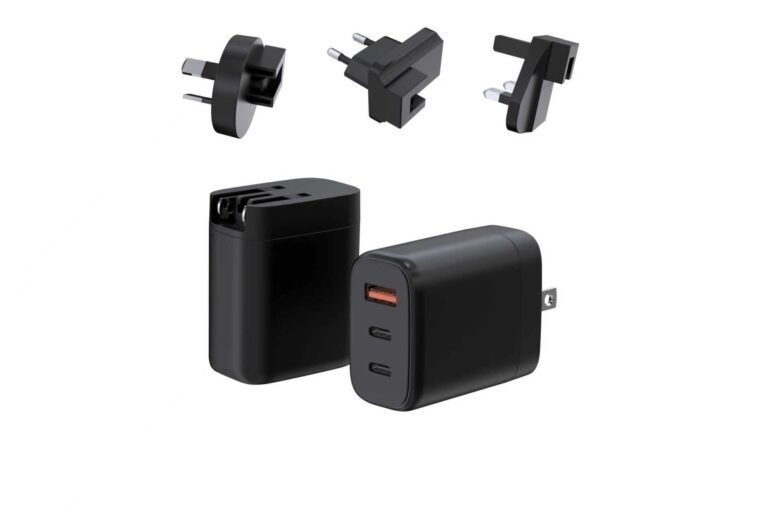
The 140W laptop charger exists for the machines that outgrew the 100W ceiling: premium laptops and workstations that negotiate more power over USB-C, often through the Extended Power Range of PD 3.1. For the buyer, the 140W tier is where the charger decision stops being “pick a wattage” and becomes “check the negotiation” — because the machine’s official request, the charger’s EPR support and the cable all have to agree. This guide covers the machines behind the 140W demand, the EPR jump beyond 100W, how 140W splits across ports, the thermal design at high output, and the compatibility checks before replacing an original brick.
The Machines Behind the 140W Demand
The 140W demand comes from a specific device class:
- Premium 16-inch laptops that request more than 100W over USB-C.
- Workstation-class machines with dedicated GPUs under sustained load.
- Some high-end MacBook Pro configurations that negotiate 140W through USB-C.
The reference is always the original adapter: a machine that shipped with a 140W adapter needs a 140W or higher charger, and a 100W charger will charge it slowly or not at all under load. The 140W tier is the point where the mainstream laptop ladder ends and the premium tier begins.
The fleet picture sharpens the demand: most organizations run a mix where the 65W and 100W tiers cover the volume, and the 140W tier serves the handful of high-performance machines. The audit — listing each model and its official request — is what separates the premium machines from the mainstream ones, and it is the document that keeps the line from over-buying a tier the fleet rarely uses. The 140W demand is real, and it is also narrow.
EPR and the Jump Beyond 100W
The jump beyond 100W happens through EPR — the Extended Power Range in PD 3.1 — which adds higher-voltage profiles above the classic 100W boundary:
- The negotiation is the same. The charger advertises its profiles, and the machine selects the one it needs.
- The profiles are higher. EPR adds the voltage and current combinations that deliver 140W and beyond.
- The cable participates. EPR power travels through an e-marked cable rated for the higher current; the cable is part of the delivery.
The full EPR mechanism is explained in the PD 3.0 vs 3.1 guide; the 140W takeaway is simpler: a 140W charger is only a 140W charger through a cable that can carry it, and only for a machine that requests it.
Expert view — WECENT project engineering team: The 140W buyers we talk to usually fall into two groups: those whose machine genuinely requests 140W, and those who think a bigger number must be safer or faster. The first group needs the EPR platform and the rated cable; the second group can save the money, because the machine negotiates its own ceiling. Read the original adapter before buying.
How 140W Splits Across Multiple Ports
A 140W charger is often a multi-port design, and the split behavior decides the experience:
| Scenario | Typical behavior |
|---|---|
| Single laptop | Full 140W on the high-power port |
| Laptop + phone | The laptop keeps most of the power; the phone takes a share |
| Full desk | The split map shows every combination |
The split map is the document to read before ordering: the laptop’s share when other devices are connected, and the phone’s share, are both in the specification. A 140W charger whose laptop port drops to 100W when a phone joins is a different product from one that keeps the laptop fully powered.
The multi-device desk is the 140W owner’s daily reality: the workstation laptop, a phone, earbuds and sometimes a tablet all drawing from one brick. The split map shows the combination — the laptop holding most of the power while the smaller devices take their shares — and the verification is the live test with the actual devices. The buyer who reads the map and runs the test gets the multi-device desk the tier promises.
Thermal Design at High Output
140W sustained output is a serious thermal problem, and the design must manage it:
- Efficiency is the lever. Less waste heat means the housing can hold the output longer.
- The plateau is the test. A well-designed charger reaches a stable temperature; one that keeps climbing is throttling or aging.
- The factory evidence matters. Aging under load in production is the factory-side version of the same check.
The thermal verification is not optional at this tier: run the charger at 140W for an hour, measure the housing, and confirm the output holds. The sustained behavior is the spec that separates a real 140W charger from a label.
Compatibility Checks Before Replacing an OEM Brick
- Confirm the machine’s official power request from the manufacturer’s documentation.
- Check the charger’s EPR support and the profile list covers the request.
- Use an e-marked cable rated for the full output.
- Verify the split map for the multi-device scenario you actually run.
- Confirm the certificate names the configuration for your market.
- Test with the real machine under load before relying on it.
The checks are the same for a single user and a fleet: the machine’s request, the charger’s profiles, the cable’s rating and the certificate’s configuration must all agree. For a 140W evaluation, the WEG Series GaN Chargers include the high-power multi-port platform, and the WECENT account team can confirm the profiles, split maps and cable requirements for your target machines. The WECENT FAQ hub covers the PD version questions behind the tier.
The cable check deserves its own line: at 140W, the e-marked cable is part of the power delivery, and a cable rated below the profile silently caps the output. The specification should name the cable alongside the charger, and the sample should ship with or specify the rated cable — because the pair, not the charger alone, is what the machine negotiates with.
The buying path in practice is short: confirm the machine’s request from the original adapter, choose the 140W tier with EPR support, pair it with the e-marked cable, and run the sustained test with the real machine. The four steps cover the compatibility, the delivery and the thermal behavior — the three things that separate a working 140W setup from a spec-sheet one.
For a channel, the 140W SKU sits at the top of the laptop ladder: a 65W workhorse, a 100W full-size tier and a 140W premium tier give the shelf a complete story, and the 140W buyer is the premium user who reads the split map and the certificate before ordering. The tier is narrow, and the buyer is exacting — which is exactly the market it should serve.
The 140W tier rewards the buyer who verifies: the machine’s request from the official spec, the charger’s EPR profiles, the e-marked cable, the split map and the sustained test. Each check is quick, and together they cover the compatibility, the delivery and the thermal story that the sticker cannot. The premium buyer who runs the checks gets a charger that works the first time — and a line that ships it with the documentation gets the premium market.
The 140W Purchase in Three Checks
The 140W purchase reduces to three checks that take minutes and prevent the three failure modes. First, confirm the machine’s request from the original adapter or the official specification — a machine that shipped with 140W is the 140W customer, and one that shipped with 100W is not. Second, confirm the charger’s EPR profiles and the e-marked cable: the profile list must cover the request, and the cable must carry it, because at 140W the cable is part of the delivery. Third, run the sustained test with the real machine under load and confirm the housing reaches a plateau — the thermal behavior is the spec that the sticker cannot show.
The three checks apply equally to a single purchase and a fleet order, and they are the same checks a line should run before shipping a new SKU. The buyer who runs them gets a 140W setup that works the first time; the one who skips them gets the spec-sheet version, which is a different product.
Frequently Asked Questions
What laptops need a 140W charger?
Premium laptops and workstations that negotiate more than 100W over USB-C — the reference is the original adapter’s wattage. Machines that shipped with 140W adapters are the 140W customers.
Is EPR required for 140W?
Yes, at the protocol level: 140W sits above the classic 100W boundary, and EPR is the PD 3.1 extension that delivers it. The machine, the charger and the cable must all support the extended range.
Can a 140W charger charge a 65W laptop?
Yes. The laptop negotiates its own ceiling and draws only what it needs — the 140W charger adds headroom for high-power machines and multi-device stacks, and stays safe on a 65W laptop.
Do I need a special cable for 140W?
Yes — an e-marked cable rated for the higher current. An under-rated cable caps the delivered power regardless of the charger.
Why does my laptop charge slowly on a 140W charger?
The usual causes are a machine that requests less than 140W, a cable rated below the profile, another device sharing the port’s power, or a charger whose profile list does not cover the machine’s request.
Can WECENT supply 140W chargers for a line?
Yes. Yes — WECENT’s OEM/ODM programs start from high-power multi-port platforms and build the brand layer on top. Share your target machines and markets with the project team for a configuration.
Sources
- WECENT – WEG Series GaN Chargers
- WECENT – GaN Charger Category
- WECENT – FAQ
- WECENT – Contact Us
- USB Implementers Forum – Official Website
- International Electrotechnical Commission – Official Website
This article is part of Laptop Chargers, the guide that covers this topic in decision order.