Gulf market entry for chargers runs through two documents at different levels: a product conformity certificate obtained in advance and a shipment certificate issued per consignment. Both depend on test evidence that names the exact model.
This article explains the sequence, the evidence and the delays that appear when one of the two documents is treated as a formality.

What is SASO and how does SABER relate to it?
A standards body and its platform.
SASO is the Saudi standards organization, and SABER is the platform through which product and shipment certificates are issued for goods entering the market.
The relationship is between a standards authority and its operational platform: the authority sets the technical requirements, and the platform is where registrations, product certificates and shipment certificates are processed. The official portal carries the current procedures (SASO).
For an exporter, the practical consequence is that the work happens in two places: obtaining the product certificate before shipping, and processing the shipment certificate for each consignment.
Product certificate versus shipment certificate
The product certificate covers the model and its conformity, while the shipment certificate relates a specific consignment to that product certificate. A shipment that arrives without the second document is held at the port even though the product has been approved.
| Document | Covers | When it is obtained | Main dependency |
|---|---|---|---|
| Product certificate | The model and its conformity | Before shipping | Model-level test reports |
| Shipment certificate | A specific consignment | Per shipment | Invoice, packing list and product certificate |
| Registration | The exporter or importer account | Once, with updates | Local entity details |
| Test reports | The technical basis | Before the product certificate | Accredited laboratory results |
Required test reports and standards
The test evidence has to correspond to the standards identified for the product category and to the model that will ship. Where a report covers a family, the family definition has to be stated, because a discrepancy between the report’s model list and the invoice is a common reason for a hold.
Reports issued for other markets may be usable where the standards align, but the correspondence has to be explicit rather than assumed.
Registering as an exporter or importer
Registration is an account-level step, usually handled by the importer or by a local entity. For a foreign manufacturer, the practical route is to work with the importer, who holds the account and processes the shipment certificates.
The registration details include the entity information and the product categories, which is why the product list has to be finalised before registration rather than after.
Shipment-level steps and port fees
Each consignment requires the commercial documents, the product certificate reference and the applicable fee. Because the process is per shipment, a programme shipping in several consignments repeats the work, which is a planning consideration rather than a technical one.
Where a shipment is consolidated, the documentation has to identify each product and its certificate, so mixed containers require more preparation than single-model ones.
Saudi Arabia and other GCC markets
Other Gulf markets have their own procedures, and products sold across several of them may need several sets of documents. Mapping the markets in advance avoids a launch that reaches one country and stops at the next border.
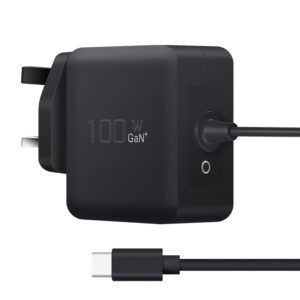
Where the plug configuration differs between markets, that difference belongs in the product specification and in the certificate documentation, so the shipped unit matches the approved model.
Common hold-ups and how to avoid them
The recurring causes are a model name mismatch between the report and the invoice, a shipment certificate initiated too late, missing Arabic labelling where required, and a plug configuration that was not in the certified family.
All four are administrative, and all four are cheaper to fix before the container leaves than at the port.
What a Gulf programme needs from the factory
The factory provides the model-level test reports, the specification, the production records and the samples required for testing, together with the batch records that show the shipped units match the approved model.
WECENT supports Gulf programmes with model specifications, certification planning and per-batch inspection records from the quality control gates, available under NDA through the OEM/ODM programme, with the platform range listed in the product catalogue. Efficiency and EMC documentation produced for other markets follows their frameworks (10 CFR Part 430, Regulation (EU) 2019/1782 and 47 CFR Part 15), and packaging transit performance can be validated against a published protocol (ISTA).
FAQ
What is the difference between SASO and SABER?
SASO is the standards organization that sets the technical requirements, and SABER is the platform used to register and to issue product and shipment certificates for goods entering the Saudi market.
Do I need a certificate for every shipment?
Yes. The product certificate covers the model, while a shipment certificate is issued per consignment. A shipment arriving without it is held even when the product itself has been approved.
Can test reports from other markets be used?
Sometimes, where the standards correspond and the report names the shipping model or an explicitly defined family. The correspondence has to be stated rather than assumed, because a mismatch is a common reason for a hold at the port.
Who registers on the platform?
Registration is usually handled by the importer or a local entity, which also processes the shipment certificates. The product list should be finalised before registration.
What causes shipments to be held?
Model name mismatches between the report and the invoice, shipment certificates initiated too late, missing labelling in the required language, and plug configurations outside the certified family.
Selling chargers into the Gulf?
Share the models, plug configurations and shipment plan, and WECENT will confirm the test evidence, documentation and batch records available for certification.
This article is part of Compliance & Power Supplies, the guide that covers this topic in decision order.