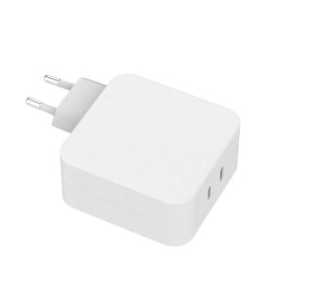
Japan’s electrical appliance regime distinguishes between product classes by the marking they carry and by who may place them on the market. For a charger, the classification determines the evidence, the labelling and the entity responsible.
This article sets out the classification, the duties and the practical sequence for a brand entering the market.
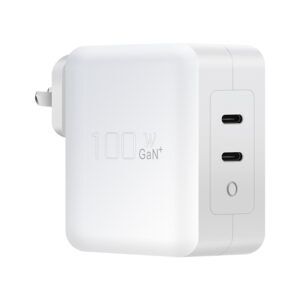
Which chargers need PSE certification in Japan?
Those in the regulated class.
Products in the regulated class require the diamond mark and third-party certification, while those in the other class require the circle mark and a self-declaration.
The regime classifies electrical products into a category requiring third-party certification and one requiring self-declaration, distinguished by the marking they carry. Which class applies to a charger depends on its specification and intended use, so the classification has to be confirmed against the official requirements rather than inferred from a similar product.
The regulator’s published guidance covers the obligations that attach to the notified business and to the importer (METI: product safety).
Diamond and circle: the difference in obligation
The difference is not cosmetic. One class requires testing by a registered conformity assessment body and carries the corresponding mark; the other allows the supplier to declare conformity based on its own testing, with the marking that indicates it.
| Item | Certified class | Self-declaration class |
|---|---|---|
| Marking | Certification mark | Declaration mark |
| Testing | By a registered conformity assessment body | By the supplier’s own test arrangements |
| Responsible party | Notified business with records | Notified business with records |
| Evidence | Certificate and test reports | Test reports and declaration |
Notifying business and importer responsibilities
The entity placing the product on the market has notification and record-keeping duties, including the obligation to keep the conformity documentation and to respond to inquiries. For a foreign manufacturer, that duty is usually taken by the importer or by a local entity acting as the notified business.
The records have to be retrievable for the period the regime specifies, which is why they belong in the same programme file as the product specification.
Test standards and accredited laboratories
Testing is carried out against the standards identified for the product category, by a body recognised for that purpose in the certified class. Where the factory already holds test evidence from another market, some of it may be reusable, but the applicable standard and the test conditions have to correspond.
Practical planning should include the time for the conformity assessment body’s process, which is typically the longest single item in a Japan launch.
Label and manual requirements in Japanese
The marking and the required information appear on the product or its packaging, with instructions in Japanese. For a programme sold across several markets, that means a Japan-specific artwork variant rather than a sticker applied at the port.
Where the product also carries other national markings for other markets, the artwork should distinguish them clearly so that a customer or an inspector can identify the applicable one.
Foreign factory options and the notification route
A factory outside Japan can support the process by providing the test samples, the technical file and the production records, but the notification is made by the entity responsible in Japan. That division should be written into the programme rather than discovered during the launch.
Where a brand has no local entity, the practical route is to work with the importer, who then holds the notification and the records.
Typical timeline for a new SKU
A realistic plan allows for sample preparation, testing, the conformity assessment process and artwork amendment, in that order. Because the artwork depends on the classification, the sequence cannot be compressed by starting with the packaging.
WECENT supports Japan programmes with model-level specifications, sampling and per-batch inspection records from its quality control gates, available under NDA through the OEM/ODM programme; the platform range is listed in the product catalogue. Adapter efficiency documentation for other markets follows their rules (10 CFR Part 430 and Regulation (EU) 2019/1782), and EMC evidence follows the applicable framework.
Keeping certification valid as models change
A specification change can affect the certification position, which is why the model code structure matters: a change that produces a new model needs its own evidence, while a change within the certified family may not. Defining the model family in advance reduces the number of separate certifications a line requires.
The records for each model should be kept together with the batch data, so a question about a shipped unit can be answered from the same file.
Programmes in this area are decided by documentation as much as by hardware. The practical discipline is to keep one file per model containing the specification, the test and inspection records and the market documents, and to review it whenever the bill of materials or the production site changes. WECENT produces per-batch inspection records at its quality control gates and provides model-level specifications and certification planning through its OEM/ODM programme, with the platform range listed in the product catalogue.
For Japanese certification documentation, the same file answers most questions that arise during qualification, audit or listing review: which standard applies, which model was tested, and which batch the shipped units came from. Reference documents for the relevant requirements are published by the standards and regulatory bodies, including the official text and the related requirement, with the equivalent market rule and https://www.ista.org/ applying where the product is sold into those markets.
Two further habits keep the file usable over time. The first is to record the review date and the reviewer against each document, so that an outdated report is visible rather than assumed current. The second is to keep the commercial documents – quotation, agreed specification and packaging artwork – in the same folder as the technical evidence, because a question about a shipped unit usually requires both.
A further point concerns the production reality behind the paperwork. Claims that survive scrutiny are the ones a factory can reproduce batch after batch, which means the specification, the test method and the acceptance criteria have to travel together with the order. Where they do not, the same product can be built to two different understandings of the same document.
Finally, buyers should decide in advance what evidence they will need if a question arises later, and request it at the sampling stage rather than after the shipment. Requesting records retrospectively is possible, but it is slower and it removes the opportunity to correct a specification before tooling. WECENT supports programmes with model-level specifications and per-batch inspection records produced at its quality control gates, available under NDA through its OEM/ODM programme, with the platform range listed in its product catalogue catalogue.
FAQ
Do all chargers need the diamond PSE mark?
No. The regime distinguishes a class requiring third-party certification from one requiring self-declaration, distinguished by the marking. The applicable class for a charger depends on its specification and intended use, and should be confirmed against the official requirements.
Who is responsible for PSE compliance?
The entity placing the product on the market has notification and record-keeping duties, which for a foreign manufacturer is usually the importer or a local entity acting as the notified business.
Can existing test reports be reused for Japan?
Sometimes, where the applicable standard and test conditions correspond. The conformity assessment process for the certified class still requires testing by a body recognised for that purpose.
What labelling is required?
The applicable marking and the required information appear on the product or its packaging, with instructions in Japanese. For multi-market programmes that means a Japan-specific artwork variant rather than an applied sticker.
How long does a Japan launch take?
Plan for sample preparation, testing, the conformity assessment process and artwork amendment in sequence. The assessment body’s process is typically the longest item, and the artwork cannot be finalised before the classification is known.
This article is part of Compliance & Power Supplies, the guide that covers this topic in decision order.
Entering the Japanese market?
Share the models, target channels and volumes, and WECENT will confirm the test evidence, documentation and labelling support available for the programme.