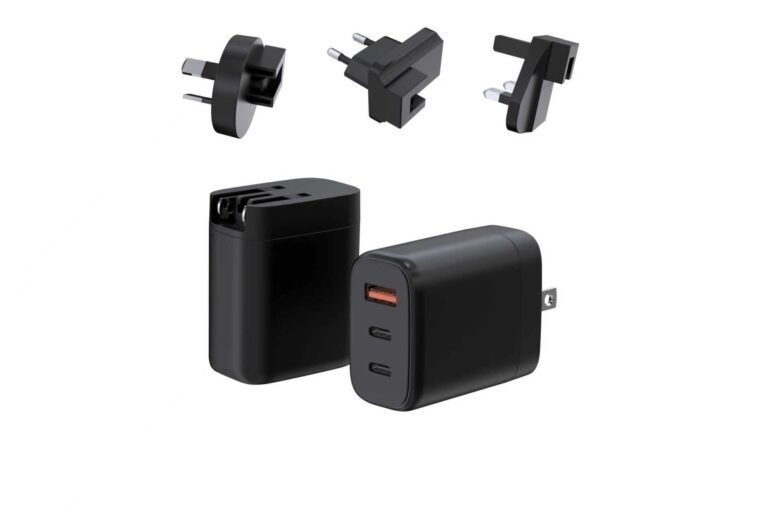
The UK market has its own marking regime whose practical effect depends on the product type and on the transition arrangements in force. For a charger brand, the working question is which marking is required now and what has to be documented either way.
This article sets out the obligations, the file that supports them and the practical route for a small brand entering the UK.

When is UKCA marking required?
For products in scope of UK rules.
UKCA marking applies to products covered by Great Britain’s own legislation, and CE marking continues to be accepted in defined cases depending on the product and the arrangements in force.
The scope and the acceptance of CE marking vary by product type and have been subject to transition arrangements, so the current position should be checked against the official guidance rather than assumed from an older summary (GOV.UK: using the UKCA marking).
For a charger, the relevant considerations are the electrical safety and EMC requirements applicable in Great Britain and the marking that demonstrates conformity with them.
Technical file and UK responsible person duties
Conformity is supported by a technical file that contains the product description, the applicable requirements, the conformity assessment evidence and the declaration. Where the manufacturer is outside the UK, an entity established in the UK often has to be identified for market surveillance purposes.
The file’s contents are similar in shape to an EU file: specification, test reports, risk assessment and traceability. Reusing the EU evidence is practical where the standards are equivalent, provided the declaration and marking match the UK regime.
Approved bodies and when they are needed
Where the applicable legislation requires third-party involvement, an approved body performs the assessment. For many power supply products the route is self-declaration supported by test evidence, which is why the test reports carry most of the weight.
| Element | What to prepare | Notes |
|---|---|---|
| Technical file | Specification, standards applied, test reports | Can reuse EU evidence where equivalent |
| Declaration of conformity | Statement naming the product and requirements | Must match the marking used |
| Responsible entity | UK-established contact where required | Named on the documentation |
| Marking | UKCA or accepted CE, as applicable | Applied to product or packaging as required |
| UK plug variant | Separate configuration as needed | Recorded in the programme specification |
Labelling: marking, importer details and warnings
Labelling requirements include the marking, the identification of the responsible entity and any warnings, with the language expectations of the market. Those items belong on the packaging artwork, which means the artwork has a regional variant.
Where a brand sells in both the EU and the UK, the practical approach is to hold one packaging design with regional blocks rather than two entirely separate designs.

Northern Ireland and cross-border considerations
Northern Ireland follows different arrangements from Great Britain for many product categories, which means a brand selling across the UK may face two conformity positions rather than one. The official guidance sets out the current treatment per product type.
For a small brand, the practical step is to define whether the market includes Northern Ireland and to check the applicable rule before printing.
Practical route for a small brand
The sequence that works for a small programme is: confirm the applicable marking with the guidance for the product type, obtain the test reports from the factory, prepare the declaration and technical file, identify the responsible entity, and update the artwork.
Where the factory already holds EU test evidence, the incremental work is the declaration and the labelling rather than a new test programme, provided the standards applied are accepted.
Keeping UK and EU documentation aligned
A programme that sells into both markets benefits from a single documentation structure with regional declarations. That keeps the evidence in one place and makes the differences explicit rather than accidental.
WECENT supports UK and EU programmes with model-level specifications, certification planning and per-batch inspection records from the quality control gates, available under NDA through the OEM/ODM programme, with the platform range listed in the product catalogue. The efficiency documentation for adapters follows the EU rules where the product is also sold there (Regulation (EU) 2019/1782), and EMC evidence under the FCC Part 15 framework is relevant for products also sold in the United States (47 CFR Part 15). Packaging transit performance can be validated against a published protocol (ISTA).
Programmes in this area are decided by documentation as much as by hardware. The practical discipline is to keep one file per model containing the specification, the test and inspection records and the market documents, and to review it whenever the bill of materials or the production site changes. WECENT produces per-batch inspection records at its quality control gates and provides model-level specifications and certification planning through its OEM/ODM programme, with the platform range listed in the product catalogue.
For UK market documentation, the same file answers most questions that arise during listing or audit: which marking applies, which model was assessed, and which batch the shipped units came from. The current rules are published in the official guidance on using the UKCA marking and on placing manufactured goods on the market in Great Britain, with the EU requirements applying in parallel where the product is also sold there (Regulation (EU) 2019/1782).
Two habits keep the UK and EU files aligned: using the same evidence structure for both, and recording the differences in one place. That way a change to the product triggers a single review rather than two independent ones, and an auditor sees a consistent explanation of which requirement applies where.
FAQ
Is UKCA marking required for chargers?
It applies to products covered by Great Britain’s own legislation, and the acceptance of CE marking depends on the product type and the arrangements in force. The current position should be checked against the official guidance before printing artwork.
Does the UK still accept CE marking?
In defined cases it does, and the treatment has changed over time through transition arrangements. Because the position varies by product type, the reliable check is the official guidance for the specific product rather than a general summary.
What should the technical file contain?
The product specification, the applicable requirements, the conformity assessment evidence and the declaration, plus traceability to the production batch. EU evidence can often be reused where the standards are equivalent.
Do I need a UK responsible person?
Where the manufacturer is outside the UK, an entity established in the UK is often required to be identified for market surveillance purposes. The applicable rule depends on the product legislation.
Should I make a separate packaging version for the UK?
In most cases the practical approach is one design with regional blocks for the marking, responsible entity and warnings, rather than two independent designs, so that changes are visible in one document.
This article is part of Compliance & Power Supplies, the guide that covers this topic in decision order.
Entering the UK market?
Share the models, volumes and packaging format, and WECENT will confirm the test evidence, documentation and plug configuration available for the programme.