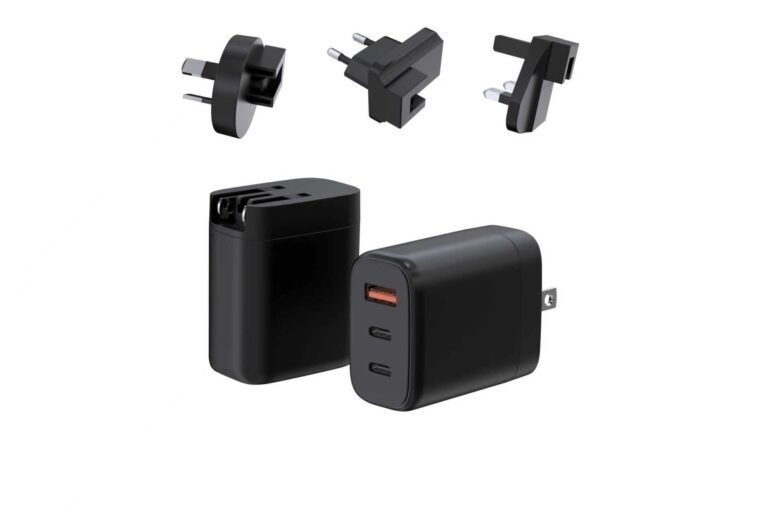
Charging built into a table is a different product from a charging pad, because the furniture now owns the airflow, the thickness between the coil and the phone, and the service access. Each of those turns into a specification line that a furniture maker, not a charger brand, has to control.
This guide sets out what to fix before the first sample is cut.
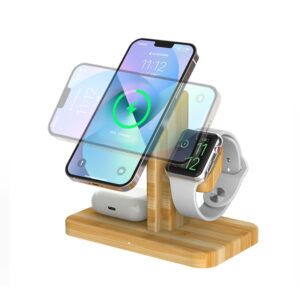
Wireless charging furniture: is there a table that can charge my phone?
Yes, as an integrated module.
Furniture with wireless charging uses an inductive module mounted under or into the surface, and its performance depends on the material thickness above the coil and on air movement around it.
The charging function comes from a module, not from the furniture material itself: a coil assembly with its control electronics, mounted so the phone sits within a few millimetres of it. The material between the module and the phone becomes part of the magnetic circuit, so its thickness and composition directly affect the delivered power.
The Qi standard governs the transfer, and the module has to be certified on that path in addition to the market’s EMC requirements (Wireless Power Consortium: Qi). For a furniture maker that means two suppliers in the chain: the furniture manufacturer and the module supplier, with a written interface between them.
Mounting depth and the air gap budget
The usable air gap is the distance between the transmitting coil and the phone’s receiving coil, and it includes the furniture surface, any spacer or adhesive, and the phone’s case. Every millimetre reduces coupling, so the design should allocate the gap deliberately rather than leaving it to the sum of the parts.
A practical budget states three figures: surface thickness, allowable gap from the coil to the underside of the surface, and the maximum case thickness the installation is designed for. Those three numbers let a supplier verify the design before tooling.
| Design item | What to specify | Why it decides the outcome |
|---|---|---|
| Surface thickness over the coil | Maximum in millimetres | The largest single contributor to the air gap |
| Module mounting depth | Dimension from surface underside to module face | Sets the remaining gap after adhesive and spacers |
| Ventilation around the module | Open area or vent path | Determines whether the module sustains its rating |
| Service access | Panel or removable mount | Decides whether a failed module costs a service call or a table |
Timber, stone and laminate: what each material does
Non-metallic materials allow the field to pass, so timber, laminate, glass and stone are all usable within a thickness budget. Metal surfaces and metallic foils or paints do not, because they absorb or shield the field, and this includes thin decorative layers that appear non-metallic.
Composites vary, which is why a sample test on the actual production stack is worth more than a material datasheet. Testing the stack with a known phone and a defined load, before tooling, removes the most expensive class of surprise.
Where a logo or decorative element sits over the coil, its ink or foil layer has to be checked in the same test. Charging through a metallic decal is a common failure in furniture programmes.
Ventilation and heat inside furniture
Under a table surface, the module has less airflow than a pad on a desk, and the heat it generates has to go somewhere. A drawer or a closed cabinet is the worst case, and it is also where furniture charging most often appears in feedback.
Two design responses are practical: a vent path through the underside or a void beneath the module, and a module specified to derate when its temperature rises. WECENT’s wireless platforms include thermal design and over-temperature protection with the rest of the protection set, verified by functional testing and load aging at the quality control gates.
Serviceability: replacing a module without rebuilding the table
A module is an electronic component inside a piece of furniture with a working life of years, so access matters. A removable panel, a reversible mount or a module that unclips from below converts a damaged unit into a ten-minute service rather than a replacement table.
For hospitality and office programmes this is the difference between a pilot that scales and one that is withdrawn after the first faults. The specification should name the service method alongside the electrical and thermal requirements.
Certification duties when charging is built in
Integrating a module does not transfer the compliance question. The module carries its own certification, the assembled furniture may fall under general product safety rules, and the market’s EMC framework applies to the electronics as installed. Where an adapter powers the module, its efficiency documentation follows the external power supply rules of the destination market (Regulation (EU) 2019/1782 and 10 CFR Part 430).
In the United States, EMC for the product’s electronics follows frameworks such as the FCC Part 15 rules (47 CFR Part 15); in the EU, radio and safety duties attach through the applicable directives. Documenting the interface between furniture maker and module supplier is what makes those duties traceable.
Pilot programme: one table model, three venues
A pilot that tests one table model in three different settings produces more usable information than a broad rollout: a hospitality room, an office desk and a public waiting area stress the design differently, and the difference shows up in heat and in service calls rather than in the specification.
WECENT supplies wireless charging modules and pads within its wireless charger range range, quotes from a written specification through the OEM/ODM programme, and starts at 200 pcs per model for a pilot, with sampling, certification planning and batch traceability included. Packaging and transit performance for installed modules can be validated against a published protocol (ISTA).
FAQ
What is the downside of wireless charging?
It transfers less energy than a cable, so it is slower and generates more heat for the same charge, and alignment matters. In furniture the added constraints are the thickness of the surface above the coil and the airflow available to the module.
Can wireless charging work through timber or stone?
It can, within a thickness budget. Non-metallic materials pass the field, while metal surfaces, foils and metallic paints shield it. Testing the actual production stack with a known phone before tooling is more reliable than relying on material datasheets.
What surface thickness can be used above a charging module?
The limit depends on the module’s coil design and the phone’s own receiving coil, so it should be stated as a maximum gap from the coil to the phone. A practical specification gives a surface thickness, a mounting depth and a maximum case thickness.
How do you service a charging module inside furniture?
Provide access: a removable panel, a reversible mount, or a module that unclips from below. Treating service access as a design requirement at the drawing stage avoids replacing furniture when a module fails.
Who is responsible for certification of charging furniture?
The module carries its own certification and the assembled product must meet the market’s general product safety and EMC requirements. Responsibility is usually divided by contract, which is why the interface between furniture maker and module supplier belongs in writing.
Integrating charging into furniture?
Share the surface material, thickness budget and target venues, and WECENT will confirm the module specification, thermal behaviour and MOQ from a written brief.
This article is part of Wireless Charger Products & OEM, the guide that covers this topic in decision order.