A solar panel’s rating describes its behaviour under standard test conditions, not what it will deliver on a cloudy afternoon at the wrong angle. That gap is where most disappointment with solar laptop charging originates, and it can be quantified before a purchase rather than discovered afterwards.
The useful approach is to model the harvest first, then decide whether a panel, a power bank or neither belongs in the kit.

Can I charge a laptop with a solar charger?
Yes, with realistic expectations.
A folding panel can refill a power bank over a day of good light, and the bank then charges the laptop; direct panel-to-laptop charging is slow and intermittent.
Direct charging works technically but rarely satisfies the user, because the panel’s output fluctuates with cloud, angle and temperature while the laptop expects a stable supply. The result is a charge that starts and stops, and a laptop that spends the day at a low percentage.
The reliable configuration is indirect: the panel charges a battery, and the battery charges the laptop through a USB-C PD charger or a DC adapter at a stable rate. Where the laptop accepts USB-C power, that also fixes the negotiation question, because the bank or charger handles the profile (USB-IF: USB Power Delivery).
Panel rating versus real harvest
The rated figure assumes a defined irradiance, a defined cell temperature and a perpendicular light angle. In field conditions the harvest is lower, and the usual causes are angle, shading, heat and cable loss. A panel lying flat on a rucksack or a vehicle roof is rarely at the optimum angle for more than a short part of the day.
Temperature matters more than users expect: solar cells lose output as they heat, so a panel in direct midday sun can deliver less than the same panel in cooler, brighter conditions on a clear morning. That is why the same equipment produces different results on consecutive days.
MPPT versus PWM in small kits
The controller decides how much of the panel’s available power reaches the battery. An MPPT controller tracks the panel’s operating point and generally recovers more energy than a simple PWM controller, especially when the panel voltage and battery voltage differ. In small kits the difference is worth having but should not be oversold.
For a buyer specifying a product, the controller is a specification line rather than a marketing phrase: conversion efficiency, input range and the cut-off behaviour that protects the battery. Those are measurable, and they determine how well the kit performs on a day with intermittent cloud.
| Kit element | What it decides | Practical sizing rule |
|---|---|---|
| Panel | Daily energy available | Size for the energy needed in a realistic day, not for the peak output printed on the box |
| Controller | How much of that energy is captured | MPPT where panel and battery voltages differ; check efficiency and cut-off |
| Battery or power bank | Whether the laptop gets a stable supply | Capacity sized for one working session, with a rated output for the laptop |
| Cable and connector | Losses between the parts | Choose gauge and length for the current involved |
Sizing example for a 65W ultrabook
A thin-and-light laptop drawing within the 65W tier typically needs a fraction of that figure per hour of light use, plus losses. Modelling the daily requirement in watt-hours, then derating the panel’s rated output for angle and weather, gives a deliverable daily figure that can be compared with the requirement.
The comparison usually shows that a modest panel cannot keep a working laptop charged from sunrise to sunset, but that it can refill a power bank over a day of good light. That is the honest use case: the panel is an energy harvester for storage, and the storage runs the laptop.
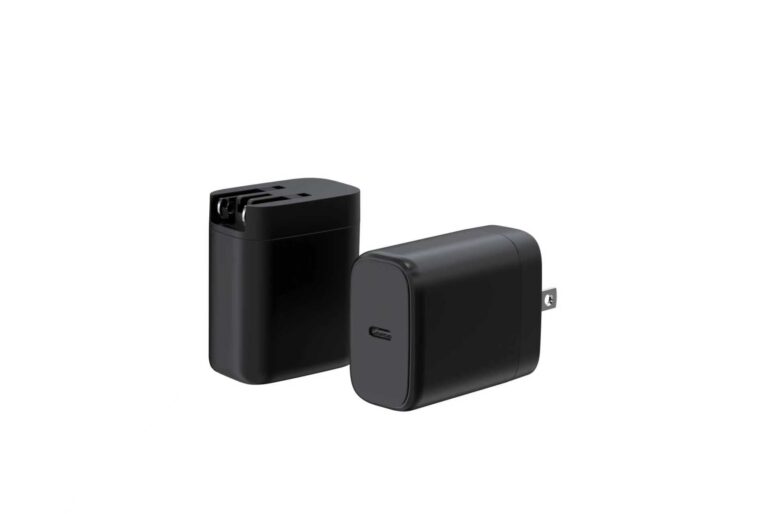
A 100W-class mains charger remains useful in the kit for the days when grid power is available, because it refills the storage in a fraction of the time the panel needs. WECENT’s travel charger range covers 65W and 100W platforms for that role, with EU, UK, US and AUS plug configurations.
Weather, angle and cable losses
Three practical adjustments improve results without buying anything: orient the panel towards the sun and re-orient it across the day, keep it out of partial shade (a shadow across one cell affects the whole string), and keep the cable run short with an adequate gauge.
Cable loss is often the invisible part of the problem. A long, thin lead between panel and battery dissipates energy as heat, and the same kit performs noticeably better with a shorter, thicker cable. For a product, that argues for a permanently attached lead of sensible length rather than an extension.
What an emergency or travel SKU should include
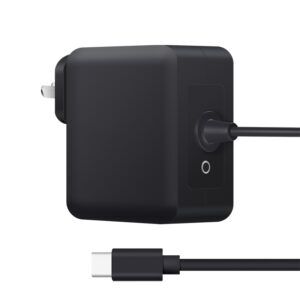
A defensible kit contains a folding panel with a realistic rating, a controller appropriate to the battery, a storage unit with a defined output, and documentation that states the expected daily energy rather than a peak figure. Adding a mains charger for grid days completes it.
Compliance and safety documentation belong in the kit as well: battery products carry transport and labelling obligations, and in markets such as the EU battery-specific rules apply across the life cycle (Regulation (EU) 2023/1542). Disposal guidance is part of the same package (US EPA: Used Lithium-Ion Batteries).
Where solar fits in a product range
Solar accessories sell to outdoor, emergency-preparedness and field-work audiences, and they sit next to travel chargers and power banks rather than replacing them. In a range, the solar product is usually the highest-priced item in an outdoor kit and the one most dependent on honest specification.
WECENT’s travel charger range and wireless platforms cover the charging side of those kits, with sampling, certification planning and batch traceability handled through the OEM/ODM programme and inspection records from the quality control gates. Transit performance for a folding panel kit can be written against a published protocol (ISTA), and the mains charger in the kit carries the external power supply documentation the market requires (10 CFR Part 430).
FAQ
Can I charge my laptop with a solar charger?
Technically yes, but direct charging is slow and intermittent because the panel’s output varies with light and angle. The reliable configuration is a panel that charges a power bank, which then charges the laptop at a stable rate through a USB-C PD or DC connection.
How big a solar panel do I need for a laptop?
Model the laptop’s daily energy requirement in watt-hours, then derate the panel’s rated output for angle, heat and weather before comparing the two. In most field conditions a modest panel is realistic for refilling storage over a day, not for powering a laptop continuously.
Is MPPT better than PWM for small solar kits?
An MPPT controller generally captures more of the panel’s available energy, particularly when the panel and battery voltages differ. The gain should be stated in the product specification with the controller’s efficiency, input range and battery cut-off behaviour rather than as a general claim.
Why does my solar panel output less than its rating?
The rating is measured under defined test conditions with a perpendicular light angle and controlled temperature. In real use, angle, partial shade, heat and cable losses all reduce the harvest, which is why the same panel performs differently from day to day.
What should an off-grid laptop kit contain?
A folding panel, a controller matched to the storage battery, a power bank with a rated output for the laptop, a mains charger for grid days, and documentation stating expected daily energy. Battery products also need the transport and labelling documentation required in each market.
Planning an off-grid charging kit?
Share the devices, expected daily energy and target markets, and WECENT will confirm the charger and storage specification, documentation and MOQ.