
Supplier NDA and Design Protection: Keeping a Custom Charger Yours
Protecting a custom charger design: what an NDA should cover, tooling ownership, design patents and how to work with an ODM without losing brand rights.
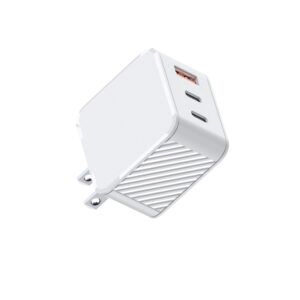
Customisation creates value and creates ambiguity: the buyer commissions a design, the factory builds the tooling, and both parties may later believe they own the result. The remedy is a document set agreed before the first drawing rather than after the first order.
This article covers the three documents that protect a custom charger, the tooling question and how to work with an ODM platform without losing brand rights.
Supplier NDA scope: what does it protect in a charger project?
Drawings, tooling files and BOMs.
A supplier NDA should cover the drawings, tooling files, bill of materials, firmware and any market information the buyer shares during the project.
The useful NDA is specific about categories rather than relying on a general definition of confidential information. Drawings, CAD files, tooling designs, BOMs, firmware and the underlying commercial information all belong in the list, together with a defined handling obligation.
The agreement should also state what is not confidential: information already public, independently developed, or received from a third party without restriction. A definition that ignores those categories is difficult to operate.
Tooling ownership and what paid tooling means
Tooling is the most common source of dispute, because the payment and the ownership are separate questions. A buyer who pays for tooling should hold a written statement naming the tooling set, its location and the conditions under which it can be moved or used for another customer.
| Item | What to agree | Why it matters |
|---|---|---|
| Tooling set | Which moulds, fixtures and jigs are covered and where they are kept | Determines what the buyer has paid for |
| Exclusivity | Whether the same tooling can produce for other customers | Protects the buyer’s differentiation |
| Maintenance | Who maintains and replaces worn tooling, and at whose cost | Determines the long-term cost of the platform |
| Transfer | Conditions for moving the tooling to another site | Provides leverage and a contingency |
Design patents and trade dress on enclosures
An enclosure’s shape, its surface treatment and its distinctive features can be protected in different ways in different markets: a design patent or registered design for the appearance, and trade dress or unfair-competition law for the overall impression in some jurisdictions.
The practical step is to check the target markets for existing rights before tooling, and to file where the product will be distinctive. Registration before launch is cheaper and easier than enforcement after a look-alike appears.
Working with an ODM without losing brand ownership
An ODM platform speeds development because the electrical design already exists. The ownership question then concerns the customisation layer: the enclosure variant, the artwork, the packaging, the firmware configuration and the brand elements.
A written position should state which layer belongs to whom, and whether the platform itself can be sold unchanged to another buyer. Customisation that changes the product’s appearance and configuration is usually enough to differentiate, even when the electrical platform is shared.
Exclusivity clauses and realistic durations
Exclusivity is a commercial instrument, and its usefulness depends on its scope: territory, channel, product configuration and duration. An exclusivity clause without volume commitments leaves the supplier unable to plan capacity and the buyer with no protection on price.
Practical terms tie exclusivity to a period and to a minimum volume, with a review point. That structure keeps the arrangement meaningful for both sides.
What to do if a design appears elsewhere
The response depends on what is protected. Where a registered design or patent exists, the remedy is legal and the evidence is the drawing set with dates. Where nothing is registered, the options are narrower: commercial pressure through the supply relationship, and a design change to differentiate.
That asymmetry is the argument for registration before launch: it converts a dispute about fairness into a dispute about a document.
Documents to agree before the first drawing
Four documents settle most of the risk: a mutual NDA covering the technical categories, a tooling agreement naming the set and its ownership, a written statement of which layers of the design belong to the buyer, and a commercial agreement covering exclusivity and volumes.
WECENT works with brands across quick OEM, enhanced OEM and full ODM levels through its OEM/ODM programme, with sampling, certification planning and batch traceability, and produces per-batch inspection records at the quality control gates. Programme documentation, including test and inspection records, can be shared under NDA; the platform range is listed in the product catalogue (ISTA covers transit performance for packaging, and 10 CFR Part 430 sets the adapter efficiency framework in the US market).
Two habits keep a customisation programme clean. The first is to version the drawings and tooling files, so that a change can be traced to a date and an approver. The second is to record, in writing, which party holds each file and which party may reuse it. Those two habits answer most ownership questions before they become disputes.
Where the programme also involves certification in the buyer’s name, the same discipline applies to the certificate set: the model code, the market and the holder should be recorded per certificate rather than assumed from the supplier’s product family (Regulation (EU) 2019/1782 and 10 CFR Part 430 cover adapter efficiency duties, while ISTA covers transit performance for packaging).
It also helps to keep the commercial and technical records in the same file: the quotation, the agreed specification, the drawing revision and the tooling statement. When a programme is reviewed a year later, that file is what makes the difference between a documented position and a recollection.
FAQ
What should a supplier NDA cover for a charger project?
The drawings, CAD and tooling files, the bill of materials, the firmware and the commercial information shared during the project, with a defined handling obligation and standard exclusions for information that is already public or independently developed.
Who owns the tooling if I pay for it?
The written agreement decides. A buyer who pays for tooling should hold a statement naming the tooling set, its location, its exclusivity conditions and the terms for maintenance and transfer, so ownership is documented rather than assumed.
Can I protect a charger enclosure design?
In many markets the appearance can be protected through a design patent or registered design, and in some jurisdictions through trade dress or unfair-competition provisions. Checking for existing rights before tooling and filing before launch avoids a difficult enforcement position.
How do I keep brand ownership when using an ODM platform?
Define which layers belong to the buyer – enclosure variant, artwork, packaging, firmware configuration and brand elements – and whether the platform can be sold unchanged to another buyer. Documenting that division prevents later ambiguity.
What can I do if a look-alike product appears?
The remedy depends on what is registered. With a design patent or registered design the evidence is the dated drawing set; without registration the options are narrower and usually commercial. That is the argument for registering before launch.
Commissioning a custom charger?
Share the customisation level, target markets and volumes, and WECENT will confirm the design, tooling and documentation arrangements available under NDA.
Related articles
 EU Battery Regulation and Power Banks: Design Duties You Cannot OutsourceKnowledge
 GPSR for Chargers: What the EU General Product Safety Regulation RequiresKnowledge
 Defective Charger Batch: How to Build a Claim That Gets ResolvedKnowledge
 Dual Sourcing Chargers: Building a Second Manufacturing Base Outside ChinaKnowledge